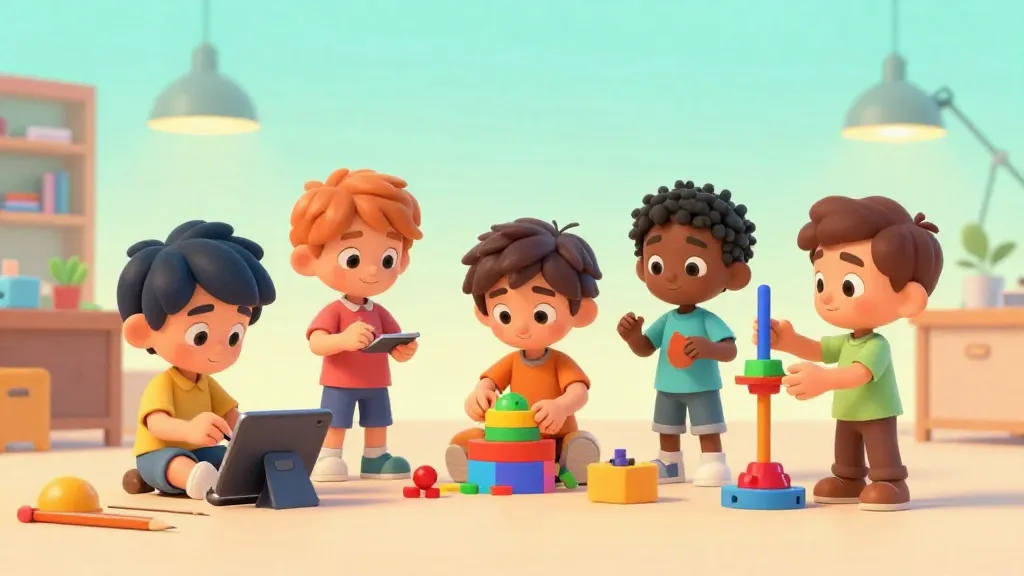
What if you didn't have to wait for a birthday or a chore list to get the money you want?
Mikaila Ulmer started a lemonade business when she was just four years old. By the time she was 15, her product was in 1,500 stores across the country! She didn't start with a giant office or a team of workers: she started with a family recipe, a folding table, and a mindset called entrepreneurship.
Being an entrepreneur sounds like a big, fancy word, but it is actually a very simple idea. An entrepreneur is someone who sees a problem and creates a business to fix it. Instead of just working for someone else, you become the boss of your own ideas.
You might think you are too young to start, but being a kid is actually a secret advantage. You see the world differently than adults do, and you have more energy to try new things.
Finn says:
"Wait, if I'm the boss, does that mean I have to tell myself to go to bed early? Being an entrepreneur sounds like a lot of responsibility!"
What Exactly is a Business?
At its heart, a business is an exchange. You provide something people want or need, and they give you money for it. This can be a product, like a handmade friendship bracelet, or a service, like walking a neighbor’s dog.
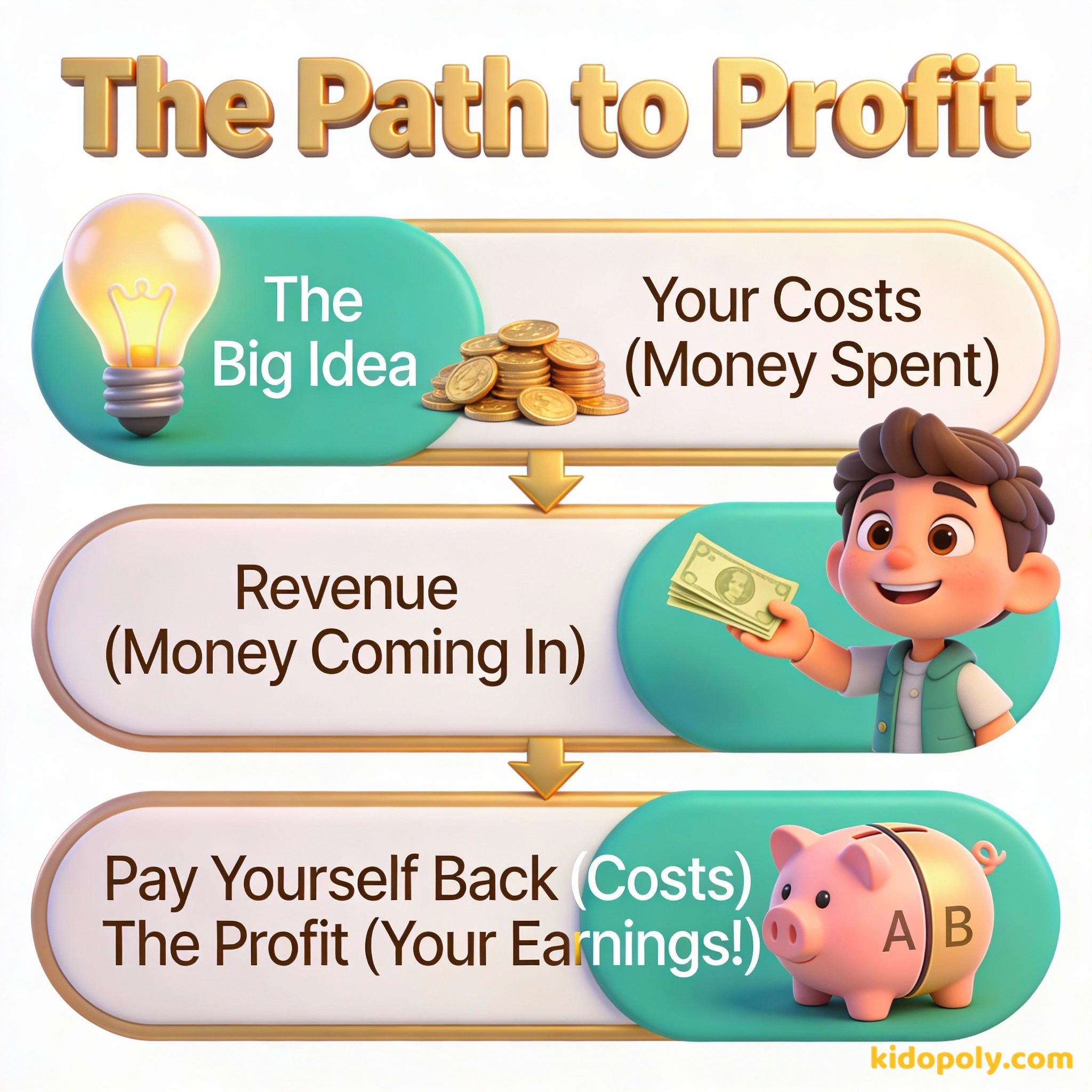
But here is the secret: making money isn't the same as making a profit. To think like a business owner, you have to understand where your money goes.
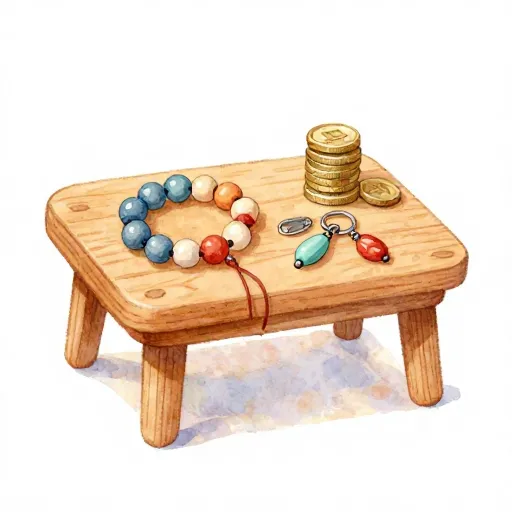
Let's say you make 10 custom keychains. Supplies (Beads, hooks): $15 Price per keychain: $5 Total Revenue (10 x $5): $50 Your Profit: $50 - $15 = $35!
Every time you sell something, you get revenue. That is the total amount of money that lands in your hand. But before you can celebrate, you have to subtract your costs - the money you spent on supplies, tools, or advertising.
Whatever is left over after you pay for your costs is your profit. This is the money you actually get to keep or put back into your business to help it grow.
The way to get started is to quit talking and begin doing.
Your Entrepreneur Superpowers
Most adults spend years going to school to learn how to be creative, but you are already an expert at it! Kids are naturally great at spotting things that could be more fun or more useful. This is the first step in innovation.

Mira says:
"Think about it, Finn! We know exactly what kids find boring or cool. That's like having inside information that adult business owners would pay millions for!"
Think about the things you and your friends talk about. Is there a toy that always breaks? Is there a game that needs better rules? Every time you say "I wish I had a way to..." you might be discovering a new business idea.
Play the 'Problem Spotter' game today. Carry a small notebook and write down three things that annoy you or someone else. By the end of the day, you'll have three potential business ideas!
From Idea to First Sale
You don't need a 50-page plan to get started. Most successful young entrepreneurs follow a simple path to see if their idea works. This is often called a startup phase, where you are testing things out.
- Spot a Problem: Look for something that people find annoying or difficult.
- Brainstorm a Solution: How can you fix it? Can you build it, teach it, or do it for them?
- Test Your Idea: Make one version of your product and show it to people. Ask for their honest thoughts!
- Set Your Price: Make sure you charge enough to cover your costs and make a profit.
- The First Sale: This is the most exciting part! Finding your first customer proves your idea is real.
Meet the Young Bosses
There are kids all over the world who have turned their hobbies into huge companies. They didn't have any special magic; they just started.
- Moziah Bridges: He loved fashion but couldn't find cool bow ties for kids. He started sewing his own, and now his company, Mo's Bows, is worth hundreds of thousands of dollars.
- Hart Main: He noticed that most candles smelled like flowers. He thought men might want candles that smelled like campfires or grass, so he started ManCans using old soup cans.
- Alina Morse: She wanted a lollipop that was actually good for your teeth. She did the research and created Zolli Candy, which is now sold in major supermarkets.
Business opportunities are like buses, there's always another one coming.
One-Time Sale vs. Repeating Business
There is a difference between selling a batch of old toys and being an entrepreneur. Selling your old LEGO set is a one-time deal. A real business is sustainable, meaning it can keep going over and over again.
Selling your old bike at a yard sale. You do it once, get the cash, and it's over.
Starting a bike-cleaning service. You find customers who pay you every month to keep their bikes shiny.
Think about a gardener. If they mow one lawn, they have money for today. If they set up a schedule to mow ten lawns every Saturday, they have a business! Entrepreneurs look for ways to keep customers coming back.
Finn says:
"So, instead of just finding a one-dollar bill on the sidewalk once, a business is like building a machine that finds a quarter every single day?"
Why it’s Okay to Fail
Here is a truth that most adults are afraid to say: most first businesses don't work. And that is perfectly okay! In the world of entrepreneurship, failing is just another way of learning.

Thomas Edison, the entrepreneur who brought the lightbulb to the world, failed 1,000 times before he got it right. He said he just found 1,000 ways NOT to make a lightbulb!
If you try to sell hand-painted rocks and nobody buys them, you haven't lost. You have just learned that people in your neighborhood might prefer something else. You take that knowledge and pivot to a new idea.

I'm convinced that about half of what separates successful entrepreneurs from the non-successful ones is pure perseverance.
Imagine it's six months from now. You walk into a local shop and see something you designed sitting on the shelf with a price tag. How would that feel?
Something to Think About
If you could start any business tomorrow without worrying about failing, what would it be?
There are no wrong answers here! Your dream business could be based on something you love, like video games, or something you're good at, like making people laugh.
Questions About Earning & Pocket Money
Do I need a lot of money to start a business?
What if someone else is already doing my idea?
How do I know what price to charge?
You Are the Boss of Your Future
Entrepreneurship isn't just about making money; it's about building confidence and learning how the world works. Whether your first business becomes a huge company or just a fun summer project, the skills you learn will stay with you forever. Ready to find your first big idea? Check out our list of [business-ideas-for-kids] to get your brain moving!
