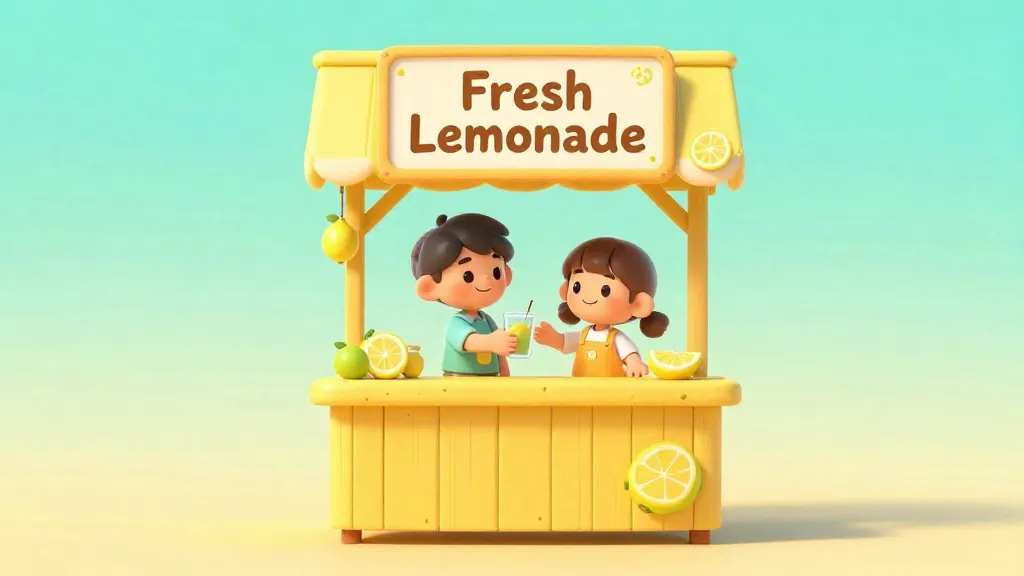
Imagine it is a boiling hot Saturday, and everyone on your street is thirsty. You have lemons, sugar, and a pitcher of water. Did you know you are sitting on a goldmine?
Running a lemonade stand is the classic way to start your journey as an entrepreneur. It is not just about squeezing fruit, it is about understanding how a business works from the ground up.
Have you ever wondered how shops decide what to charge for a toy or a snack? They use a specific set of rules to make sure they do not lose money. When you open a lemonade stand, you become the boss of your own shop. You have to think about supplies, pick a great spot, and figure out how to get people to notice you.

Imagine you are at a theme park on a hot day. You are extremely thirsty. Would you pay more for a drink there than you would at your own front door? This is how businesses think about 'demand'!
Before you pour your first glass, you need a plan. A business plan sounds like something for people in suits, but it is actually just a list of what you need and how much it costs. You will need a table, a pitcher, cups, lemons, sugar, and ice. You also need a bright sign to tell people what you are selling.
The Secret Math of Lemonade
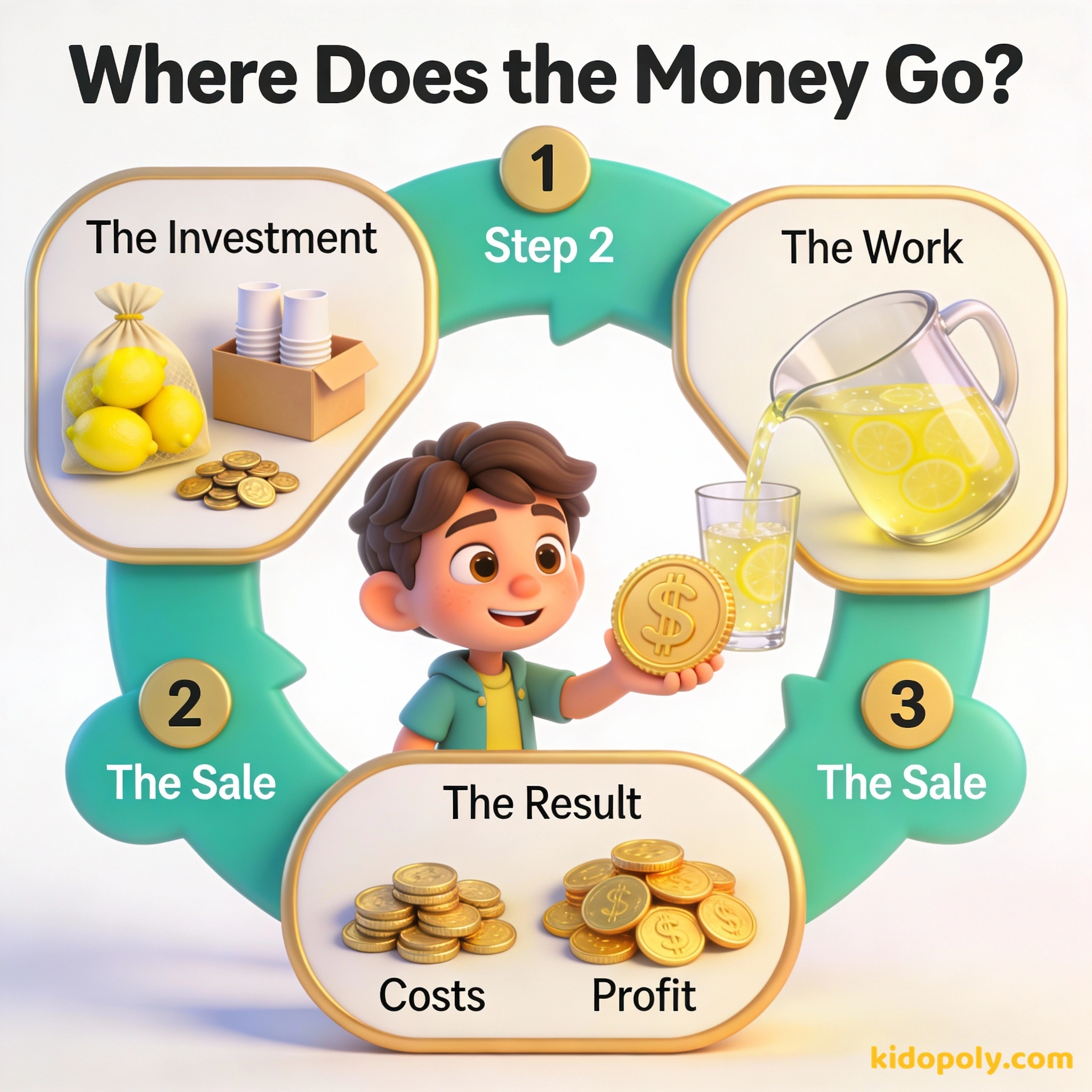
To make a profit, which is the money you keep after paying for everything, you have to do some simple math. Let's say a bag of lemons costs £3.00 and gives you enough juice for 10 cups. That means the lemon juice for one cup costs 30p. If the paper cup costs 5p and the sugar and ice cost about 5p, your total cost for one drink is 40p.

Price is what you pay. Value is what you get.
If you sell that drink for 40p, you have made zero money. You have only earned back what you spent. To make money, you need to charge more than it cost you to make. If you sell it for 80p, you make 40p in profit for every single cup. If you sell 20 cups, you just earned £8.00 for your piggy bank.

Finn says:
"Wait, if I want to get rich fast, shouldn't I just charge £10 for one cup of lemonade?"
THE PROFIT POP: 1 Lemon (30p) + 1 Cup (5p) + Sugar (5p) = 40p Cost Sale Price = 80p 80p - 40p = 40p Profit per cup Sell 50 cups = £20.00 Profit!
Finding the Perfect Spot
In the world of business, people often say: location, location, location. This means where you put your stand is just as important as how your lemonade tastes. If you set up in a quiet corner where nobody walks, you will not sell many drinks. You want to be where people are thirsty and active.
- Near a local park where kids are playing football
- On a busy pavement where people are walking their dogs
- At the end of your driveway during a neighborhood yard sale
- Near a beach or a hiking trail on a sunny afternoon
Once you have your spot, you need marketing. Marketing is how you tell the world that your product is awesome. A big, yellow sign with clear writing is your best tool. You might even include a 'hook' like 'The Coldest Drink in Town' or 'Secret Recipe Lemonade' to make people curious.

Mira says:
"If you did that, Finn, nobody would buy it! People compare your price to what they could get elsewhere. That is called 'market value'."
Customer Service Superpowers
Have you ever been to a shop where the person behind the counter was grumpy? It probably made you want to leave. In your business, you are the face of the company. Being friendly and polite is part of customer service. A smile can actually help you sell more lemonade than a sign can.
Sometimes, a customer might have a complaint. Maybe the lemonade is too sour or they want more ice. Instead of getting upset, think like a business owner. Fixing a problem with a smile creates a repeat customer. That is someone who comes back again and again because they trust you and like your service.
The Taste Test: Before you open, make three small batches of lemonade. One with lots of sugar, one with lots of lemon, and one in the middle. Ask your family to vote on the best one. That is your first 'market research'!
Why We Love the Stand
Kids have been running lemonade stands for a long time. In the United States, they became a huge part of culture over 100 years ago. It was a way for children to feel independent and learn the value of a dollar. Today, the tradition continues all over the world because the lessons are still the same.
A Quick History of the Stand

A penny saved is a penny earned.
Levelling Up Your Business
Once you master the basic lemon-and-sugar recipe, you can start to innovate. Innovation is when you find new ways to make your business better or different. You could offer a 'specialty' drink like Strawberry Lemonade for an extra 20p. This is called an upsell.
- Add fresh mint or frozen berries for a fancy look
- Offer a 'loyalty card' where the 5th drink is free
- Sell a small snack, like a cookie, alongside the drink
- Donate a portion of your profits to a local animal shelter
Keep all the profit to buy something big you have been wanting, like a new game or a bike.
Give half of your profit to a charity that helps animals or the environment.
Mira says:
"I saw a stand that sold 'Pink Lemonade' for more money just because it looked pretty. That is called 'perceived value'!"
Running a stand teaches you that money does not just appear. It is created when you provide something people want. Whether you save your profit for a new LEGO set or use it to buy more lemons for tomorrow, you have officially become a business owner. That is a real-life superpower.

Build your business on what you love, and it will feel like play.

In 1879, a young boy named Edward Bok started selling ice water to people on horse-drawn streetcars in New York. He eventually added lemon and sugar and became one of the first famous lemonade entrepreneurs!
Something to Think About
If you made £20 at your stand today, what would you do with it?
There is no wrong answer here! Some people love the feeling of watching their savings grow, while others love the joy of buying something they worked hard for.
Questions About Earning & Pocket Money
How much should I charge for a cup of lemonade?
What if nobody buys my lemonade?
Do I need to ask permission to start a stand?
Ready to Open for Business?
You now have the tools to run your very first company. Remember, even the biggest businesses in the world started with a simple idea and a lot of hard work. Go grab those lemons and start squeezing!