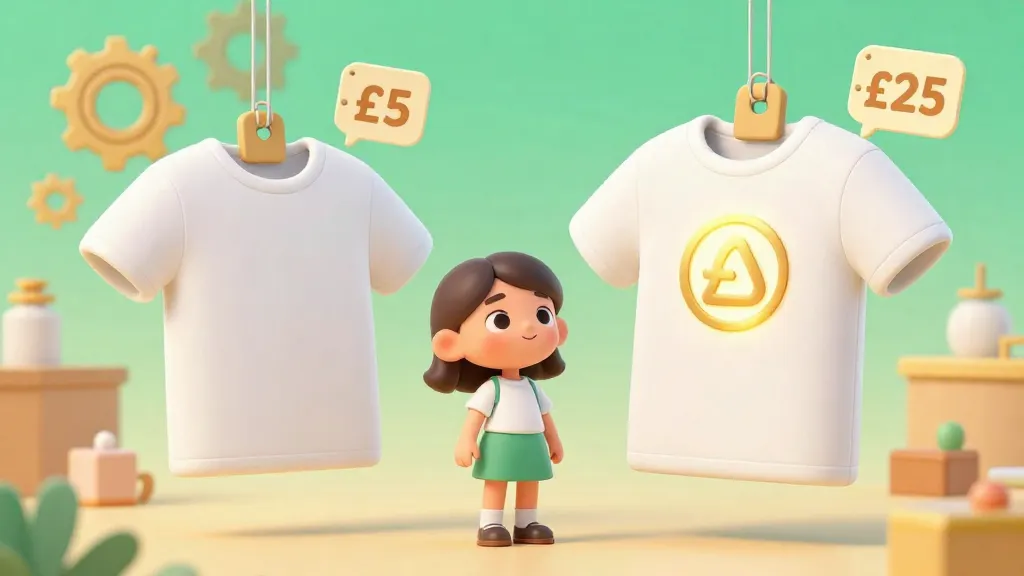
Imagine you are standing in a shop looking at two plain white t-shirts. They feel the same, they look the same, and they are both made of 100% cotton. But one costs £5 and the other costs £25. Why?
The answer is not a mistake. It is the result of a complex system called pricing. Understanding how businesses decide what to charge is like having a superpower that lets you see behind the scenes of every shop in the world.
Every time you look at a price tag, you are seeing the end result of a long series of decisions. Businesses do not just pick a number out of thin air. They use specific frameworks to make sure they can stay in business while still getting you to open your wallet.

Mira says:
"If the cotton is the same, are we basically just paying £20 for a tiny little embroidered bird logo? That is a very expensive bird!"
The Recipe for a Price: Cost-Plus
The most basic way a business sets a price is called cost-plus pricing. Think of it like a recipe. First, the business adds up all the money it spent to make the product. Then, they add a little bit extra on top so they can make a profit.
How to calculate a 'Cost-Plus' price: Materials: £3.00 Labour (Time): £2.50 Shipping: £1.00 Total Cost: £6.50 + Desired Profit: £2.50 Final Price: £9.00
If a shop sold everything at the exact price it cost to make, they would have no money left to pay for the lights, the heating, or the people who work there. Profit is what allows a business to grow, create new products, and pay its employees.
Price is what you pay. Value is what you get.
The Pricing Chain
Before a toy or a pair of trainers reaches the shelf, it travels through a long pricing chain. Each stop along the way adds a little more to the final cost. This includes the farmers who grow materials, the factories that build the product, and the trucks that drive it to the shop.
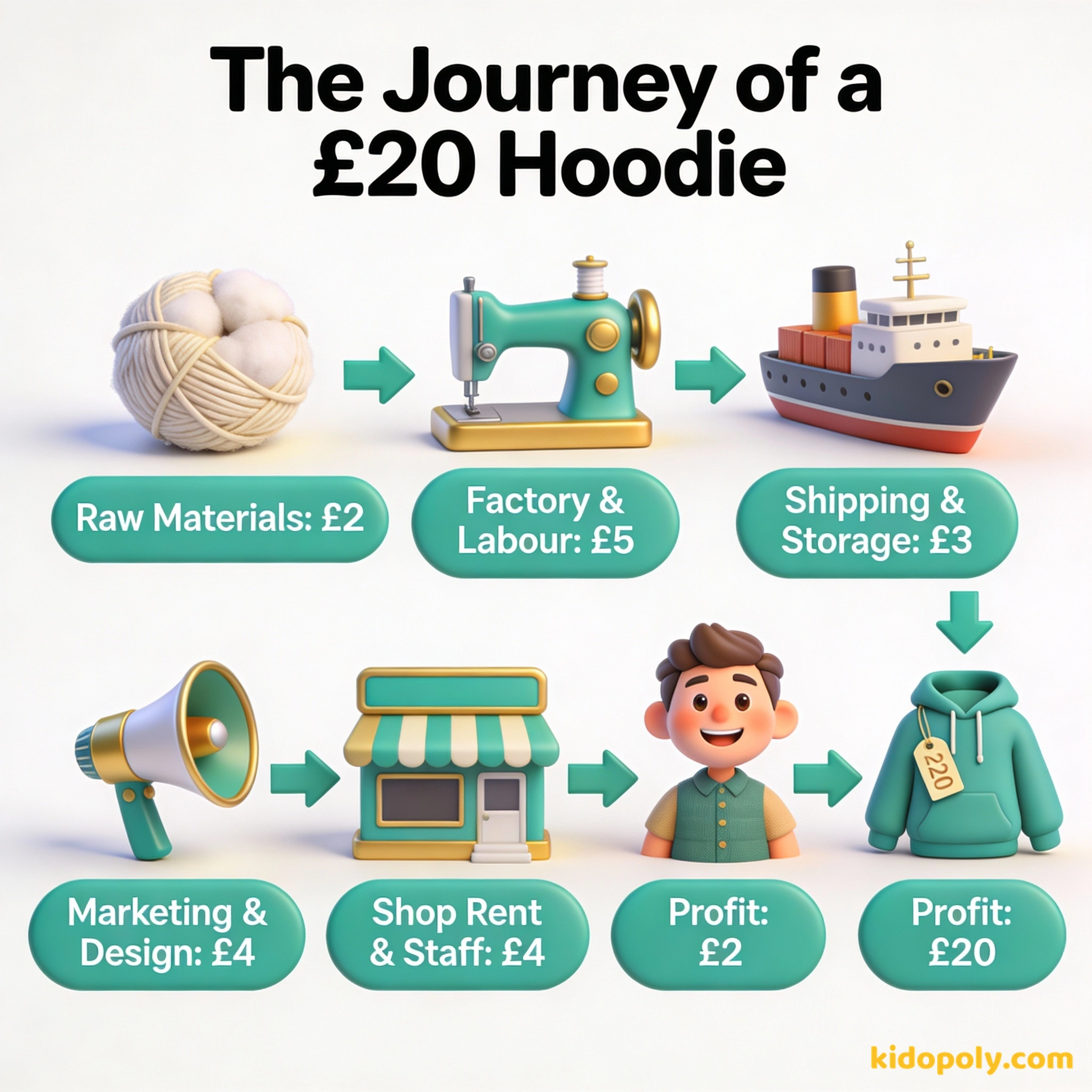
Even when the product arrives at the shop, the price keeps growing. The shop has to pay rent for their building and wages for the staff who help you. All of these small costs are bundled together into that one single number you see on the sticker.
The Power of the Name
This brings us back to our t-shirt mystery. Why does the shirt with the famous logo cost five times more? This is called a brand premium. When you buy a famous brand, you aren't just paying for the cotton. You are paying for the years of work the company spent making that brand feel cool or high-quality.

Finn says:
"So if I start a business, I have to make sure my price covers my costs AND leaves me with a profit? If I spend £10 making a cake, I should probably sell it for £15!"
Companies spend millions on design and marketing to create a certain feeling. They know that many people are willing to pay more for a brand they trust or a logo they admire. This is value-based pricing, where the price is set by how much the customer thinks the item is worth, rather than just what it cost to make.
These items are often made in the same factories as big brands but have simple packaging. You pay mostly for the ingredients and the labour.
You are paying for the quality of the item, plus the cost of cool adverts, famous sponsorships, and the status of owning that brand.
The Battle of the Shops
Businesses do not live in a vacuum. They are always watching their competition. If two shops on the same street sell the exact same football, they have to be careful. If Shop A charges £15 and Shop B charges £10, most people will go to Shop B.
There are two kinds of companies: those that work to try to charge more and those that work to try to charge less. We will be the second.
This competition often pushes prices down. To win your business, shops try to find ways to be more efficient so they can offer a lower price than their rivals. However, if a shop is the only one in town selling something special, they might be able to charge more because there is nowhere else for you to go.
Brain Games: Psychological Pricing
Have you ever noticed that almost everything in a shop ends in .99? A game might cost £19.99 instead of £20. This is a trick called psychological pricing. Our brains read from left to right, so we focus on the first digit we see. Even though £19.99 is only one penny less than £20, our brains process it as being in the '10s' rather than the '20s'.
This is called 'Left-Digit Bias.' Because we read from left to right, our brain records the first number it sees most strongly. Seeing a 1 in £19.99 makes the price feel closer to £10 than £20!
Another trick is called anchoring. A shop might show you a jacket with a 'was' price of £100 and a 'now' price of £60. By showing you the £100 first, they 'anchor' that high price in your mind. Suddenly, £60 feels like a massive bargain, even if the jacket only cost £20 to make!
Finn says:
"I always thought £9.99 felt way cheaper than £10, but it is literally just one penny. My brain is totally falling for it!"
Location, Location, Location
Sometimes, the price of an item changes based on where you are. This is often called convenience pricing. Imagine you are at a theme park on a very hot day. A bottle of water that costs £1 at the supermarket might cost £3 at the park.

Imagine you are at a cinema. You really want popcorn, but it costs £7. Outside at the supermarket, the same bag is £1. You pay the £7 because you are already in your seat, the movie is starting, and you can't leave. That is convenience pricing in action!
This happens because you are a captive audience. The park knows you are thirsty and that you cannot easily leave to find a cheaper shop. You are paying extra for the convenience of having that cold water right there when you need it most.

The secret of successful retailing is to give your customers what they want.
When you understand these patterns, you start to see the world differently. You realize that a price isn't just a number, it is a story about how things are made, how brands compete, and how our own brains work when we go shopping.
Something to Think About
If you were starting a business selling hand-made friendship bracelets, how would you decide your price?
Think about how much you spent on thread, how long it took you to make, and if you want your friends to see it as a 'luxury' brand or a 'bargain' brand. There is no wrong answer, it is all about your business strategy!
Questions About How Money Works
Why do some shops sell the same thing for different prices?
Is a higher price always a sign of better quality?
Why do prices end in .97 or .95 sometimes?
You are now a Pricing Pro
The next time you are in a shop, look at the shelves like a business owner. Can you spot a brand premium? Can you find the psychological .99 tricks? Understanding how prices work helps you see the world more clearly. To see how these prices change when items become rare or popular, check out our page on supply-and-demand.