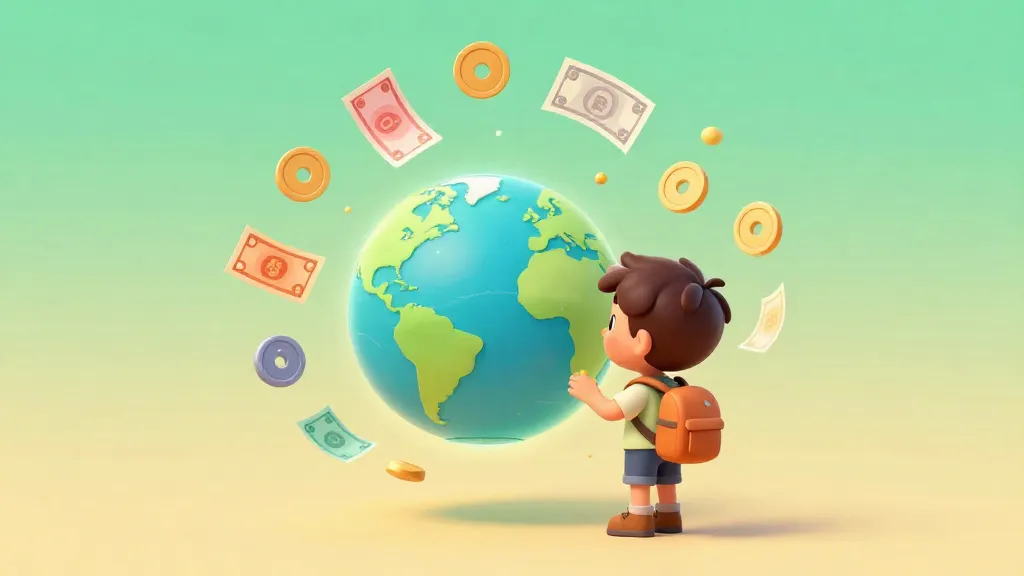
Imagine you are at the beach in Australia and you forget to take your pocket money out of your swimming trunks. In most places, your paper cash would turn into a soggy, mushy mess: but not in Australia!
Down under, the money is made of a special plastic called polymer, which means it is completely waterproof. Every country has its own unique currency, which is the specific type of money used by people in a certain place. From coins with holes in the middle to notes that feature scientists and snow leopards, the money people carry tells a huge story about their culture and history.
Did you know that there are about 180 different currencies used across the planet today? While we use money to buy things every day, each country designs its cash to be a mini-work of art that represents what they care about most.
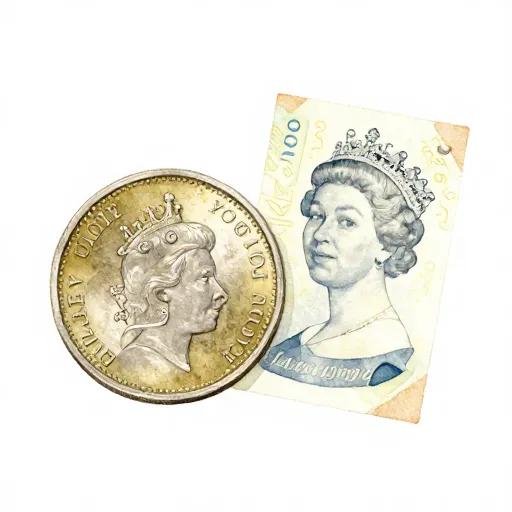
There are roughly 180 different currencies in the world today. The oldest currency still in use is the British Pound, which has been around for over 1,200 years!
The Superstars of World Currency
When you travel, the first thing you notice is how different the money looks. In the United States, the US Dollar is famous for being green and featuring past presidents. But did you know the US Dollar is so popular that countries like Ecuador, El Salvador, and Panama use it as their own official money too?
In the United Kingdom, the British Pound features the monarch, currently King Charles III. On the back of their notes, they celebrate great thinkers like Winston Churchill or the scientist Jane Austen. This shows how much the country values its history and its biggest ideas.
An investment in knowledge pays the best interest.

Finn says:
"If the money in Australia is made of plastic, does that mean it feels like a credit card? Or is it soft like a bag?"
A Rainbow of Money: Colour and Culture
Some countries decide that green and brown are just too boring. If you visit Brazil, you will see some of the most colourful money in the world! Their currency, the Real, features amazing local animals like the Great Egret, the Golden Lion Tamarin, and even a Jaguar.
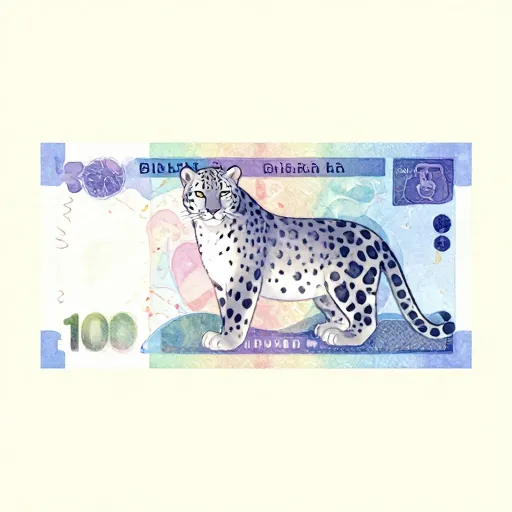
Imagine going to the shop and paying with a bill that has a giant, fuzzy snow leopard on it. In Kazakhstan, their 10,000 Tenge note features a beautiful blue snow leopard leaping across the paper!
South Africa does something similar with its currency, the Rand. Every banknote features one of the 'Big Five' animals: the rhino, elephant, lion, leopard, and buffalo. It is like having a tiny zoo inside your wallet!

Mira says:
"I love that South Africa puts animals on their money. It's like they are saying 'Nature is our real wealth' every time they pay for something!"
Coins with a Difference
Not all money is a solid circle. In Japan, the 5-yen and 50-yen coins actually have a hole right in the middle! This was originally done to save metal during production, but today it helps people tell the coins apart just by feeling them in their pocket.
Be a money detective! Hold a banknote up to a bright window. Can you see a hidden face or image appearing in the white space? This is called a watermark, and it is a secret trick countries use to stop people from making fake money.
In India, the Rupee is designed to be inclusive for everyone. Because India has so many people who speak different languages, every banknote has its value written in 17 different languages! The notes also have special raised marks made of thick ink so that people who are blind can tell which note they are holding just by touch.
The world has enough for everyone's need, but not enough for everyone's greed.
The Big Euro Experiment
Usually, when you cross a border into a new country, you have to swap your money for something new. But in Europe, things are a bit different. There are 20 countries, including France, Germany, and Italy, that all decided to use the exact same money: the Euro.

This makes it much easier for people to travel and for businesses to sell things to each other. While the paper notes look the same everywhere, each country gets to design its own special symbols on the back of the Euro coins. It is like a giant team where everyone wears the same uniform but has their own unique badge.
Finn says:
"Wait, 20 countries sharing one currency? That's like if me and all my friends decided to only trade the same type of blue marbles!"
Unusual Shapes and Giant Numbers
Most money is printed horizontally, like a wide-screen TV. But some places, like Switzerland and Bermuda, decided to be different. Their banknotes are vertical, meaning the pictures are printed top-to-bottom like a skyscraper!
Paper money is cheaper to make and can be folded easily into a tiny wallet.
Polymer (plastic) money lasts 3 times longer and can go through a washing machine without breaking.
Sometimes, the numbers on money can get very confusing. In Vietnam, the currency is called the Dong. Because of the way their economy works, the numbers on the bills are huge. You might hold a note that says 500,000 on it, but it might only buy you a nice lunch!
If you are in Vietnam: 1 US Dollar = approx. 25,000 Dong 10 US Dollars = approx. 250,000 Dong A simple ice cream might cost 20,000 Dong! Large numbers don't always mean things are expensive, they just use a different scale.
The Evolution of Money Tech
The King of Currencies
When we talk about 'highest' and 'lowest' money, it can mean two things. The most valuable single unit of money in the world is usually the Kuwaiti Dinar, where just one dinar is worth more than three US dollars!
On the other hand, the highest number ever printed on a single note was in Zimbabwe. During a time when their money was losing value very fast, they printed a note worth 100 trillion dollars. Even with all those zeros, it still was not enough to buy much more than a loaf of bread!
We shall show mercy, but we shall not ask for it.
Something to Think About
If you were the leader of your own country, what three things would you put on your money to show people what your country is all about?
Think about the people you admire, the animals you love, or the landmarks in your town. There are no wrong answers, money is a canvas for your culture!
Questions About How Money Works
Why do different countries have different money?
Which country has the most beautiful money?
Can I use my money in a different country?
Your Wallet is a World Map
Next time you see a coin or a bill, take a closer look. You might see a hidden bird, a famous inventor, or a secret code. Money is more than just a way to pay for toys: it is a tiny, portable museum that connects you to people all over the globe. If you want to see how these different values actually work when you travel, check out our guide on exchange-rates next!
