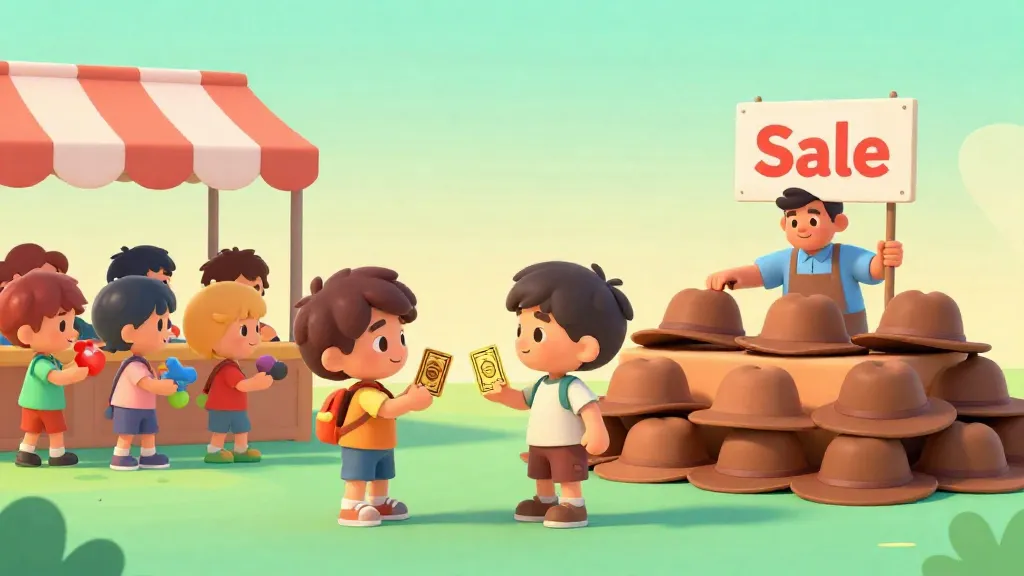
Remember when everyone wanted that one specific toy at Christmas and it sold out everywhere?
Prices on eBay went through the roof, but by February, the shelves were full and the toy was on sale. You just watched supply and demand in action: you just didn't know it had a name yet. These two forces are the most important rules in the world of economics, and they control almost everything you buy.
The Invisible Tug-of-War
Imagine you are at school and you have the very last pack of a super-rare trading card in your bag. Suddenly, twenty people want to trade with you. Because so many people want it, you can ask for almost anything in return.
This isn't just a schoolyard trade: it is a fundamental rule of how the world works. Economics is the study of how people use money and resources, and at its heart is a constant tug-of-war between two things: supply and demand.

Mira says:
"So supply and demand is basically like the rules of a giant game of musical chairs? When there are fewer chairs and more people, the chairs become way more important!"
What is Supply?
Supply is simply the amount of something that is available to buy. If a bakery makes 50 chocolate donuts today, their supply of donuts is 50. If a toy company only makes 1,000 pairs of a special limited-edition trainer, that is a low supply.
When supply is high, it means there is plenty of that item for everyone. Think about pencils at the shop: there are usually thousands of them. When supply is low, it means the item is rare or hard to find.
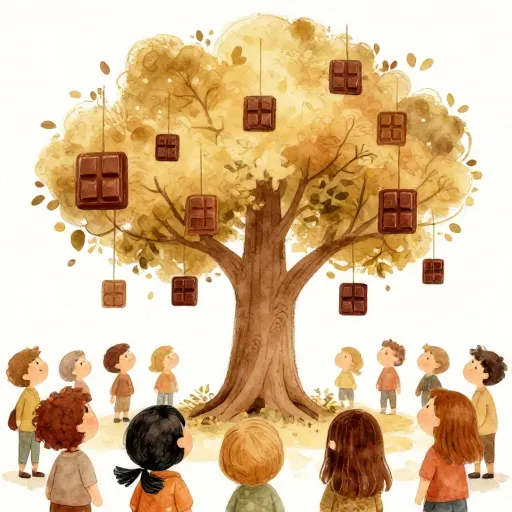
Imagine a world where only one tree on Earth grew chocolate bars. The supply would be tiny! People would travel from every country to get one, and they would be willing to pay thousands of pounds for a single bite. That is low supply in action.

Supply and demand are like the two blades of a pair of scissors.
What is Demand?
Demand is how much people want to buy something. Think about an ice cream van. On a cold, rainy Tuesday in January, the demand for ice cream is probably very low. Nobody wants to eat a frozen treat while they are shivering!
But imagine that same ice cream van on the hottest day of the summer at a crowded beach. Suddenly, hundreds of people are lining up. The demand has shifted from low to sky-high because everyone wants exactly what the van is selling.

Finn says:
"Wait, so if I'm the only person in school who knows how to fix a broken bike, does that mean the 'demand' for my help is high? Could I charge two candy bars instead of one?"
How They Move the Price
Now, here is the secret: supply and demand work together like a pair of scissors to set the price of everything. When these two forces move, the price of your favorite toys, snacks, and even clothes moves too.
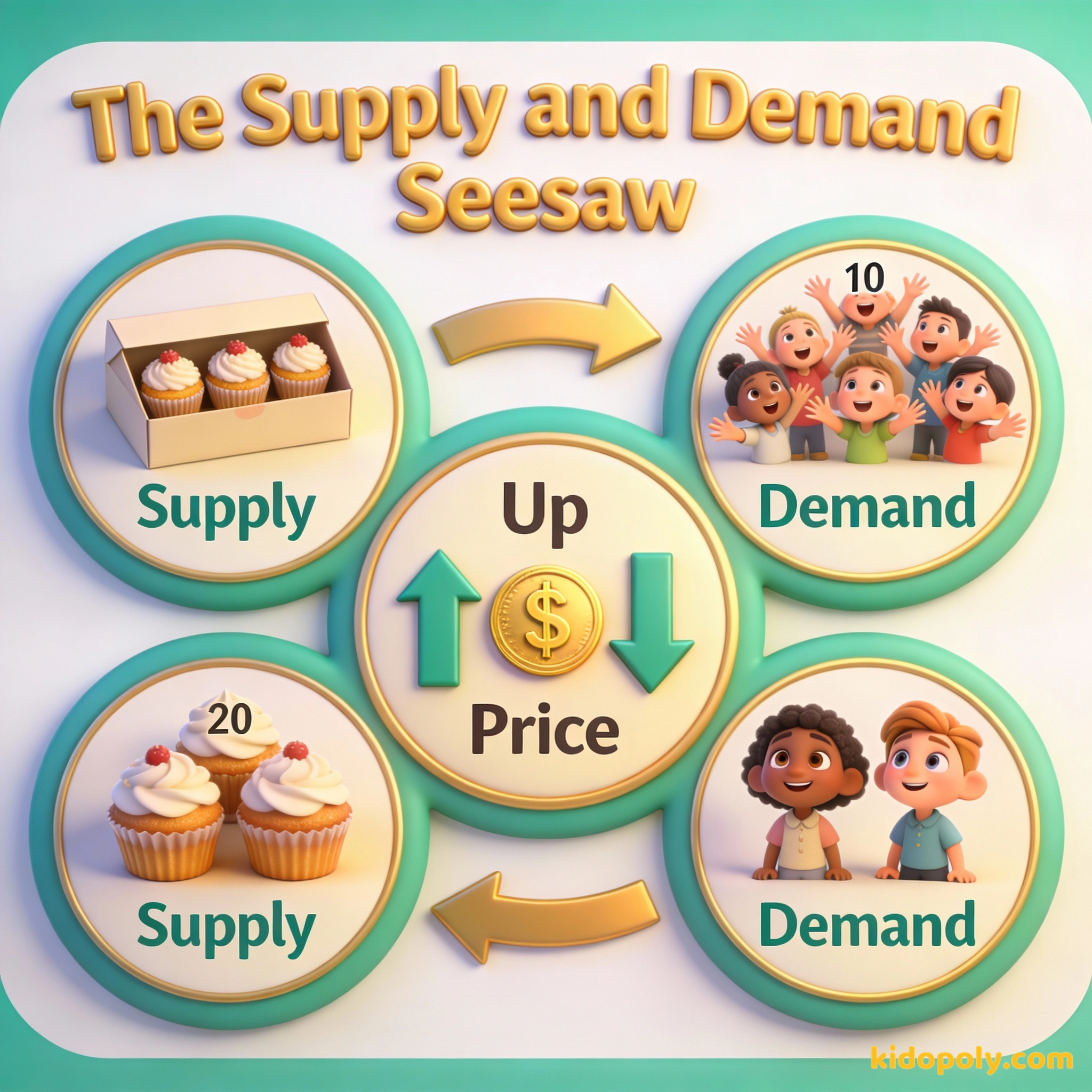
If the demand is high (lots of people want it) but the supply is low (there isn't much of it), the price goes up. This is why those rare trainers cost so much more than the regular ones you wear to gym class.
Let's look at the Beach Snack Shop: - Normal Day: 100 ice creams available / 100 kids want one = £2.00 each. - Heatwave: 100 ice creams available / 500 kids want one = £4.00 each. - Rainstorm: 100 ice creams available / 5 kids want one = £1.00 (Sale!)
When Nobody Wants It: The Clearance Sale
What happens when the tug-of-war goes the other way? Imagine a shop ordered 500 bright neon-green winter coats, but it turns out that nobody actually likes neon green. The supply is very high, but the demand is nearly zero.
To get people to buy them, the shop has to lower the price. This is why you see "Clearance Sales" or "50% Off" signs. The shop is trying to create demand by making the item so cheap that people decide it's worth buying after all.

Price is what you pay. Value is what you get.

In the 1600s, people in the Netherlands went crazy for tulips! Because the demand was so high and the supply of rare colors was low, a single tulip bulb could cost as much as a whole house. This was called 'Tulip Mania.'
Supply and Demand in Your Daily Life
Supply and demand aren't just for shops: they happen in your life every day. Think about the school fair. If there are ten stalls selling cupcakes but only one stall selling homemade slime, which one do you think can charge more?
Because the slime is unique (low supply) and everyone wants it (high demand), that stall will be the most successful. The cupcake stalls might have to lower their prices to compete with each other because there are so many of them.
You get the item right away and get to enjoy it while it's popular, but you usually have to pay the highest possible price.
You save money and might get a better deal, but you have to wait and the item might sell out before you get it.
Mira says:
"This makes so much sense! It's why strawberries are cheaper in the summer when they grow everywhere, but expensive in the winter when they have to be flown in from far away."
Why Umbrellas Cost More in the Rain
Have you ever noticed that a shop near a train station might sell umbrellas for £5 on a sunny day, but if a sudden rainstorm starts, the price might jump to £10? This feels sneaky, but it is actually just supply and demand.
When it starts pouring, the demand for umbrellas explodes instantly. People need them right now! Because the shop only has a limited number in the bin, the value of each umbrella goes up because the demand is so much higher than the supply.
Pick a toy or a video game you want. Check its price online once a week for a month. Does the price stay the same? If it goes down, can you figure out if the supply went up or the demand went down?

Teach a parrot the terms 'supply and demand' and you’ve got an economist.
You are the Master of the Market
Understanding supply and demand is like having a superpower. It helps you understand why prices change and helps you decide when it's a good time to spend your money. If you want a brand-new game, waiting a few months until the supply is high and the initial demand has cooled down could save you a lot of pocket money.
Next time you see a price change or a sold-out sign, remember the invisible tug-of-war. You are seeing the most important rule of money in action! You can learn more about how shops decide what to charge in our guide on how-prices-work.
Something to Think About
Can you think of something you own that is very rare?
If you decided to sell it, how would the supply and demand for that item change the price you could ask for? Remember, there is no right or wrong answer: it all depends on how much someone else wants it!
Questions About How Money Works
What happens if supply and demand are exactly the same?
Can demand be changed by advertising?
Is it bad when prices go up because of high demand?
You're an Economics Explorer!
Now that you know how supply and demand work, you can see why things cost what they do. If you're curious about how those prices are actually written on the stickers, head over to our page on how-prices-work. Or, if you want to see what happens when the price of everything starts to go up at once, check out inflation-explained!
