Remember when the world seemed to pause during 2020? Suddenly, the news was full of scary words like 'crisis' and 'recession.'
Maybe you noticed your parents looking a bit more worried about the bills, or perhaps a favorite local shop closed its doors for good. That feeling of the world slowing down is what happens during an economic recession, a time when the giant machine of buying and selling takes a break.
A recession is a word grown-ups use to describe a time when the economy stops growing and starts shrinking. Think of the economy like a giant garden. Usually, new plants are growing, and the garden gets bigger every year.
But during a recession, it is like a long, cold winter. The growth stops, some plants might wither, and everyone has to wait for spring to return.
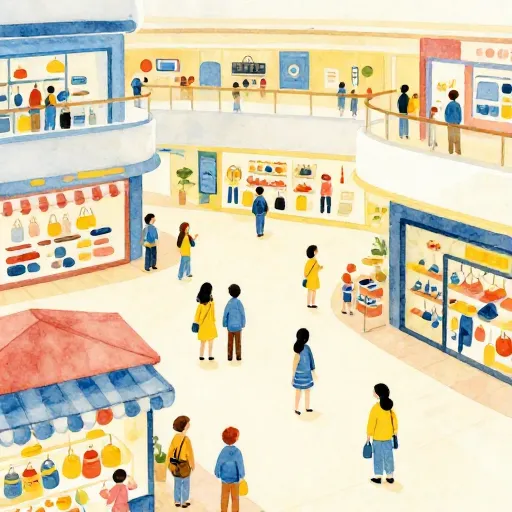
Imagine a giant shopping mall where every single person is just walking around looking at things, but nobody is actually buying anything. The cash registers are silent. That is a recession in a nutshell.
In technical terms, experts say a recession is happening when the economy shrinks for two quarters in a row. A quarter is just three months, so if the economy gets smaller for six months straight, the 'recession' label comes out.
The Vicious Cycle
Why does a recession feel so different from normal life? It is all because of how money moves between people and businesses. This is often called how-the-economy-works in action.

Finn says:
"Wait, if everyone stops spending money to be safe, does that actually make the recession worse? That seems like a confusing trap!"
It starts when people become worried about the future. Maybe they hear bad news and decide to stop buying new toys, going to the cinema, or eating at restaurants. This sounds small, but if millions of people do it at once, it creates a chain reaction:
- Spending drops: Families stop buying extra things to save money.
- Businesses earn less: Shops and factories don't sell as many products.
- Job losses: Because they are making less money, businesses might let workers go.
- Less spending: Now that those workers don't have a salary, they spend even less money.
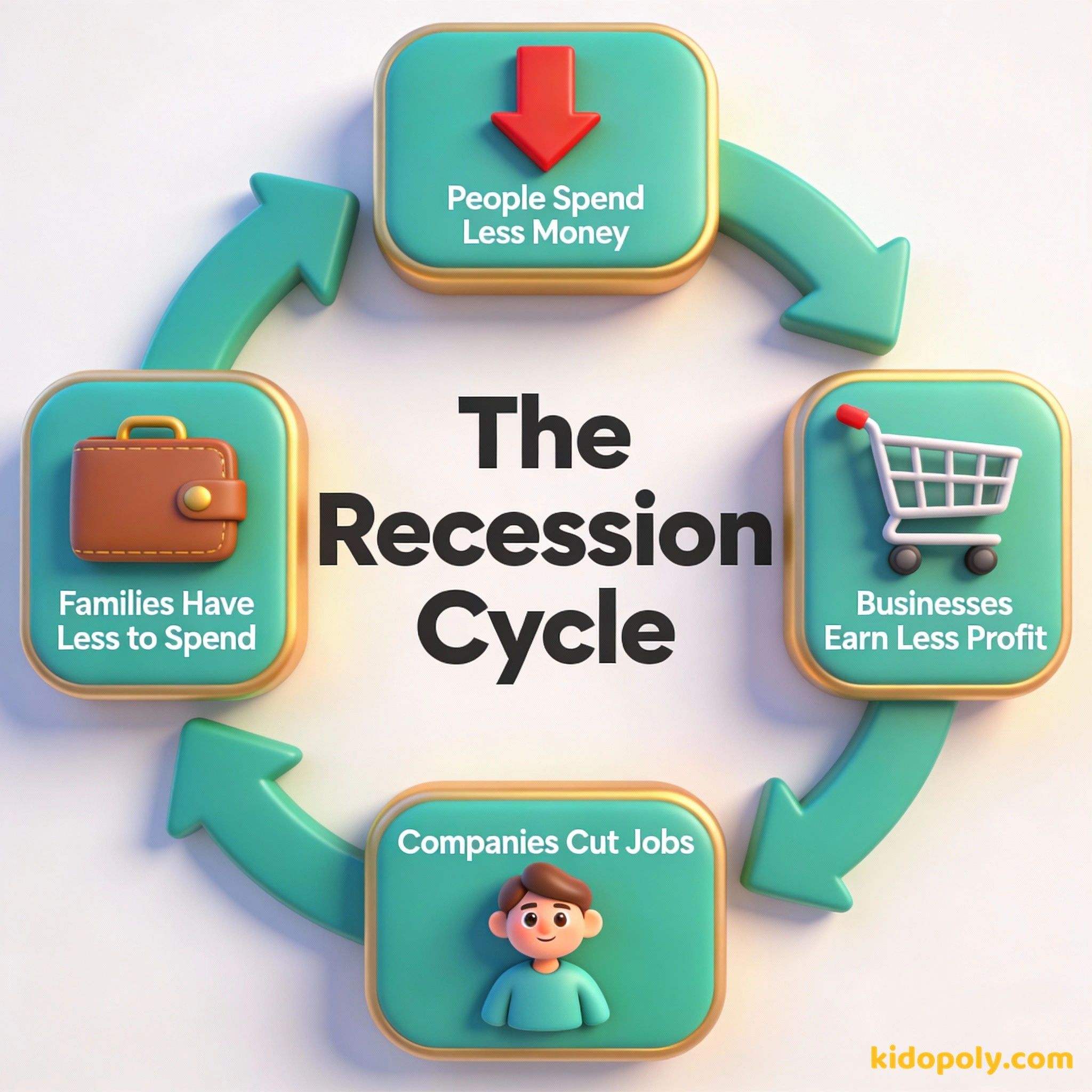
This is the 'Recession Loop.' It can feel like a downward spiral, but it is important to remember that this cycle does not last forever. Eventually, things become so cheap or people miss their favorite things so much that they start spending again.
Be fearful when others are greedy and greedy when others are fearful.
Famous Recessions in History
Recessions are not new. They have happened many times throughout history, and each one has a different story. Understanding them helps us see that we have survived them before.
A History of Economic Dips
The shortest recession in history happened in 2020 during the COVID-19 pandemic. It only lasted two months because the government acted so quickly to help people.
In 1929, the world faced the Great Depression, which was like the 'Grandfather' of all recessions. It lasted for years and was very tough for families. More recently, in 2008, the Global Financial Crisis happened because banks made some big mistakes with housing loans.
Then came the 2020 COVID recession. This one was unique because it didn't happen because of a money mistake, it happened because we had to turn the economy off to keep people safe.
What Governments Do to Help
When a recession hits, the government acts like a doctor trying to heal a sick patient. They have a few 'medicines' they can use to get money moving again.
One way they help is by lowering interest rates. This makes it cheaper for people to borrow money for things like houses or for businesses to buy new equipment.
Normal Interest Rate: 5% (It costs $5 to borrow $100) Recession Interest Rate: 1% (It costs only $1 to borrow $100) When the government drops the rate, it encourages people to spend that 'saved' $4 on other things, like local shops!
They might also spend more money on big projects, like building new schools or fixing roads. This creates new jobs for people who might have lost theirs. Sometimes, they even send checks directly to families to help them pay for groceries and clothes.

Mira says:
"It is like the government is giving the economy a giant jump-start, like a flat battery on a car. They just want to get the engine running again."
How Recessions Affect You
Even though you are a kid, a recession can change your daily life. You might notice that your parents say 'no' to extra treats more often. You might see your school using older textbooks because their budget was cut.
- Parent Stress: Adults might talk more about the price of petrol or electricity.
- Shop Changes: You might see 'For Lease' signs on shop windows in your town.
- Budgeting: Your family might choose a staycation instead of a big holiday abroad.
A recession is when your neighbor loses his job. A depression is when you lose yours.
It is okay to feel a bit worried when things change, but remember: a recession is a phase, not a permanent state of the world. Just like the seasons change, the economy has a rhythm.
Saving every penny helps your family stay safe if someone loses a job. It is like building a fortress.
If everyone saves every penny, shops close and more people lose jobs. Spending helps the whole country recover.
The Best Part: They Always End
Here is the most important fact: every single recession in history has ended. Every. Single. One. After the 'winter' of a recession, the 'spring' of economic growth always returns.
Finn says:
"So a recession is basically the economy's way of taking a nap? It sounds less scary when you think of it as a break before getting back to work."
In fact, the economy usually comes back stronger than it was before. New types of businesses are often born during recessions because people find clever new ways to solve problems.
The difficulty lies not so much in developing new ideas as in escaping from old ones.
When the recovery happens, businesses start hiring again, people feel confident enough to spend, and the cycle starts moving upward. By understanding what a recession is, you can look at the news and know that while things might be tough for a bit, a brighter future is always on the way.
Something to Think About
If you were the leader of a country during a recession, what is the first thing you would do to help families feel less scared?
There are no wrong answers here. Some people focus on giving money, while others focus on creating jobs or just sharing helpful information. What do you think matters most?
Questions About How Money Works
Will a recession make me lose my pocket money?
How do we know when a recession is over?
Are recessions always bad?
You're an Economic Explorer!
Now you know that a recession is just a part of the economic cycle. It can be a bumpy ride, but the world always finds its way back to growth. To understand more about how these prices change during a recession, check out our guide on inflation-explained!