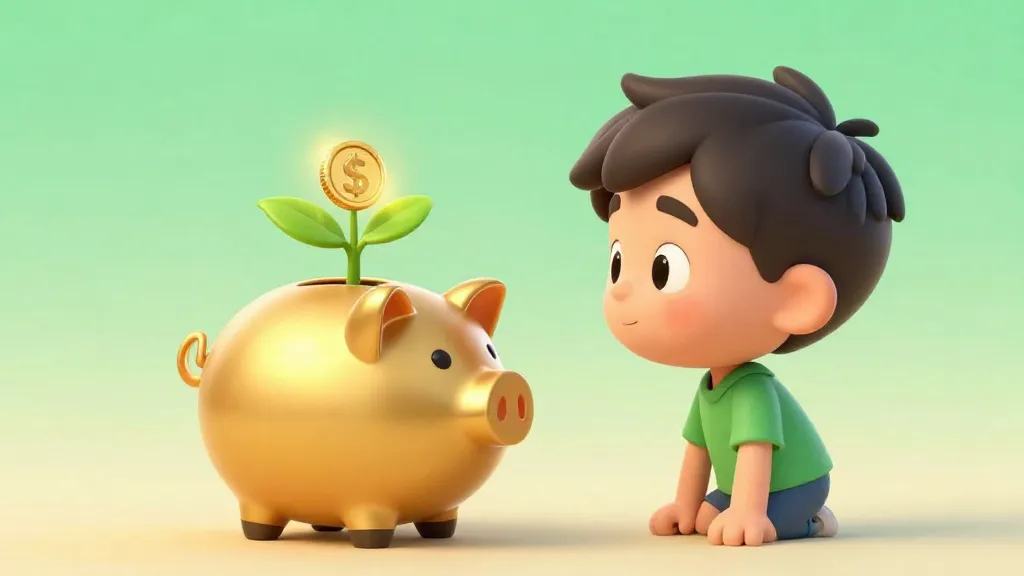
Imagine you lend your friend £10 to buy a book, and they promise to pay you back next month. When next month arrives, they don't just give you £10: they give you £11.
That extra £1 isn't a mistake. It is interest, the secret ingredient that makes money grow or cost more over time. Understanding interest is like having a financial superpower because it helps you see the hidden price of almost everything you buy or save.
Most people think money is just something you use to buy toys or snacks, but money actually has a price of its own. This price is called interest. To understand it simply, you can think of interest as rent for money.
When you want to live in a house you do not own, you pay the owner rent every month. When you want to use money that you do not have yet, you pay the owner of that money a little bit extra for the privilege. This works both ways: you can be the person paying the rent, or the person collecting it.
Let's look at the math: If you save: £100 At an interest rate of: 5% You earn: £5 in interest Your new total after 1 year: £105 You earned £5 just for letting your money sit in the bank!
The Two Sides of the Interest Coin
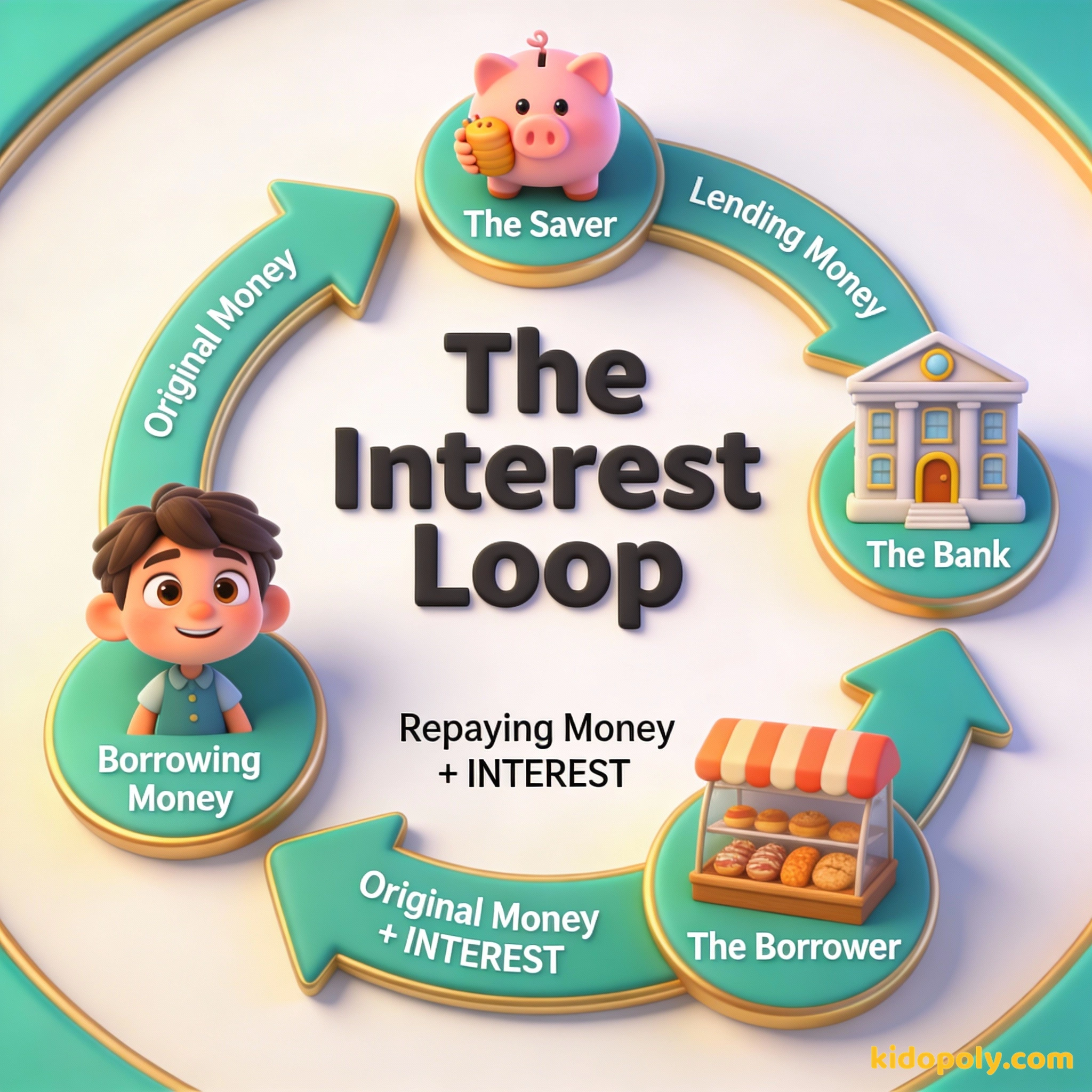
There are always two people involved in interest: the lender and the borrower. The lender is the person who has the money right now. The borrower is the person who needs it and promises to pay it back later.
If you put your pocket money into a savings account, you are actually the lender. You are letting the bank look after your money so they can use it for other things. Because you are being helpful and waiting to spend your money, the bank pays you interest as a reward.

Finn says:
"Wait, so the bank is actually paying ME to keep my money safe? That sounds like a great deal. Is there a catch, or do I just get free money for waiting?"
On the other side, if you need to buy something big, like a car or a house when you are older, you might need to be the borrower. You ask the bank to give you the money now, and you pay them back over many years. Because the bank is taking a risk and letting you use their money, you pay them interest.
Money makes money. And the money that money makes, makes money.
Why Does Interest Exist?
It might seem strange that you have to pay extra just to use money. Why can't we just trade the same amounts back and forth? Economists (people who study money) say there are three main reasons why interest exists: time, risk, and opportunity.
First, there is the time value of money. Most people would rather have £10 today than £10 a year from now. If you have it today, you can buy a treat immediately. If you have to wait a year, that wait should be worth something: that 'something' is the interest.

Imagine you have a super rare video game console. Your friend wants to borrow it for a week. You agree, but you say, 'Since I can't play it this week, you have to give me one of your game cards to keep when you return it.' That game card is the interest: the price your friend pays for the fun of using your console right now.
Second, there is risk. Whenever someone borrows money, there is a tiny chance they might not be able to pay it back. Interest acts like a safety net for the lender. It makes it worth the risk of letting someone else hold onto their cash.
Finally, there is opportunity cost. If I lend you my £50, I can't use that £50 to buy a new video game for myself right now. The interest you pay me is the reward for the opportunity I am missing out on while you have my money.
Understanding the Interest Rate
When you look at a bank's website or an advertisement, you will see a percentage followed by a sign like '%'. This is the interest rate. It tells you exactly how much 'rent' is being charged or earned over one year.
If a savings account has a 5% interest rate, it means for every £100 you keep there, the bank will give you £5 extra at the end of the year. If the rate is 1%, you only get £1. The higher the rate, the faster your savings grow, but also the more expensive it is to borrow money.
You are the lender. You receive interest. Your money grows because you are patient.
You are the borrower. You pay interest. You get to use the money now, but it costs you more in the end.
Interest rates don't stay the same forever. They can go up or down based on how the whole country's economy is doing. When rates are high, people tend to save more because they earn more 'rent' on their money. When rates are low, people tend to borrow more because the 'rent' is cheap.

Mira says:
"It is like the speed of a game! When interest rates are high, the 'saving' game gets a speed boost and you level up your bank account faster. When they are low, the 'borrowing' game becomes easier to play."
Who Controls the Interest Rates?
In every country, there is a special bank that acts like the 'boss' of all the other banks. In the UK, it is the Bank of England. In the USA, it is the Federal Reserve. These are called central banks.
Central banks set a 'base rate' that influences all other interest rates. If they want people to spend less money to stop prices from rising too fast, they might raise the interest rate. If they want people to spend more money to help businesses grow, they might lower it.

Interest on debt is the penalty you pay for not waiting.

Interest is thousands of years old! In ancient times, people didn't just lend money: they lent seeds and cows. If you lent someone a bag of grain, they might pay you back with a bag and a half after the harvest. The extra half bag was the interest!
Why Interest is Your Superpower
Once you understand how interest works, you can start making smarter choices. You can look for savings accounts with the highest rates to make your money work harder for you. You can also understand why it is often better to save up for something rather than borrowing money and paying interest on it later.
Finn says:
"Does the Bank of England have a giant dial they turn to change the interest rates? I wonder how they decide when to make the 'rent' more expensive for everyone."
Interest is one of the most powerful forces in the world. It is the reason why a small amount of money saved today can turn into a huge amount of money when you are an adult. By letting your money earn interest, you are basically hiring your coins to go out and find more coins to bring home to you.

Interest is the most powerful tool in your financial toolbox.
Next time you go past a bank with an adult, look at the windows. Can you find any signs that say '%'? Look for 'AER' (for savings) or 'APR' (for borrowing). Compare the numbers: which one is usually higher?
Summary of Interest
To wrap it all up, remember that interest is simply the cost of using someone else's money. Whether you are earning it in a savings account or paying it on a loan, it is always calculated as a percentage over time. The longer you leave your money to grow, the more interest you will collect.
Next time you see a percentage sign at a bank, you will know exactly what it means. It is the 'rent' that makes the world of money go round. Now that you know the secret, you can decide which side of the interest coin you want to be on!
Something to Think About
If you had £100 today, would you rather spend it now on something fun, or save it for a year to get £105?
There is no right or wrong answer here. It is all about what you value more: having something fun today, or having more money to spend later. Everyone makes different choices based on what they need!
Questions About How Money Works
Does interest ever stop growing?
Why is borrowing interest higher than savings interest?
Can interest rates be negative?
Ready to Watch Your Money Grow?
Now that you know how interest works, you have taken a huge step toward being a money expert. Interest is the engine that powers the world's economy. If you want to see how interest can get even more exciting when it starts building on top of itself, check out our guide to compound interest next!
