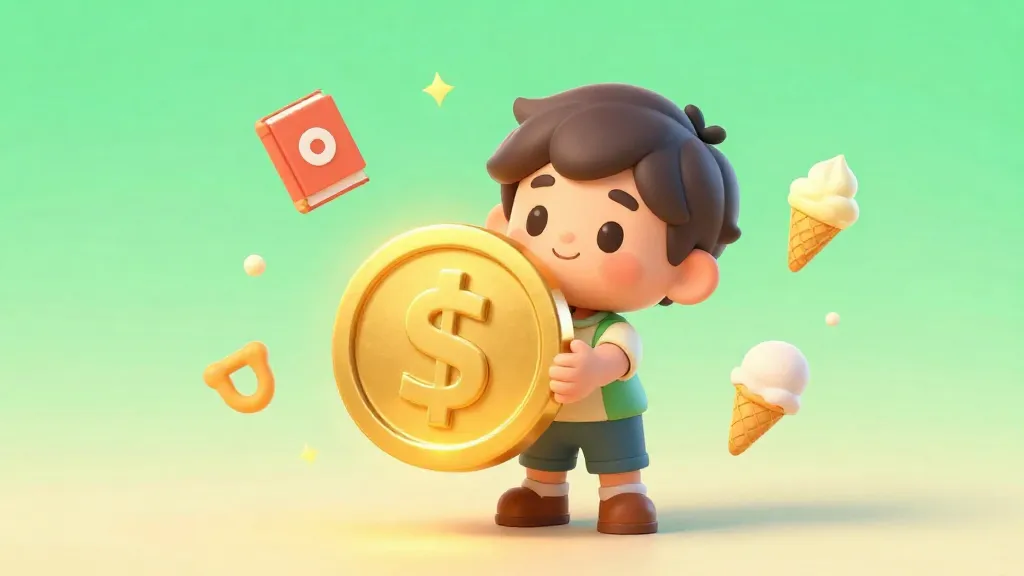
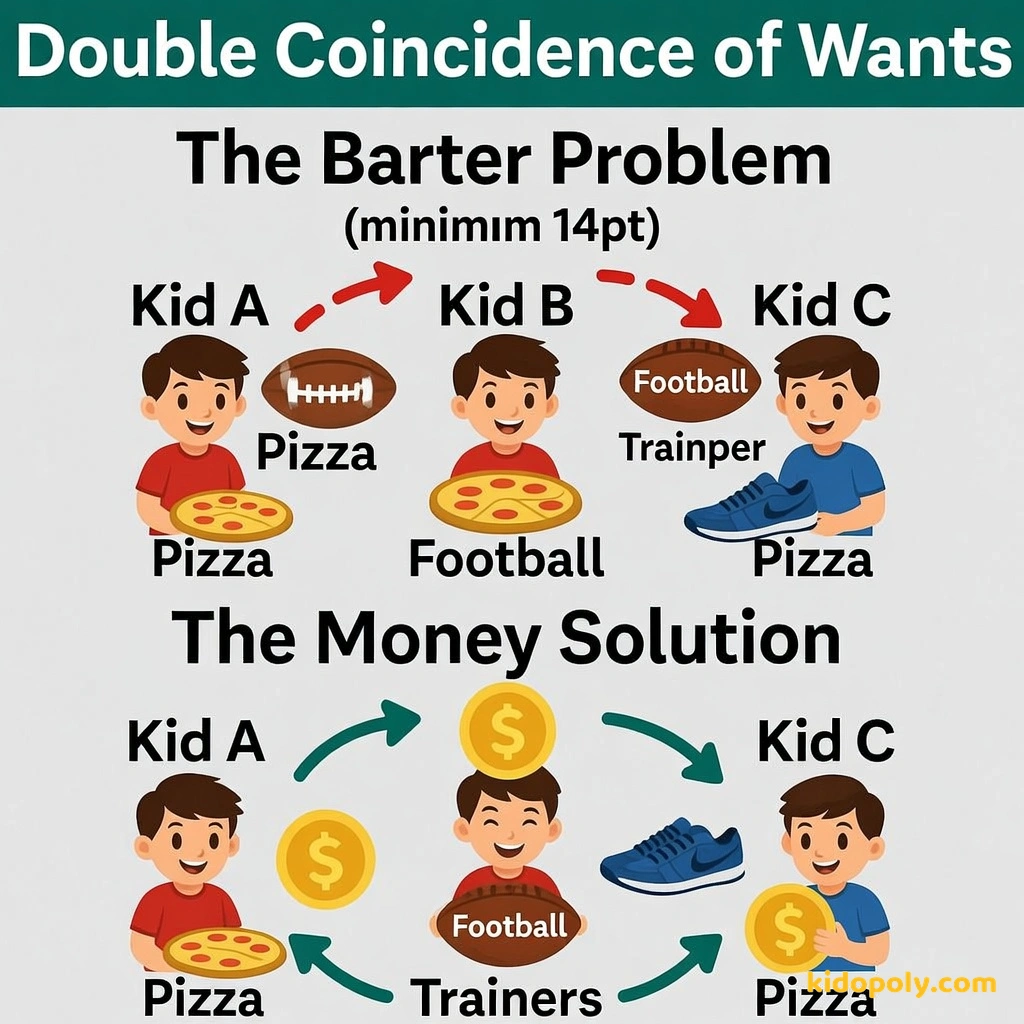
Imagine you have a delicious pepperoni pizza, but you really want a football. Your friend has a football, but they don't want pizza: they want new trainers. Another kid has trainers, but they want a book! How do you all get what you want?
This confusing puzzle is exactly why humans invented money. While it might look like just pieces of paper or shiny coins, money is actually a brilliant social agreement that allows us to trade with anyone, even if we don't have exactly what they want to swap.
The Great Swap Shop Problem
Before money existed, people used a system called barter. This meant trading one thing directly for another. If you had a basket of apples and wanted a wooden toy, you had to find someone who had a toy and specifically wanted apples.
Economists call this the double coincidence of wants. It is a fancy way of saying two people must want exactly what the other person is offering at the exact same time. As you can imagine, this made shopping very difficult and took a long time!
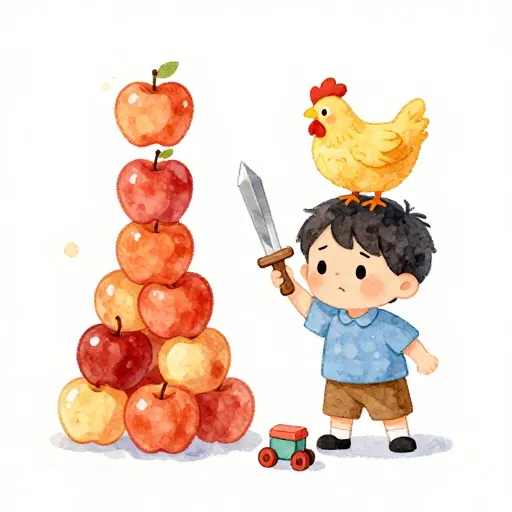
Imagine you are at school and want a blue pen. The person with the pen wants a sticker. You don't have a sticker, but you have a juice box. You have to find someone who wants a juice box and has a sticker, trade with them, and then go back to get the pen. Money skips all those steps!
Finn says:
"So if I want a cookie but the baker wants a toy I don't have, I'm just stuck being hungry? That sounds like a terrible system!"
Money was the genius solution to this problem. Instead of carrying around heavy baskets of fruit or chickens to trade, people agreed to use one special item that everyone would accept. This made money a medium of exchange, which is a tool that acts as a middleman for every trade.
The Three Superpowers of Money
For something to count as real money, it needs to be able to do three specific jobs. Think of these as the three superpowers that turn an ordinary object into a tool for trade:
- Medium of Exchange: As we saw, it must be something everyone accepts as payment.
- Store of Value: If you put a dollar in your piggy bank today, it should still be worth a dollar next month. It doesn't rot like an apple or grow old like a puppy.
- Unit of Account: It helps us measure how much things are worth. It is much easier to say a bike costs $100 than to say it costs 500 bananas or 12 pairs of socks.
Man is an animal that makes bargains: no other animal does this: no dog exchanges bones with another.
Why Can't Anything Be Money?
If money is just an idea we agree on, why don't we use leaves from trees or pebbles from the beach? For money to work well, it needs to have a few special physical traits.
First, it needs portability, meaning it's easy to carry around. Second, it needs divisibility, which means you can break it into smaller pieces to buy cheap things. Finally, it needs durability, so it won't fall apart if it gets wet or spends a year in your pocket.
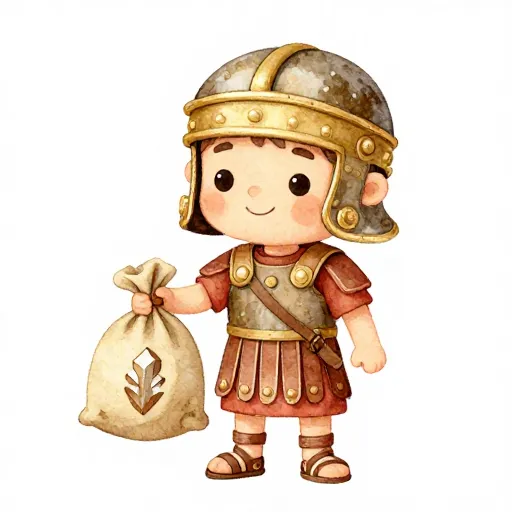
In ancient Rome, salt was so valuable that soldiers were sometimes paid with it! The word 'salary' actually comes from the Latin word for salt, 'sal.' Imagine getting a bag of salt instead of a paycheck today!

Mira says:
"It's like how everyone in my favorite game agrees that 'Gems' are worth a new dragon skin. We all just decided they are valuable!"
The Secret Ingredient: Trust
Here is the most mind-blowing part: a $10 bill is actually just a piece of paper (or plastic). It doesn't have any use on its own. You can't eat it, you can't wear it, and you can't build a house out of it.
Money only works because of trust. We all believe that the shopkeeper will take our money, and the shopkeeper believes the bank will take it, and the bank believes the government stands behind it. Money is a shared story that we all agree to believe in so that the world keeps turning.
Money is just an idea.
If we used heavy seashells as money: - 1 seashell = 1 candy bar - 50 seashells = 1 toy car - 500 seashells = 1 bike To buy a bike, you would need to carry a bag weighing about 5 kilograms (11 pounds) just to pay the shopkeeper. Paper money is much lighter!
Is Digital Money Real?
Most of the money in the world today isn't even physical! When your parents tap a card at the shop or buy V-Bucks in a game, no paper money changes hands. This is called digital money.
It works exactly like physical cash because it represents the same currency. Even though you can't touch it, it is still a record of value that everyone agrees is real. Whether it's a gold coin from the past or a number on a screen today, it's all part of the same big system of trade.
You can see it and touch it. It works even if the power goes out or the internet is down. It helps you feel exactly how much you are spending.
It can't be lost in the street or stolen from your pocket. You can send it across the world instantly to buy things from other countries.
Finn says:
"So money is basically a giant game of pretend that everyone in the whole world takes very seriously? That's actually kind of cool."
Weird Things Used as Money
Because money is based on agreement, humans have used some very strange things as currency over thousands of years. As long as a group of people agrees it has value, it can be money!
- Shells: In many parts of the world, cowrie shells were used for centuries.
- Salt: Roman soldiers were sometimes paid in salt, which is where we get the word salary.
- Giant Stones: On the island of Yap, people used massive limestone discs called Rai stones that were way too heavy to move!
- Cigarettes: In places like prisons or during wars, people have used cigarettes as a way to trade for food and supplies.
An investment in knowledge pays the best interest.
Try creating your own 'Family Currency'! Draw some special tokens on paper. Agree with your parents what they are worth: maybe 5 tokens equals an extra 10 minutes of screen time, or 10 tokens equals picking the movie for Friday night. See how quickly everyone starts treating those pieces of paper like real treasure!
How Money Changed Form
Understanding what money is helps you see the world differently. It's not just about getting more stuff: it's about understanding how we all work together to solve the giant puzzle of trading.
To learn more about how we got from seashells to credit cards, check out the history-of-money. If you want to know why a $5 bill can buy a sandwich, head over to why-money-has-value.
Something to Think About
If you and your friends were stuck on a deserted island, what object would you choose to be your 'money'?
Think about what is easy to find, what will last a long time, and why everyone would agree it is valuable. There is no right answer, it is all about what you can agree on!
Questions About How Money Works
Why can't I just print my own money at home?
Are things like Robux or V-Bucks real money?
Is gold still used as money?
You're a Money Expert!
Now you know the big secret: money isn't just paper or coins, it's a brilliant way for humans to work together. Next time you see a price tag or tap a card, remember that you are taking part in a giant, worldwide agreement! Want to see how this all started? Head over to our page on the History of Money to see the first coins ever made.