In 2009, someone using the fake name Satoshi Nakamoto created a new kind of money that doesn't need banks, can't be controlled by any government, and lives entirely on the internet.
Today, that invention, Bitcoin, is worth over a trillion dollars. But while some people have made fortunes, others have lost their life savings. To understand this world, you need to learn how cryptocurrency works and why it is so different from the money in your pocket.
Imagine you are playing a video game and you earn 500 gold coins. You can use those coins to buy a new sword or a cool outfit for your character. But those coins only exist inside that game. If you try to use them to buy a real-life pizza, the shop owner will think you are joking.
Cryptocurrency is like those game coins, but with a major twist. It is digital money that uses high-level math called encryption to make it secure. Unlike your game gold, people use crypto in the real world to buy things, and many people treat it like a digital version of gold or stocks.

The first ever real-world purchase made with Bitcoin was for two pizzas in 2010. A programmer paid 10,000 Bitcoins for them. At today's prices, those pizzas would be worth hundreds of millions of dollars!
What Exactly Is It?
To understand crypto, you have to think about how regular money works. When you buy something with a debit card, a bank sits in the middle. The bank checks its computer to make sure you have the money, deducts it from your account, and sends it to the shop.
Cryptocurrency was invented to cut out the middleman. It is decentralized, which means no government or bank is in charge of it. Instead of one bank keeping a secret list of everyone's money, cryptocurrency uses a shared digital ledger called a blockchain.

If you buy something like bitcoin or some cryptocurrency, you don’t really have anything that is producing anything. You’re just hoping the next guy pays more.

Finn says:
"So if there is no bank, who do I call if I send my money to the wrong person by mistake?"
How Does It Actually Work?
Imagine a giant notebook that exists on thousands of computers all over the world at the same time. Every time someone sends or receives crypto, that transaction is written into this notebook. This notebook is the blockchain.
Because everyone on the network has a copy of this notebook, it is almost impossible to cheat. If you tried to tell the network you had a million dollars when you didn't, the other computers would check their copies of the notebook, see you were lying, and reject your transaction.
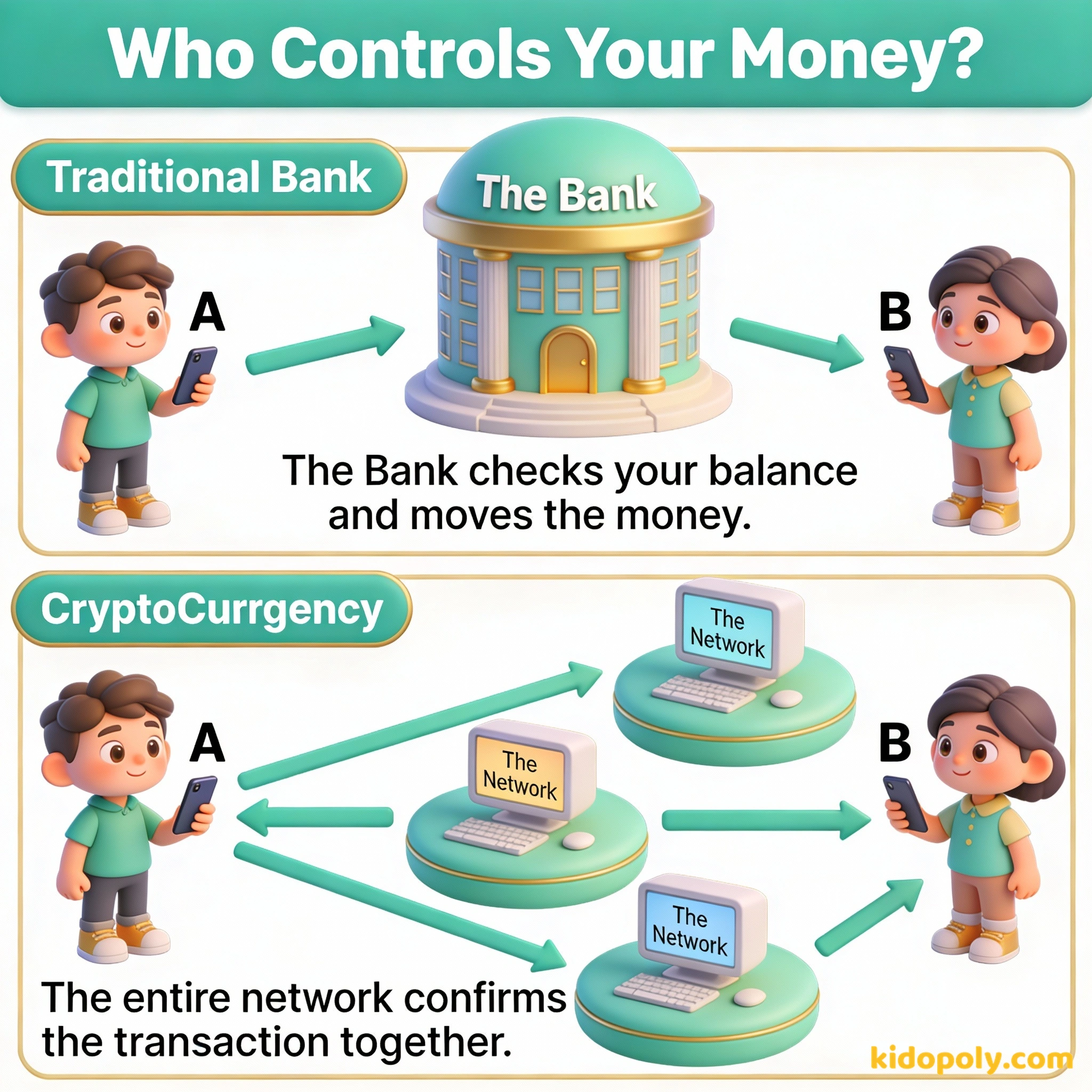
This system makes the money secure without needing a bank manager or a vault. You can read more about the technical side of this in our guide to blockchain-explained.
Major Players: Bitcoin and Beyond
There are thousands of different cryptocurrencies today, but they aren't all the same. Most people start by learning about the two biggest names in the game:
- Bitcoin: This was the very first cryptocurrency. It was designed to be a digital version of cash that is limited in supply, like gold.
- Ethereum: This is the second-largest crypto. It does more than just move money: it allows people to build apps and programs directly onto its blockchain.
Bitcoin has a hard limit: there will only ever be 21,000,000 coins created. Current coins: ~19,600,000 Remaining coins to be found: ~1,400,000 Because the supply is limited, fans of Bitcoin believe it will become more valuable over time as more people want it.

Mira says:
"It is kind of like trading rare cards. The card itself is just paper, but it is worth a lot because everyone agrees it is special and there aren't many of them!"
Why Do Prices Go Up and Down?
If you look at a chart of Bitcoin's price, it looks like the world's scariest rollercoaster. One day it might be worth $60,000, and a few months later it might drop to $30,000. This is called volatility.
Regular companies, like Apple or Disney, have buildings, products, and profits. Their stock price is usually based on how much money the company earns. Cryptocurrency doesn't have earnings or products. Its value is based entirely on speculation, which is a fancy way of saying it is worth whatever people are willing to pay for it today.

Bitcoin is a remarkable cryptographic achievement. The ability to create something which is not duplicable in the digital world has enormous value.
It's the future of money because it's fast, global, and doesn't need banks.
It's too risky and uses too much electricity, making it bad for the planet.
Is It Real Money?
This is a tricky question. In some ways, yes. You can use it to buy things at certain shops, and you can trade it for regular dollars or euros. However, most people don't use it to buy lunch because the price changes so fast.
Imagine if the price of a chocolate bar was $1 in the morning, $5 at lunch, and 50 cents by dinner time. That would make it very hard to use as a regular currency. This is why many people view crypto more like a risky investment than a way to pay for groceries. You can compare the two in our page on crypto-vs-regular-money.
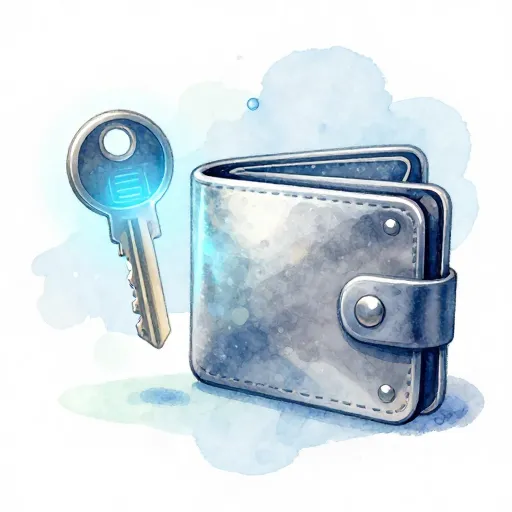
Imagine you have a magic digital wallet. If you share your 'Public Key' (like an email address), anyone can send you money. But if you lose your 'Private Key' (like your super-secret password), your wallet is locked forever, even if it has a billion dollars inside!
Finn says:
"Wait, if I have to be 18 to buy it, why is everyone at school talking about it?"
The Honest Truth About Risk
Because crypto is so new and lives entirely online, it comes with big risks. First, if you lose the password to your digital wallet, your money is gone forever. There is no "Forgot Password" button that can call a bank for help.
Second, the world of crypto is full of scams. Because transactions can't be reversed, once you send money to a scammer, it is gone. Finally, because the price can drop so quickly, many people have lost a lot of money by buying in when the price was high and panicking when it fell.

I do think the tax on the poor is that people are being sold a dream of getting rich quick with crypto.
A Short History of Crypto
Should Kids Invest in Crypto?
In most places, you have to be at least 18 years old to buy or sell cryptocurrency on your own. While the technology is exciting, it is also one of the riskiest things you can do with money.
If you are interested in crypto, the best thing to do is learn. You can follow the prices, read about how the technology is changing, and talk to your parents about it. Think of it like a science experiment: it is fascinating to watch, but you should understand the rules before you jump in.
Something to Think About
If you could design your own kind of money, what rules would you make for it?
Think about whether you would want a bank to help you if you made a mistake, or if you would prefer to have total control, even if it meant more risk. There are no right answers, just different ways of thinking about value!
Questions About Investing
Can I buy a fraction of a Bitcoin?
Is cryptocurrency legal?
Where does cryptocurrency come from?
Ready for the Next Level?
Cryptocurrency is just one part of the huge world of investing. Now that you know the basics, you might want to learn about the specific coin that started it all in our what-is-bitcoin guide, or see how this tech compares to the dollars in your bank account in crypto-vs-regular-money.
