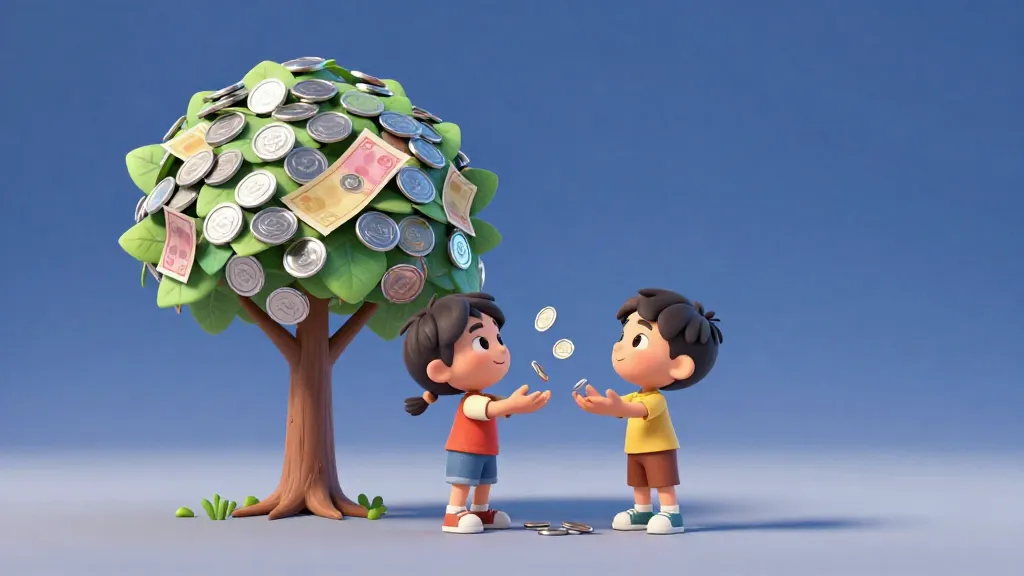
What if someone paid you £1 every three months just because you owned a single sheet of paper?
That might sound like a magic trick, but it is actually one of the coolest parts of the stock market. When you own shares in a company, you are a part-owner, and when that company makes a profit, they often send you a 'thank you' payment called a dividend.
Imagine you and your friends started a lemonade stand. You all chipped in money to buy the lemons and sugar, making you all owners. At the end of the day, after paying for the supplies, you have £10 left over.
Instead of keeping all that money to buy a new sign, you decide to give each friend £1 as a reward for helping out. That £1 is a dividend. In the grown-up world, some of the biggest companies do this exact same thing with millions of people.
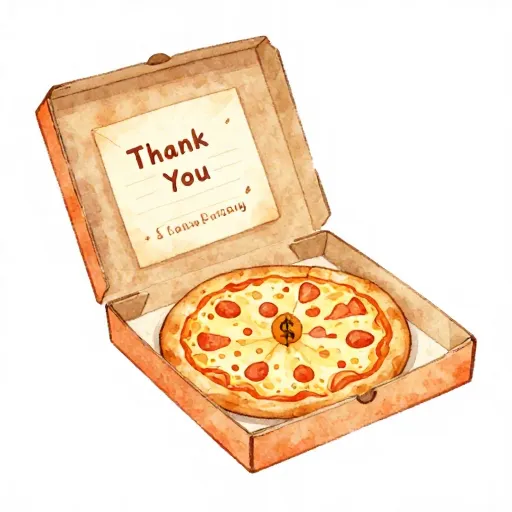
Imagine you own 100 shares of a company. Every three months, they send you enough money to buy a large pizza. You didn't have to work for it, you just had to own the shares. That is the power of dividends!
How Dividends Actually Work
When a company like Coca-Cola or McDonald's makes money, they have to decide what to do with their profits. They could use it to build more factories, or they could give some of it back to the people who own the company: the shareholders.
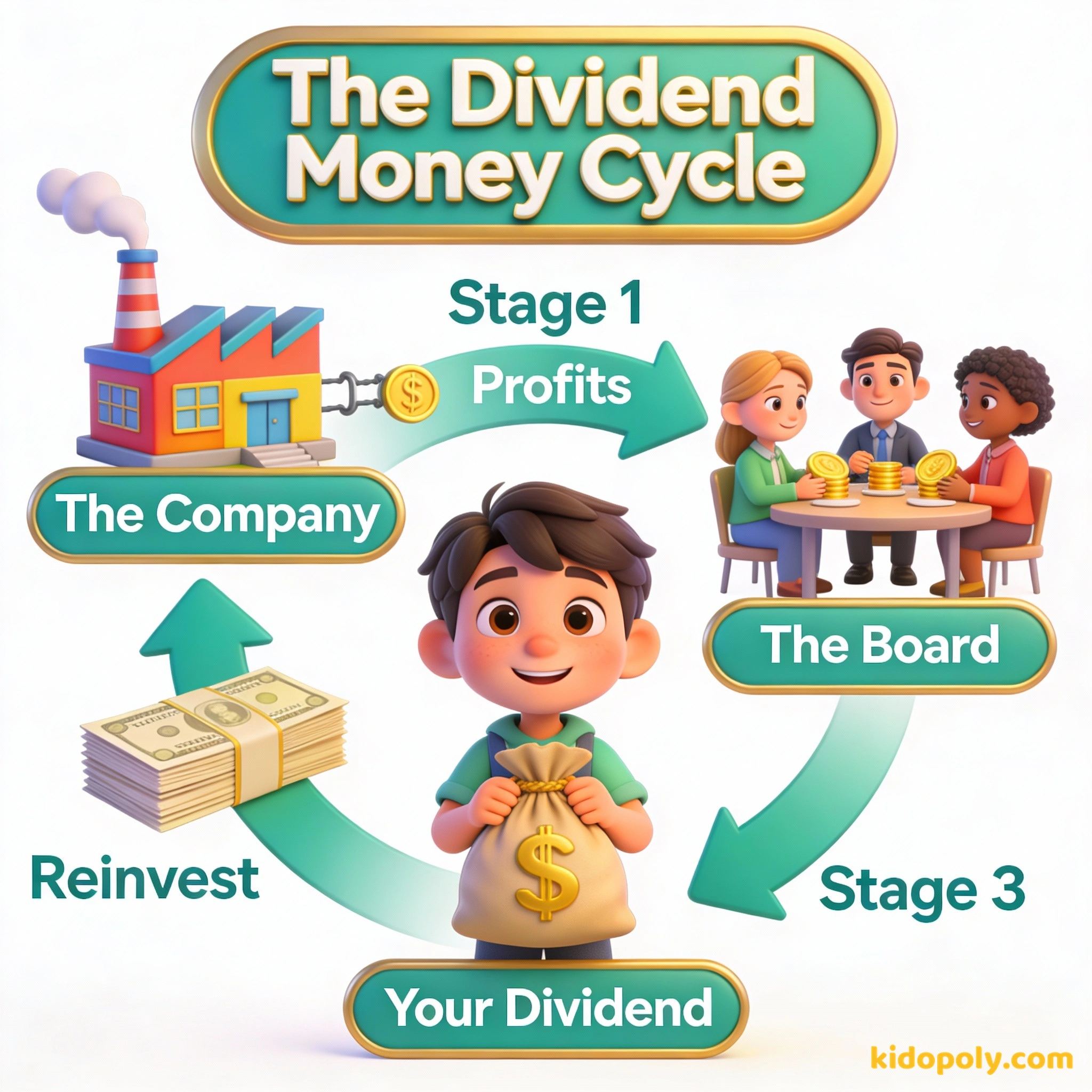
If the company's leaders (the Board of Directors) decide to pay a dividend, they announce how much money they will pay for every single share you own. If you own one share, you get one payment. If you own 100 shares, you get 100 payments!

Finn says:
"Wait, so if I own a share of a toy company, they might actually send me money to buy more toys? That feels like a cheat code!"
Most companies do not send you a physical check in the mail anymore. Instead, the money usually appears magically in your brokerage account, which is like a special bank account for your investments.

Do you know the only thing that gives me pleasure? It is to see my dividends coming in.
The Timing: When Do You Get Paid?
Companies do not just pay whenever they feel like it. They usually have a schedule. Most companies in the UK and USA pay dividends quarterly, which means every three months or four times a year.
- Quarterly: Every 3 months (the most common)
- Monthly: Some special companies pay every single month
- Annually: Some companies only pay once a year
Some companies have paid dividends every single year for over 100 years! This includes companies like Coca-Cola and General Mills (the people who make Cheerios).
Because they pay regularly, many people use dividends as a form of passive income. This is money you earn without having to do a job, just because you own something valuable.
Why Some Companies Pay and Others Do Not
Not every company pays a dividend. If you own shares in a brand-new tech company or a startup, you probably will not get a dividend for a long time.
They use their profits to build new things, invent new tech, and grow as fast as possible. This makes the stock price go up.
They are already huge and stable. They give their extra profit back to you in cash because they don't need it all to grow.
Newer companies are usually 'Growth Stocks.' They want to take every penny they earn and reinvest it to grow bigger and faster. Think of it like a teenager who eats a lot of food to grow tall.

Mira says:
"It is like a tree. A young tree needs all its energy to grow branches, but an old tree has enough energy to drop fruit for everyone else."
Established companies, often called 'Blue Chip' stocks, are like fully grown adults. They are already huge and very profitable, so they have extra cash to share with their owners. These companies are often the stars of dividend investing.
The Superpower: The Money Snowball
Getting a few pounds in your account is fun, but the real magic happens when you use that money to buy even more shares. This is called a Dividend Reinvestment Plan, or DRIP for short.
Imagine you get a £5 dividend. Instead of buying a bag of sweets, you use that £5 to buy a tiny bit more of the company. Now, next time the company pays a dividend, you have more shares, so you get a bigger payment.
The Power of 10: If you own 10 shares of a company... And they pay a £1 dividend per share... You get £10 every time they pay! If they pay 4 times a year (quarterly): £10 x 4 = £40 per year. That is £40 for doing absolutely nothing!
This is a real-life version of compound interest. Over many years, your 'money snowball' gets bigger and bigger. Eventually, the dividends themselves might be enough to buy whole new shares every month without you ever adding more of your own pocket money.

Our favorite holding period is forever.
Are Dividends a Guarantee?
It is important to remember that dividends are not a promise. If a company has a really bad year and loses money, they might 'cut' or stop their dividend to save cash.
However, some companies are so proud of their dividends that they try never to miss a payment. There are companies known as Dividend Kings that have increased their dividend payments every single year for over 50 years straight!
Finn says:
"So I should look for the companies that have been paying for a long time? Like the 'grandparents' of the stock market?"
Next time you are at the shops, look at the brands around you. Brands like Disney, Nike, or Apple. Go home and search for '[Company Name] dividend' online. See if they pay their owners and how often they do it!
How to Spot a Dividend
If you look up a company on a finance website, you will see a lot of confusing numbers. To find the dividend, look for the dividend yield. This is usually shown as a percentage.
If a stock costs £100 and has a 3% yield, it means they pay roughly £3 in dividends per year. It is like an interest rate for your stocks. Learning to find these numbers makes you feel like a financial detective.

Blue-chip stocks with a long history of increasing dividends are the safest way to invest.
Investing in dividends turns you from a consumer who just buys things into an owner who gets paid by the things you use. Whether it is the trainers on your feet or the phone in your hand, being an owner is a total power move.
Something to Think About
If you had a 'money snowball' that started paying you £10 every month, would you spend it on something fun now, or reinvest it to try and turn it into £100 a month later?
There is no right or wrong answer here. It is all about what you value most: a treat today or a bigger harvest tomorrow!
Questions About Investing
Do all stocks pay dividends?
Can a company stop paying dividends?
Do I have to pay to get dividends?
Start Your Snowball
Dividends are one of the most exciting ways to see your money work for you. Now that you know how they work, why not explore which companies are the most famous for their payments? Check out our guide to the best-stocks-for-kids to see which dividend-paying companies are favorites for young investors!