Over 400 years ago, Dutch spice traders invented the stock market so they could share the cost (and the profits) of sending ships to Asia.
Today, millions of people around the world buy and sell tiny pieces of companies every single day using their phones. This giant system is called the stock market, and it is one of the most powerful tools in the world for building wealth.
Imagine a giant marketplace. It is not like a supermarket where you buy milk, or a farmers' market where you buy carrots.
Instead, this is a place where people buy and sell tiny pieces of famous companies. If you have ever wanted to own a part of the company that makes your favorite video games or your favorite sneakers, the stock market is where that happens.
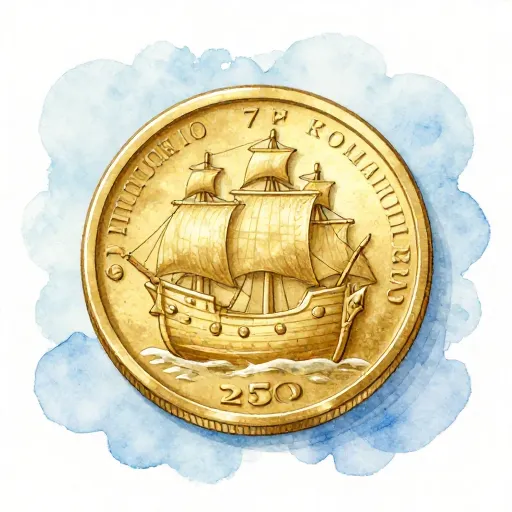
The world’s very first stock exchange was created in Amsterdam in 1602! It was built so people could buy shares in the Dutch East India Company, which sent ships all over the world to trade spices like cinnamon and pepper.
The World’s Biggest Marketplace
A stock market is basically a shopping mall for investors. In the same way you go to a shop to find a specific toy, investors go to the stock market to find specific companies to own.
But here is the cool part: there is no physical "stuff" to carry home. When you buy something on the stock market, you are buying a stock, which is a digital certificate of ownership.

Mira says:
"The stock market is like a giant global group project where millions of people are trying to figure out what a company is worth."
Before you can start buying, you need to understand that this marketplace is made of smaller sections called exchanges. Think of these as different stores within the giant mall of the stock market.
Where the Action Happens: Stock Exchanges
There are many different stock exchanges around the world. The two biggest and most famous ones are located in New York City.
- The New York Stock Exchange (NYSE): Known as "The Big Board," this is the oldest exchange in the U.S. It is famous for its marble building and the loud bell that rings to start the day.
- NASDAQ: This is a purely digital exchange. It is where most of the world’s big tech companies, like Apple and Google, are traded.
- London Stock Exchange (LSE): One of the oldest in the world, located right in the heart of London.

In the short run, the market is a voting machine, but in the long run, it is a weighing machine.
How a Trade Actually Happens
In the old days, people had to shout and wave pieces of paper on a crowded floor to buy a stock. Today, it mostly happens through high-speed computers.
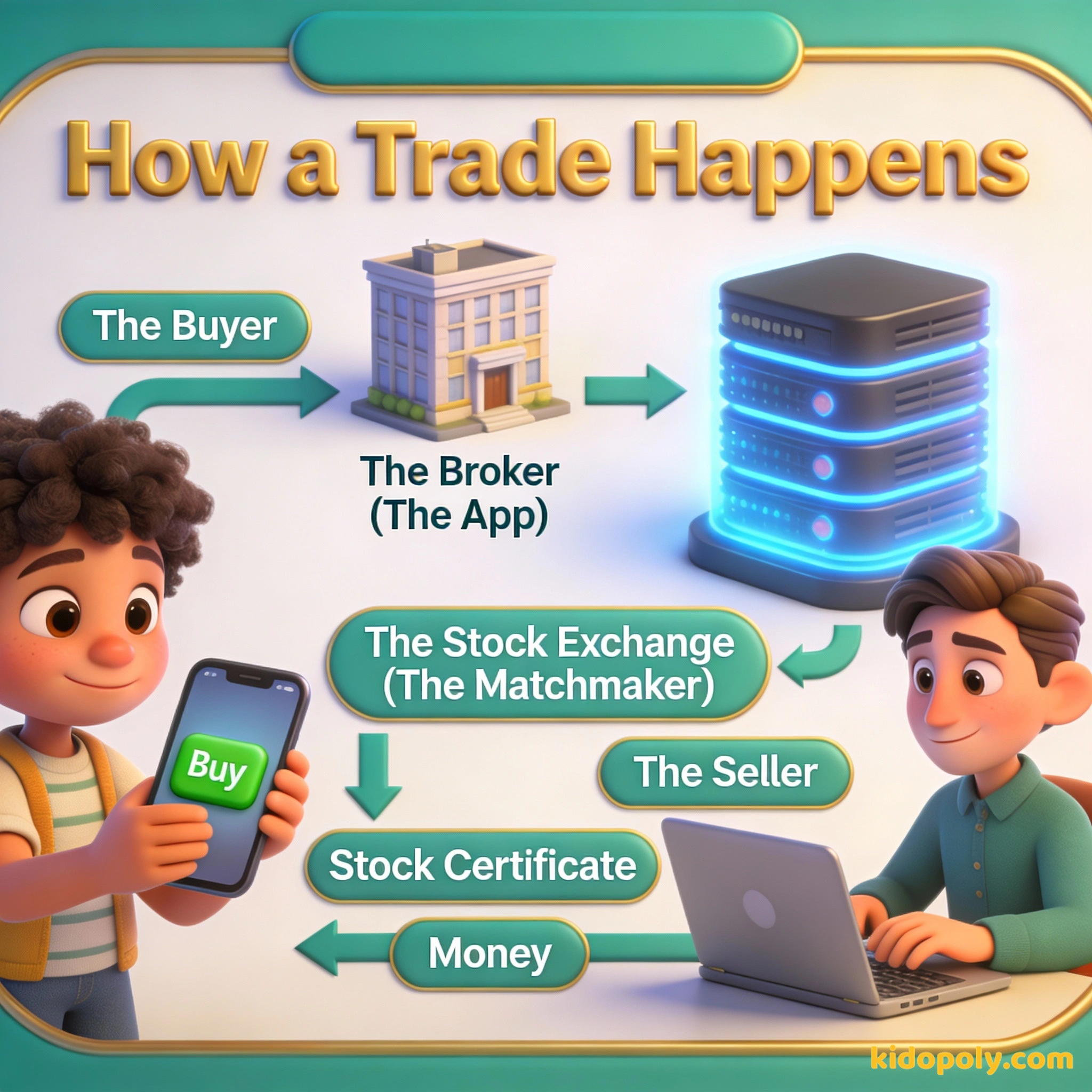
When you decide to buy a stock, you use a broker. This is usually an app or a company that has permission to talk to the stock exchange for you.
- You tell your broker which stock you want and how much you are willing to pay.
- The broker sends your request to the stock exchange.
- The exchange acts like a giant matchmaker, finding someone else who wants to sell that exact stock at that exact price.
- Once the match is made, the money moves from your account to the seller, and the ownership of the stock moves to you.
Market Scorecards: The Indices
With thousands of companies being traded every day, how do we know if the stock market is doing well or having a bad day? We use a stock index.
An index is like a "greatest hits" list or a scorecard. It tracks a specific group of companies to see how they are performing as a team. If the index is up, it usually means the economy is feeling strong.

Finn says:
"If the S&P 500 goes up, does that mean every single stock in it went up that day?"
You might hear grown-ups talk about the S&P 500. This is an index that tracks 500 of the biggest companies in the United States. In the UK, people track the FTSE 100, which follows the 100 largest companies on the London Stock Exchange.
Imagine an index with only 3 companies: Company A: $10 Company B: $20 Company C: $30 If the index is just the average, the index score would be $20. If Company C grows to $60, the new average is $30. Even if the others didn't change, the index went up by 50%!
Bulls and Bears: The Market's Moods
The stock market can be a bit like the weather: sometimes it is sunny and everything goes up, and sometimes it is stormy and everything goes down. Investors use two animals to describe these moods.
Bulls are optimistic. They believe the economy is growing and prices will go up. They 'charge' ahead with confidence.
Bears are cautious. They believe the economy is slowing down and prices will go down. They want to 'hibernate' and protect their money.
A bull market happens when stock prices are rising for a long time. Bulls thrust their horns UP when they attack, which is why they represent a rising market. This is usually a time when people feel confident about the future.

Don't look for the needle in the haystack. Just buy the haystack.
A bear market is the opposite. It happens when stock prices fall by 20% or more from their recent highs. Bears swipe their claws DOWN when they attack, representing falling prices. It can be scary, but history shows that bear markets are a normal part of how the system works.
The Opening Bell: Market Hours
Unlike the internet, the stock market is not open 24 hours a day. It has specific market hours when trading is allowed to happen.
In New York, the stock market usually opens at 9:30 AM and closes at 4:00 PM. These hours give the humans (and the computers) a chance to rest and process all the news that happened overnight.
Finn says:
"It's weird that the market closes. My video games and YouTube never shut down at 4:00 PM!"
A Quick Trip Through History
The stock market wasn't always digital. It started because traveling across the ocean was very dangerous and expensive.
A History of the Marketplace

The stock market is a device for transferring money from the impatient to the patient.
What Happens Next?
Understanding the stock market is like learning the rules of a giant game. Now that you know how the marketplace works, you can start exploring what actually makes a stock valuable.
Pick three companies you know, like Disney, Roblox, or Apple. Ask a grown-up to help you look up their 'ticker symbols' (short 3-4 letter codes) and see if they have been 'green' (up) or 'red' (down) over the last week.
Something to Think About
If you could own a tiny piece of any company in the world, which one would it be and why?
There are no right or wrong answers here! Your choice might be based on a product you love, a company you think is helping the planet, or a brand you use every day.
Questions About Investing
Can kids buy stocks on the stock market?
What happens if a stock exchange loses power or the internet goes down?
Does the stock market ever close for holidays?
Your Investing Journey Starts Here
The stock market might seem complicated, but it is really just a giant conversation about what the future is worth. Now that you know the rules of the marketplace, you are ready to learn about the actual 'items' on the shelves: the stocks themselves!