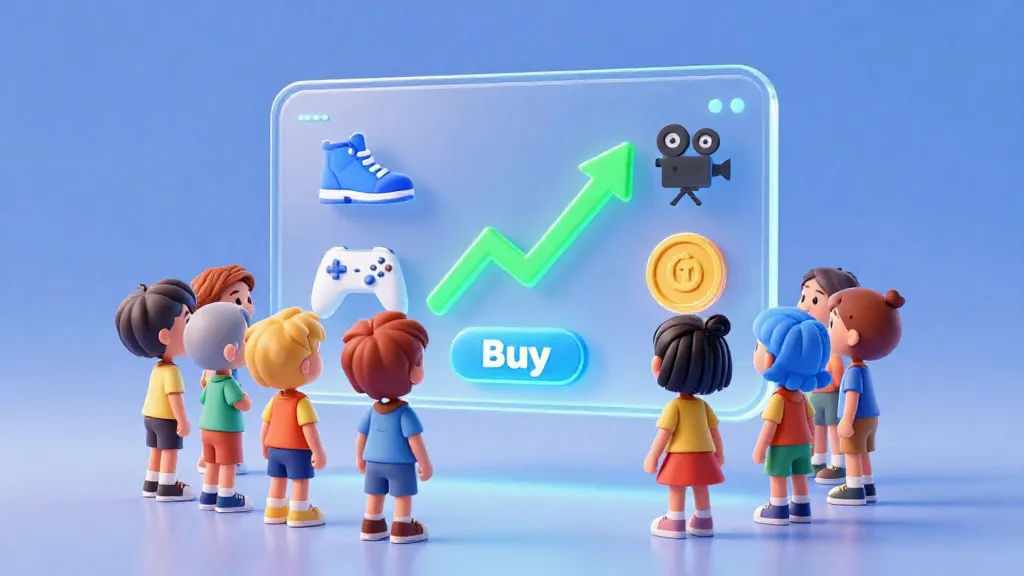
Every time someone buys a pair of Nikes, plays Roblox, or watches a Disney film, the companies behind those products make money. What if some of that money ended up in your pocket?
When you own a stock/what-is-a-stock/), you own a tiny piece of a real-world company. This means you are a shareholder, and as the company grows and succeeds, your small piece can become more valuable. This is the foundation of investing, which is essentially putting your money to work so it can grow over time.
Imagine you could walk into your favorite shop and say, "I own a little bit of this place." It sounds like a movie, but it is actually how the world of business works every single day. Millions of people, including many kids and teenagers, are becoming part-owners of the brands they love through the stock market.

Imagine there is a lemonade stand that is so popular it has a line around the block. The owner wants to buy five more stands but doesn't have the money. They offer you a deal: give them $10 today, and you will own 1% of all the lemonade stands they ever build. That $10 'share' is a stock!
What are Stocks and Why do They Exist?
A stock is like a tiny slice of a very large pizza. The pizza is the company, and the slices are called shares. If a company has one million shares and you own one, you own a one-millionth piece of that business. Even though your slice is small, it is real ownership.
Companies sell these slices because they need money to grow. If a video game company wants to build a new console or a shoe brand wants to open stores in a new country, they need millions of dollars. By selling stocks to the public, they get the cash they need without having to pay back a bank loan. In return, you get to ride along on their journey to success.

If you don't find a way to make money while you sleep, you will work until you die.
How Kids Can Actually Buy Stocks
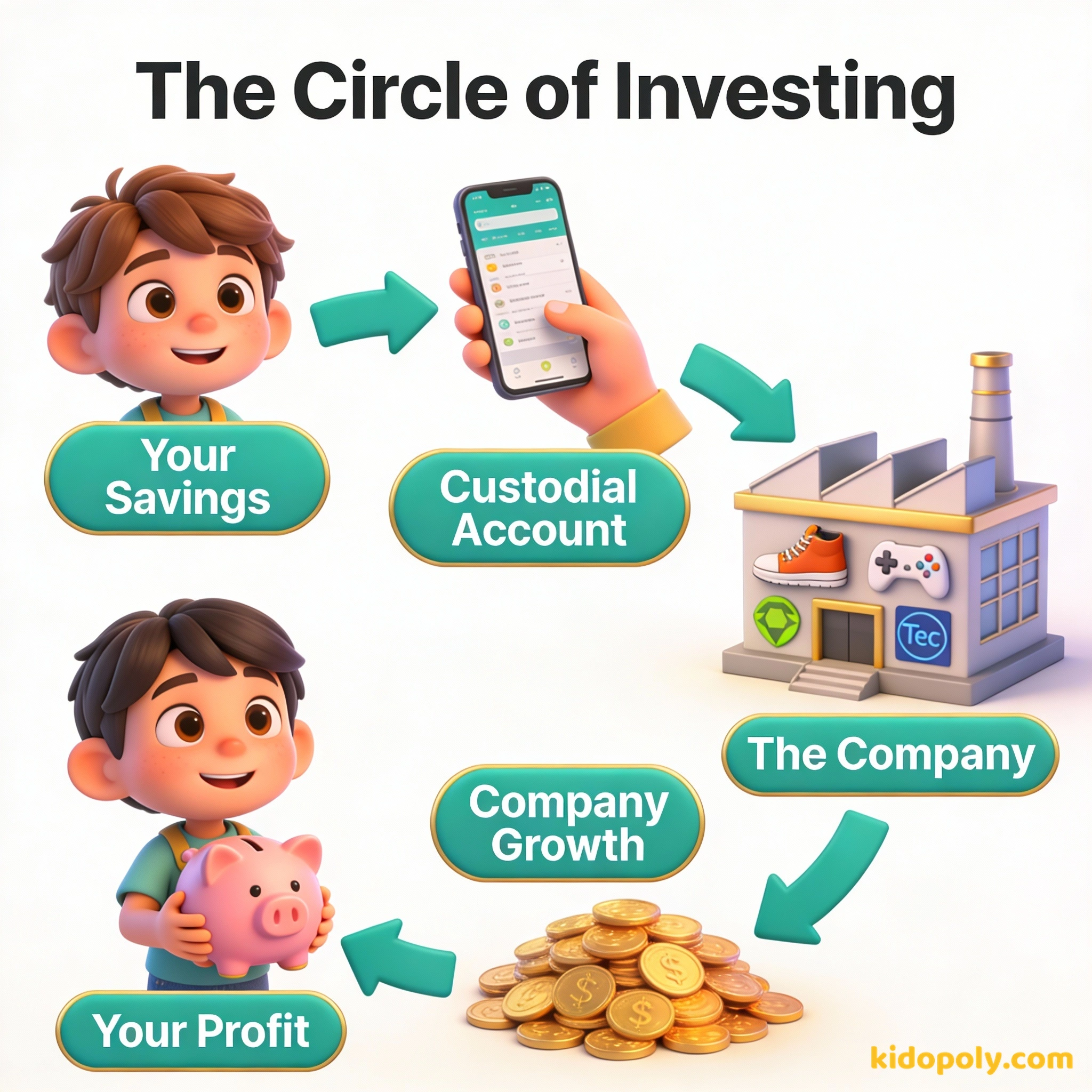
You might be wondering if you can just walk into a bank and ask for some Apple stock. It does not quite work like that, especially for people under 18. Because you are a minor, you cannot legally open a trading account on your own. Instead, you need a custodial account.

Mira says:
"Think of a custodial account like a co-op mode in a video game. You're the main player, but your parent is there to help you navigate the tricky menus!"
This is a special type of account that an adult (usually a parent or guardian) opens for you. The adult technically manages the account, but the money and the stocks inside it belong to you. When you turn 18 or 21, the account transfers fully into your name. Many apps today make this easy, allowing you to track your stocks on a phone while your parents handle the legal bits.
In 1997, a single share of Amazon cost $18. If you had bought just one share back then and held onto it, that investment would have grown into thousands of dollars today because the company became so huge.
Do You Need Thousands of Pounds to Start?
In the old days, if one share of a famous company cost $500, you had to have $500 to get started. That is a lot of grass-cutting or birthday money! Today, things are much easier thanks to fractional shares. This is a game-changer for kid investors.
Share Price: $150 Your Savings: $15 Without fractional shares: You have $0 in stock (you can't afford it). With fractional shares: $15 / $150 = 0.10. You now own 10% of one share! If the company price doubles, your $15 becomes $30.
Fractional shares allow you to buy a "sliver" of a share for as little as $1 or $5. If you want to own a piece of a company but a full share is too expensive, you can just buy a tiny percentage of it. This means you can start your investing journey with whatever amount you have saved up in your piggy bank.
How You Make Money (and the Risks)
There are two main ways your money grows in the stock market. The first is through capital gains. This happens when you buy a share for $10 and, because the company becomes more popular or successful, the price of that share rises to $15. If you sell it, that $5 difference is your profit.
The second way is through dividends. Some companies are so successful that they have extra cash at the end of the year. Instead of keeping it all, they divide it up and send a little bit to every shareholder. It is like a "thank you" payment for owning the stock. You can learn more about this in our guide to dividend-investing.

An investment in knowledge pays the best interest.
However, it is not always a one-way street. The value of a stock can go down as well as up. If a company makes a bad product or people stop buying their things, the price of your shares might drop. This is why investing is different from a savings account at a bank. In a bank, your money is safe but grows slowly. In the stock market, your money has the chance to grow much faster, but there is a risk you could lose some of it.
The price can go up very fast, making you much more money than a bank account ever could. You also get to own companies you actually like.
The price can drop to zero if a company fails. You have to be okay with seeing your balance go down sometimes without panicking.
What Stocks Should You Pick?
Choosing your first stock is an exciting step. Most experts suggest starting with "what you know." Look around your room. What games are you playing? What snacks are you eating? What computer are you using to do your homework? These are all potential companies you could own.

Finn says:
"Wait, so if I buy a share of a pizza company, do I get free pizza? Probably not, but I guess I'd own a tiny bit of every pepperoni they sell!"
You do not need to be a math genius to start. You just need to be observant. If you see that all your friends are suddenly using a new app or wearing a specific brand of hoodie, that is a clue that the company might be doing well. You can find more tips on picking your first shares in our best-stocks-for-kids guide.

Know what you own, and know why you own it.
Your Learning Roadmap
Starting with stocks is like learning a new sport or a musical instrument. You do not have to know everything on day one. Here is how you can continue your journey:
- Level 1: Understand the basics of what-is-a-stock.
- Level 2: Learn how the whole system works in stock-market-for-beginners.
- Level 3: Research specific companies to build your first "Watchlist."
Mira says:
"It is like planting a tree. You don't expect it to be ten feet tall tomorrow morning. You just have to make sure it has water and then be patient while it grows."
Remember, the most important part of investing is time. The earlier you start, the more time your money has to experience the magic of growth. Even a small amount of money invested today could grow into something much bigger by the time you are an adult.
Pick three companies you use every day. Use a finance website with your parents to look up their 'Ticker Symbols' (like AAPL for Apple or DIS for Disney). Check their prices every Monday for a month to see how they move!
Something to Think About
If you could own a tiny piece of any company in the world right now, which one would it be and why?
Think about which companies make products that you think will still be around and popular when you are an adult. There are no right or wrong answers, just your own observations!
Questions About Investing
Can I lose all my money in stocks?
What is the best age to start investing?
Do I have to pay taxes on my stocks?
Your Future as an Owner
You are now one step ahead of most people your age. By understanding that you can be an owner and not just a shopper, you are taking control of your financial future. Your next step? Head over to our guide on how to choose your very first companies to buy!
