
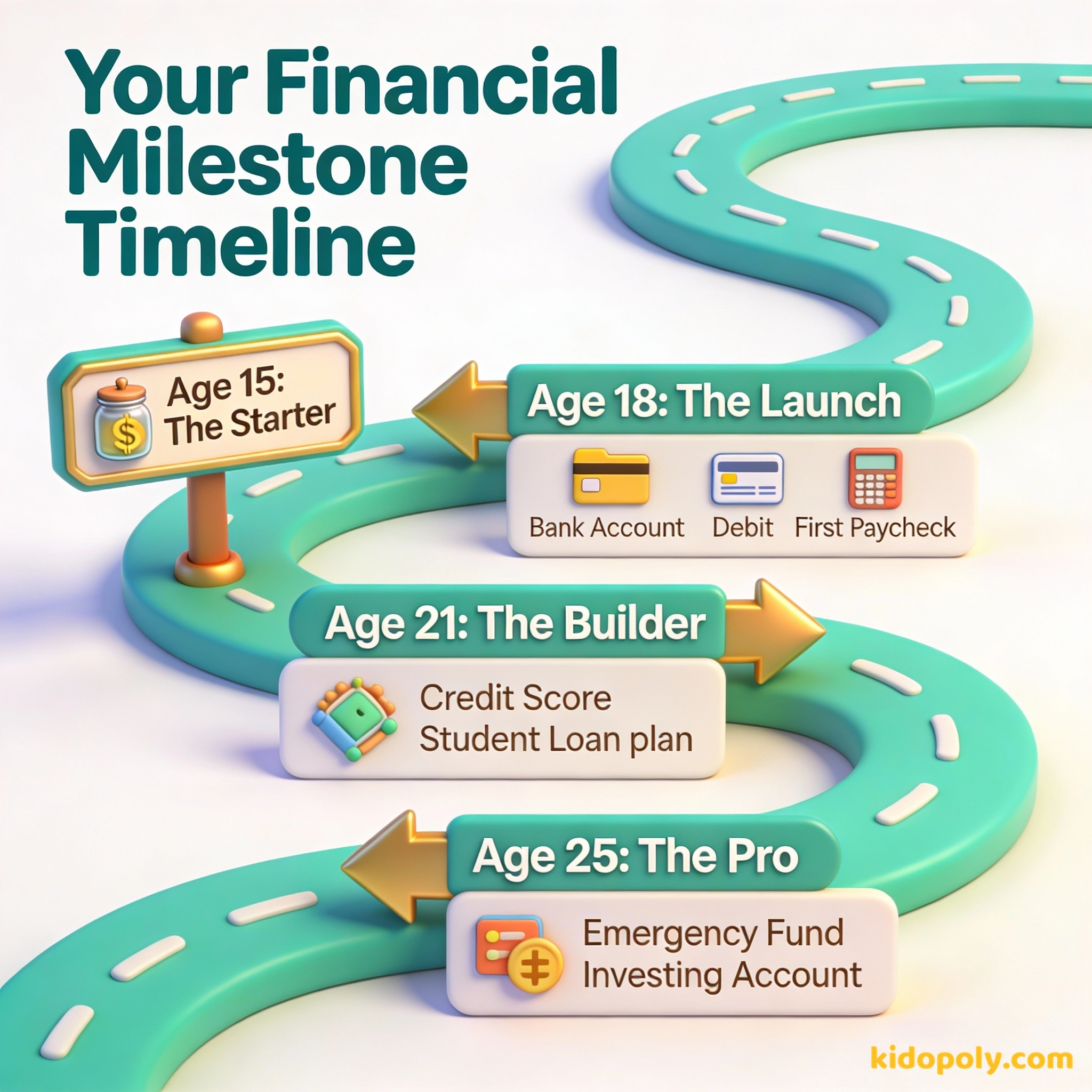
In a few years, you will likely sign a student loan contract, get your first credit card offer, and have to decide whether to start a pension.
The reality is that nobody in school is going to teach you exactly how these things work. This guide covers the financial literacy skills you actually need: the ones that could save or cost you tens of thousands of pounds over your lifetime as you transition into adulthood.
Most people wait until they are 25 or 30 to start taking money seriously. By then, they have often made expensive mistakes with debt or missed out on years of growth. You have a massive advantage right now because time is your most valuable asset.

Someone is sitting in the shade today because someone planted a tree a long time ago.
Financial literacy is not about being a math genius. It is about understanding a few core frameworks that help you make better choices with your cash. Think of it as a survival kit for the real world that keeps you from being trapped by bills later on.
The Essential Money Checklist
Before you turn 18, you should have a basic handle on four main areas. These are the pillars that keep your financial life from collapsing when you move out or start your first full-time job.
- Budgeting: Knowing exactly where your money goes.
- Credit and Debt: Understanding how borrowing money can help or hurt you.
- Investing: Making your money work for you while you sleep.
- Taxes: Understanding that the number on your paycheck is not what you actually take home.

Finn says:
"But wait, if I save all my money for the future, when do I actually get to spend it and have fun?"
Why Your Age is a Superpower
There is a concept called compound interest that sounds boring but is actually like a legal cheat code for wealth. It essentially means you earn interest on your interest. The earlier you start, the less work you have to do later.
Investing £1,000 at age 16: At a 7% annual return, it becomes £27,000 by age 65 without you adding another penny. Investing £1,000 at age 30: At the same 7% return, it only becomes £10,000 by age 65. Starting 14 years earlier nearly triples your money!
If you start putting away a small amount at 16, you will likely end up with much more than someone who starts at 30, even if they save more money than you. This is why financial literacy for teenagers is so urgent. You can't get these years back once they are gone.
Managing Your First Income
Whether you have a part-time job, get an allowance, or receive birthday cash, you need a system. Without a plan, money has a way of disappearing into snacks, gaming skins, and small purchases you don't even remember making.
This is where a budget comes in. A budget is not a restriction on your fun; it is a plan for what you want to achieve. You can learn more about setting specific targets in our guide to budgeting-for-teens.
The 30-Day Tracker: For the next 30 days, write down every single thing you buy. Use a notes app or a small notebook. At the end of the month, highlight anything you bought but didn't actually need or enjoy. That is your 'found money' for next month.
The Reality of Credit and Debt
When you turn 18, companies will start sending you offers for credit cards. They make it sound like free money, but it is actually a high-interest loan. If you don't pay it back in full every month, you can end up in a debt spiral.

Mira says:
"Think of a credit score like a 'Trust Rating.' If you always return what you borrow on time, people are happy to lend to you again!"
Your credit score is a number that tells banks how trustworthy you are. A high score means you can get lower interest rates on a car or a house later. A low score, caused by missed payments or 'Buy Now Pay Later' services, can make your adult life very expensive.
In many places, your credit score doesn't just affect loans. It can also determine how much you pay for car insurance or whether a landlord will let you rent an apartment!
Avoiding the 'Subscription Creep'
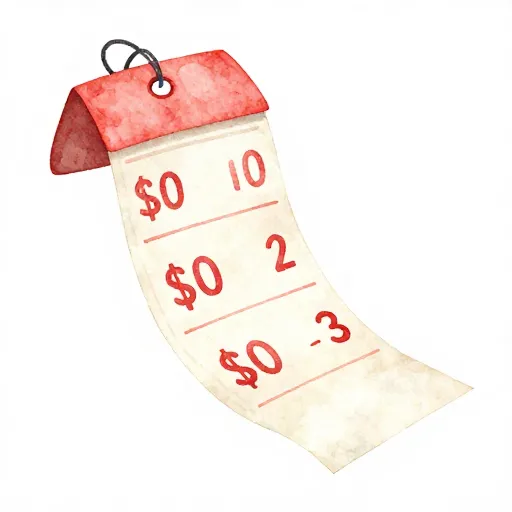
One of the biggest financial mistakes teens make is signing up for too many small monthly payments. It starts with a streaming service, then a gaming pass, then a gym membership you rarely use. This is called subscription creep.
You must gain control over your money or the lack of it will forever control you.
These small amounts might only be £10 each, but five of them add up to £600 a year. That is money that could have been invested or used for a major goal like a first car or a trip with friends. Always track your recurring payments.
Imagine you want to buy a new laptop that costs £800. If you buy it with a credit card and only pay the minimum each month, you could end up paying over £1,500 by the time you're done. Always look at the total cost, not just the monthly payment.
Investing: It's Not Just for Wall Street
Many teens think investing is only for rich people in suits. In reality, you can start with very small amounts. The goal is to buy assets, like stocks or index funds, that grow in value over time.
Finn says:
"How is buying a stock different from just giving someone my money and hoping for the best?"
When you invest, you are becoming a part-owner of companies. Instead of just buying a new pair of shoes from a brand, you could own a tiny piece of that brand. You can dive deeper into how this works in our investing section.

A big part of financial freedom is having your heart and mind free from worry about the what-ifs of life.
What School Didn't Tell You About Taxes
When you get your first 'real' job, you will see a gap between your 'gross pay' and your 'net pay.' Taxes are taken out automatically to pay for things like roads, schools, and healthcare. Knowing how much will be deducted helps you avoid overspending before your check clears.
Keeping your money in a standard savings account is safe, but the interest is often lower than inflation, meaning your money loses buying power.
Investing in the stock market offers higher potential growth but comes with the risk that the value could go down in the short term.
Moving Forward
Financial literacy is a lifelong journey, but the basics you learn now will set the tone for your entire 20s. Start by setting up a first-budget and tracking every penny for one month. You might be surprised where it's all going.
Something to Think About
If you were given £500 today, how would you split it between spending now, saving for a big goal, and investing for the future?
There is no right or wrong answer here. Your choice reflects what you value most right now, whether that is a new experience today or security for tomorrow.
Questions About Learning & Teaching Money
Can I start investing if I'm under 18?
What is the biggest mistake teens make with money?
How do I build a credit score if I can't get a credit card yet?
Your Future Starts Now
You don't need to be an expert today. You just need to be slightly more informed than you were yesterday. Start by looking at our guide on your first-budget to see how simple it can be to take control of your cash.
