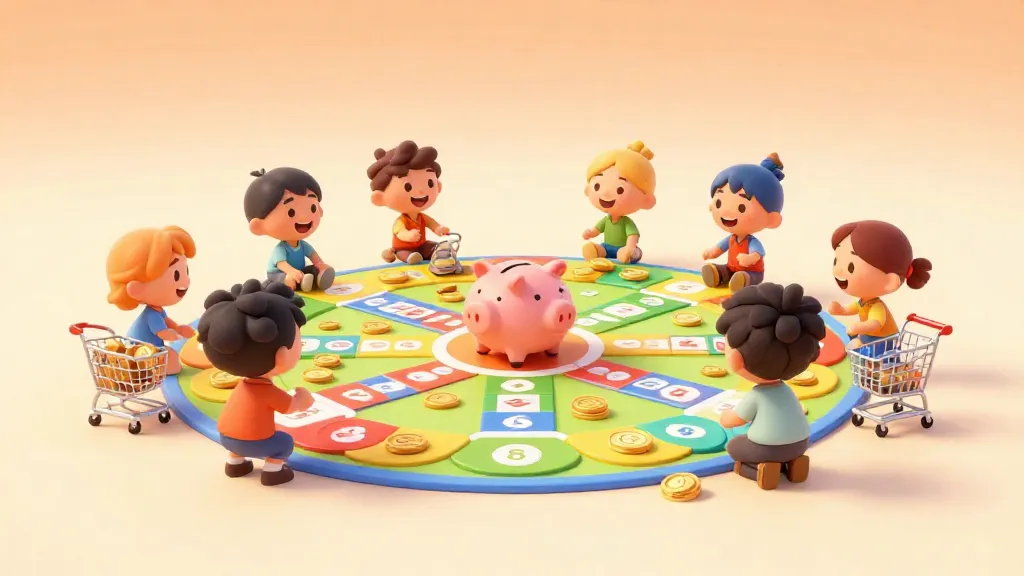
Have you ever tried to explain the concept of inflation or budgeting to a seven year old during a grocery run? Usually, their eyes glaze over before you even finish your first sentence.
The truth is that kids learn financial literacy far more effectively through interactive play than through lectures. By using educational money games, you provide a safe space for them to practice financial decision-making and experience the consequences of their choices without any real world risk.
Most parents assume that money lessons require a textbook or a lecture. However, research consistently shows that games are the most powerful tool for teaching complex systems. When a child plays a game, they are not just memorizing facts, they are practicing the behavior of managing resources.
Studies suggest that children's financial habits are largely formed by the age of seven. Using games early helps set a foundation of positive behaviors before they start handling their own real cash.
Kids who play money games often make better financial decisions later in life. This is not because the games teach them accounting, but because they normalize the process of pausing to think before spending. It turns money management from a chore into a challenge to be solved.

The earlier you start, the better off you are. It’s never too early to start teaching kids about money.
The Best Free Online Money Games
If you are looking for immediate, accessible ways to start, the internet is full of high quality, free resources. Many of these are developed by financial institutions or non-profits to ensure the math is accurate and the lessons are age appropriate.

Finn says:
"If the game gives me a million dollars for winning, does that mean I can buy that huge LEGO set in real life?"
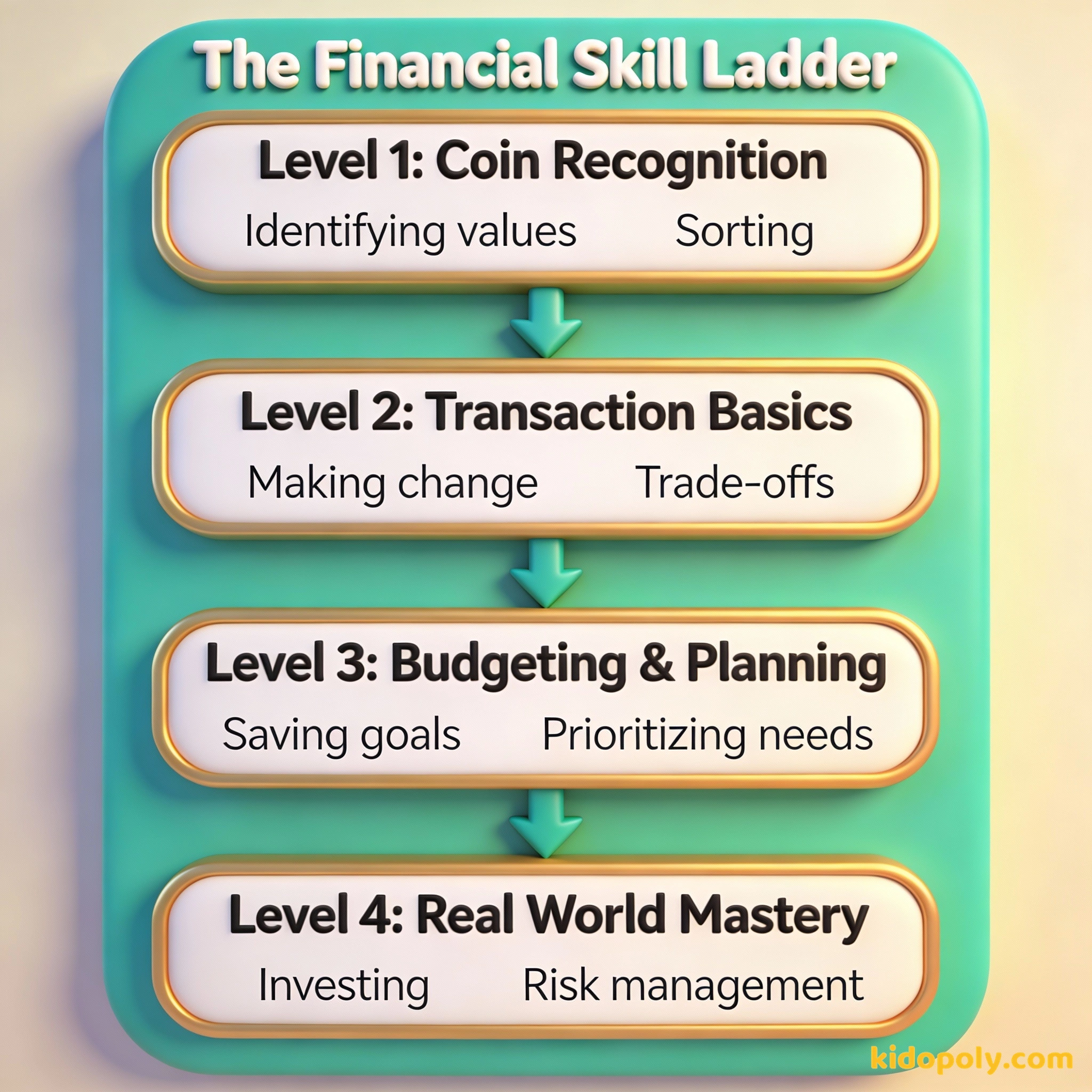
For younger children, Peter Pig's Money Counter is a fantastic starting point. It helps kids practice identifying, counting, and saving money while learning about the history of coins. It is simple, tactile in a digital way, and rewards children for accuracy and speed.
Host a 'Family Budget Challenge' night. Give everyone a fictional scenario: 'We have $50 for a Saturday afternoon out.' Let the kids use a game-like format to pitch how to spend it, including costs for travel, snacks, and tickets.
Older kids who enjoy sports will likely gravitate toward Financial Football. This game, developed by Visa, uses football gameplay to teach financial concepts. To move your team down the field and score, you must answer questions about budgeting, identity theft, and credit scores.
Interactive Apps with Game Mechanics
While we have covered dedicated banking tools elsewhere, some apps are designed specifically as games first. These tools use gamification to make the act of saving feel like leveling up in a video game.
Apps like Biz Kid$ offer various games that put children in charge of their own virtual businesses. They have to manage inventory, set prices, and deal with unexpected costs. This teaches them the difference between revenue and profit in a way that feels like a puzzle rather than a math class.

Mira says:
"I noticed that when we play the grocery store game, my son stopped asking for every single candy bar because he knows our 'budget' only allows for three items."
Other platforms like Rooster Money use game mechanics like achievement badges and goal tracking. These features help kids visualize their progress. When a child can see a digital progress bar filling up toward a new toy, the abstract concept of 'delayed gratification' becomes a visible reality.

An investment in knowledge pays the best interest.
DIY Money Games for Home
Some of the best learning happens away from a screen. You can create fun money games using items you already have around the house. These activities are especially helpful for younger children who still need the physical sensation of handling cash.
The Pizza Party Problem: Budget: $20.00 Pizza: $12.50 Drinks: $4.00 Delivery Tip: $5.00 Total: $21.50 Result: Over budget by $1.50. What item do we change to make it work?
One classic is the Pretend Shop. Set up a small area with toys or pantry items and give them price tags. Hand your child a fixed amount of play money and ask them to 'buy' ingredients for a specific meal. This forces them to make choices based on a limited budget.
Finn says:
"Is it better to lose all my fake money in a game now so I don't lose my real money when I'm a grown-up?"
Another great activity is the Coin Sorting Race. Empty a jar of mixed change and have a race to see who can sort them into stacks of the same value the fastest. For an added challenge, ask them to calculate the total value of their stacks at the end.
Provide instant feedback, complex scenarios, and automated math. Great for older kids exploring investing or business.
Offers tactile experience and social interaction. Best for younger kids learning to count and trade items.
Learning Through Board Games
Traditional board games are often the first place kids encounter the idea of 'losing' money. While we have a dedicated guide for money board games, it is worth noting that classics like Monopoly or newer options like The Game of Life are excellent for long-term play.
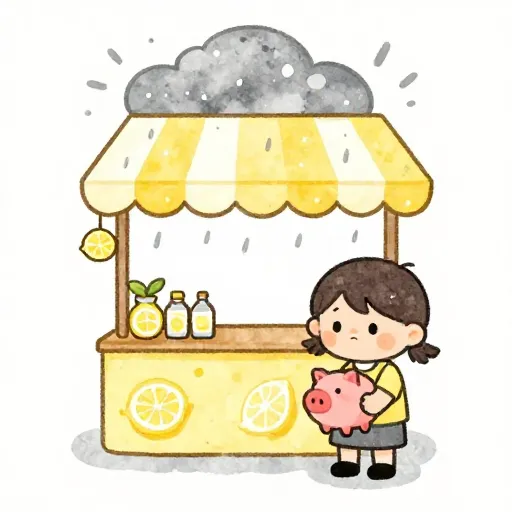
Imagine your child is playing a game where they have to choose between buying a lemonade stand or saving for a bicycle. In the game, a rainy day happens and the stand loses money. They just learned about 'market risk' without losing a single real penny.
These games are particularly good at teaching the relationship between risk and reward. They show kids that sometimes you can do everything right and still have a bad turn, which is a vital lesson in financial resilience. Just remember to keep the focus on the decisions made, not just the final score.

Money is a physical representation of your values.
What Makes a Game Effective?
Not every game with a dollar sign on it is a good teacher. To be truly effective, a money game needs to offer real choices. If a game just tells a child what to do, it is a tutorial, not a game.
Look for games that include:
- Consequences: If they spend all their money early, they should feel the lack of it later in the game.
- Progressive Difficulty: The math should get harder as the child gets better.
- Fun First: If the game isn't fun, the child will stop playing, and the lesson will end.
Something to Think About
What was the first game you played that involved money, and what did it teach you about winning or losing?
There are no right or wrong answers here. Thinking about your own early experiences with money games can help you understand what lessons you might want to pass on to your child.
Questions About Learning & Teaching Money
Are there free online money games for children?
What age is appropriate for money games?
Do money games really help with financial literacy?
From Play to Practice
Games are the bridge between knowing and doing. Once your child has mastered the basics in a digital or board game environment, they will be much better prepared for the real world. If you want to see how these game skills translate to the kitchen table, explore our guide on how to teach-kids-about-money.
