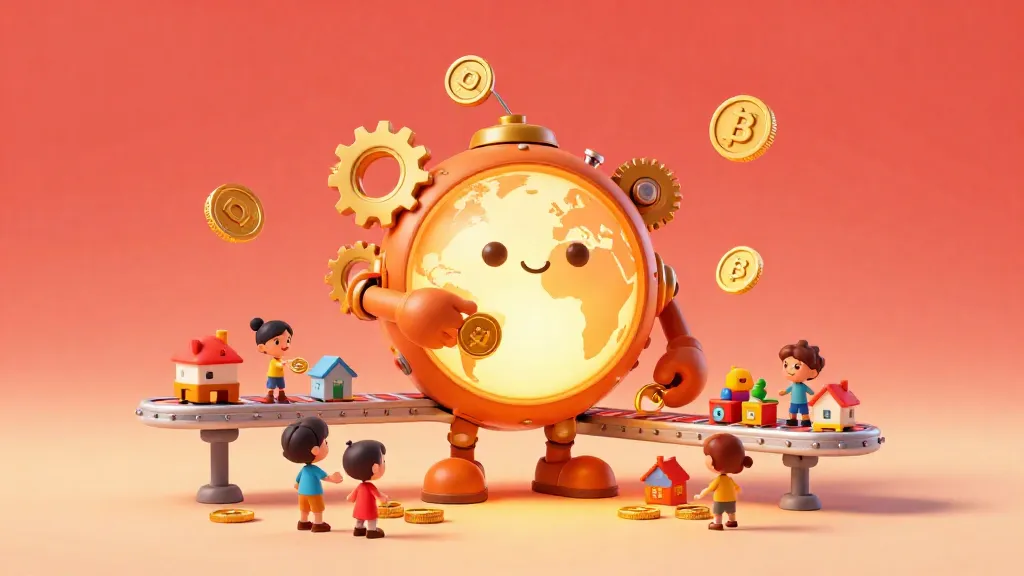
The money in your pocket has been on a long, secret journey before it reached you.
It might have started as part of someone's salary, then was spent at a toy shop, then used by that shop to pay a worker, and eventually found its way to your family. The economy is this endless loop of money flowing between people, and understanding it helps you make sense of almost everything you see on the news.
What actually is the economy? Most people think it is just a bunch of boring charts and numbers on the news, but it is actually much more exciting than that. The economy is the sum of every choice made by every person, business, and government in the world.
It is the story of how we make things, how we share them, and how we decide what they are worth. Think of it as a giant, invisible machine that connects you to a cocoa farmer in Africa, a toy designer in Japan, and the person who built your school.
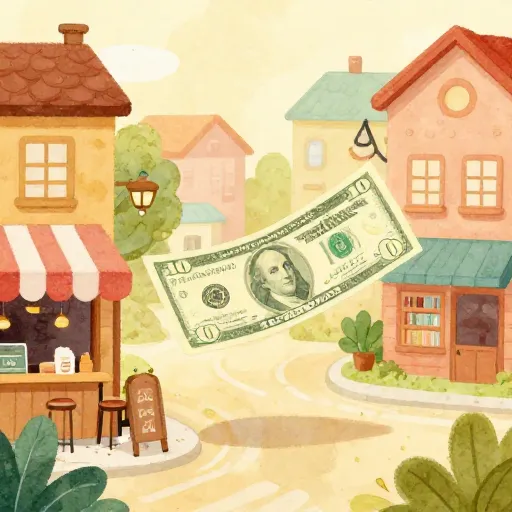
Imagine a $10 bill. This morning, a teacher used it to buy coffee. The coffee shop owner used it to pay a barista. The barista used it to buy a book. The bookshop owner used it to buy lunch. In just one day, that single $10 bill helped four different people earn money!
The Three Main Players
\To understand how the machine works, you need to meet the three main groups of people who keep it running. First, there are consumers. That is you! Consumers are people who use their money to buy things they need or want, like pizza, video games, or haircuts.
Second, there are producers. These are the businesses and people who make products or provide services. A bakery that sells bread is a producer, and so is a YouTuber who creates videos for you to watch.
Mira says:
"It is like a massive multiplayer game where every single person on Earth is playing at the same time. Every purchase is a move!"
Finally, there is the government. Think of the government as the referee of the economic game. They collect taxes from consumers and producers to pay for things everyone uses, such as roads, parks, and libraries.
The Great Money Loop
The economy works because money is always moving in a circle, which economists call the circular flow. You can see how this works by following the path of a single pound or dollar. When you buy a comic book, your money goes to the shop owner.
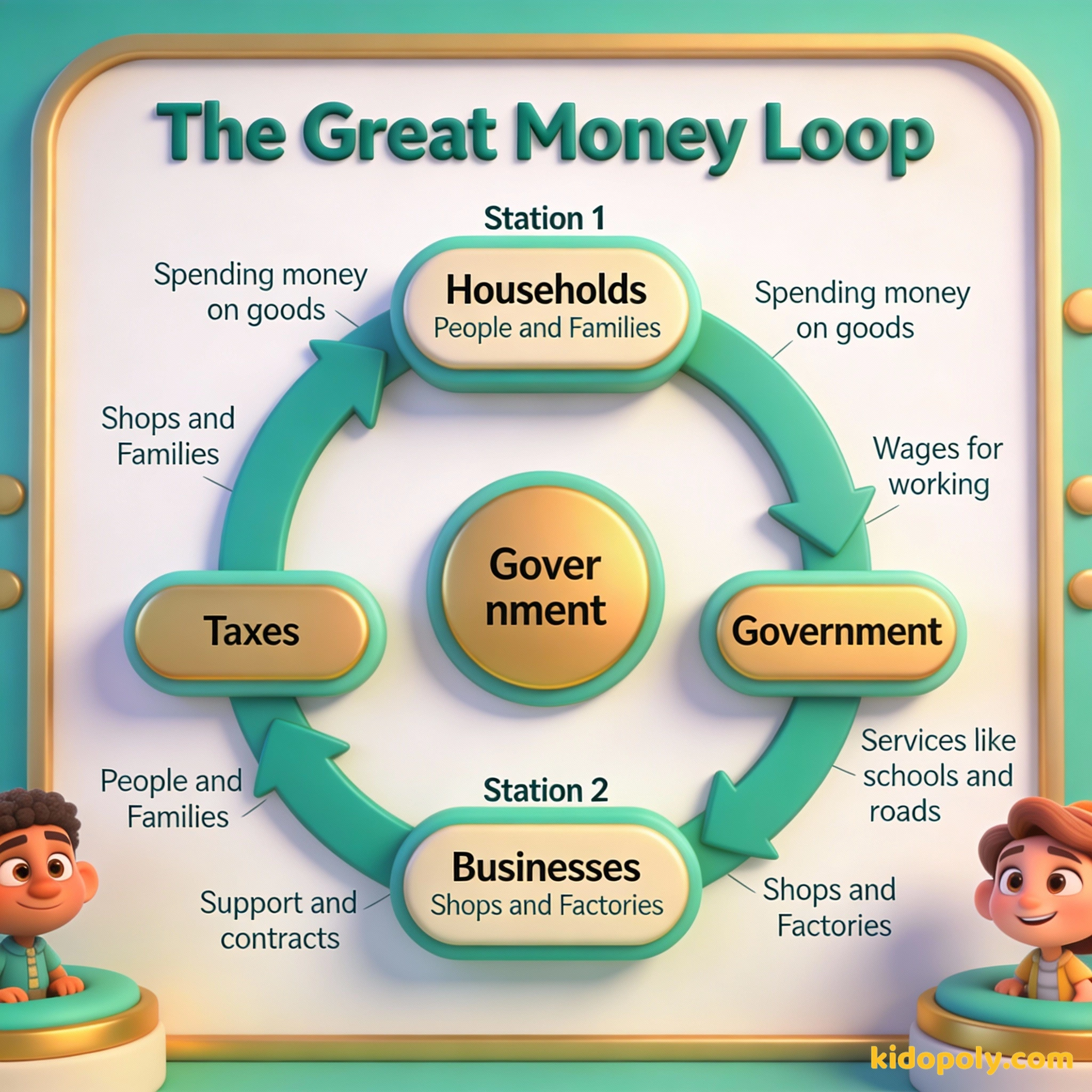
The shop owner uses that money to pay their staff and buy more comics from a publisher. The staff then take their wages and spend them on groceries or cinema tickets. This keeps the loop going: your spending becomes someone else’s income, and their spending becomes income for someone else.

It is not from the benevolence of the butcher, the brewer, or the baker that we expect our dinner, but from their regard to their own interest.
This loop is what makes the economy strong. If everyone stopped spending money at once, the loop would freeze. Shops would have no money to pay workers, and workers would have no money to buy food. This is why you often hear people talking about 'keeping the economy moving.'
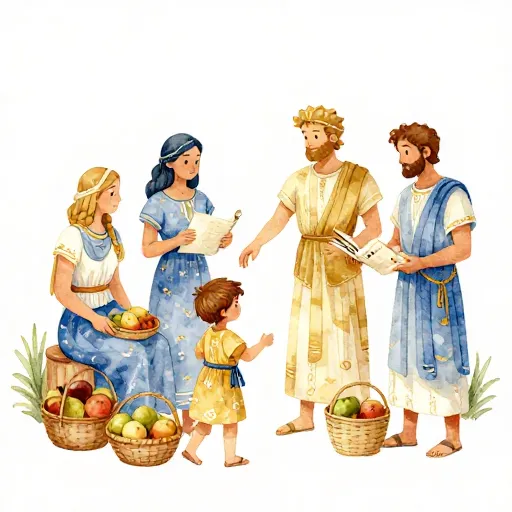
The word 'economy' comes from an ancient Greek word, 'oikonomia,' which actually means 'household management.' Just like you manage your chores and pocket money at home, an economy is how a whole country manages its resources!
Speeding Up and Slowing Down
The economic machine does not always run at the same speed. Sometimes it speeds up, which we call economic growth. This usually happens when people feel confident about the future and are buying more things.
When the economy grows, businesses usually hire more people and build new things. You might see new shops opening in your town or your parents might get a pay rise. Economists measure this speed using something called GDP, which is like a speedometer for the whole country.
Finn says:
"Wait, so if I don't buy that new video game, does the whole economy slow down just a tiny little bit?"
However, sometimes the machine slows down. If people become worried about the future, they might stop spending money and start saving every penny instead. When spending drops, businesses sell fewer things and might have to let workers go.
If the economy slows down for a long time, it is called a recession. This can be a tough time for families, but just like a real machine, the economy can be fixed and started back up again with the right choices.
The difficulty lies not so much in developing new ideas as in escaping from old ones.
Why Economics Matters to You
You might think you are too young to care about the economy, but it affects your life every single day. It determines how much your favorite snacks cost at the shop and whether your parents have stable jobs.
The Multiplier Effect: If you spend $10 at a local shop: 1. The shop owner keeps $2 profit. 2. They pay $5 to their worker. 3. They pay $3 to the person who made the product. That $10 you spent just put money into three different people's pockets!
Understanding the economy also helps you understand supply and demand, which explains why some things are expensive and others are cheap. It also explains inflation, which is why a bar of chocolate might cost more today than it did when your parents were your age.
By learning how the machine works, you can start to see the hidden patterns in the world around you. You will understand why some toys are hard to find and why the government builds new parks.
When you save, you have more money for the future and banks can lend that money to help businesses grow.
When you spend, you help shops stay open and keep people employed right now. Both are important!
Can One Person Make a Difference?
It can feel like you are just a tiny part of a massive system, but the economy is actually made of billions of small decisions. Every time you choose to save your pocket money or buy from a local business, you are sending a signal to the machine.
Mira says:
"The economy isn't just about cold numbers and banks. It is actually just billions of people helping each other get the things they need."
Your choices help decide which businesses succeed and what new products get made. When you learn how to manage your own money, you are becoming a smarter part of the global loop. You are not just a passenger: you are one of the people helping to steer the ship.
Price is what you pay. Value is what you get.
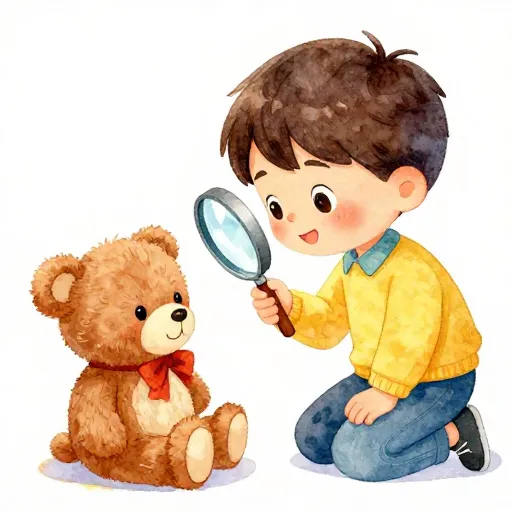
The 'Made In' Scavenger Hunt: Look at the labels on five things in your room. Where were they made? You might find things from China, Vietnam, Germany, or the USA. This shows you how you are connected to the global economy!
Something to Think About
If you could create a new business that helps people in your town, what would it be?
Remember, there is no wrong answer here! Economics is all about finding new ways to provide value to others. Think about what your community needs most.
Questions About Money & Society
What is the economy exactly?
Why does the economy sometimes crash?
Can a kid really help the economy?
Ready to master the machine?
Now that you know the economy is just a giant loop of people helping people, you are ready to look at how the 'speedometer' works. Check out our guide on GDP to see how we measure the whole world's progress!