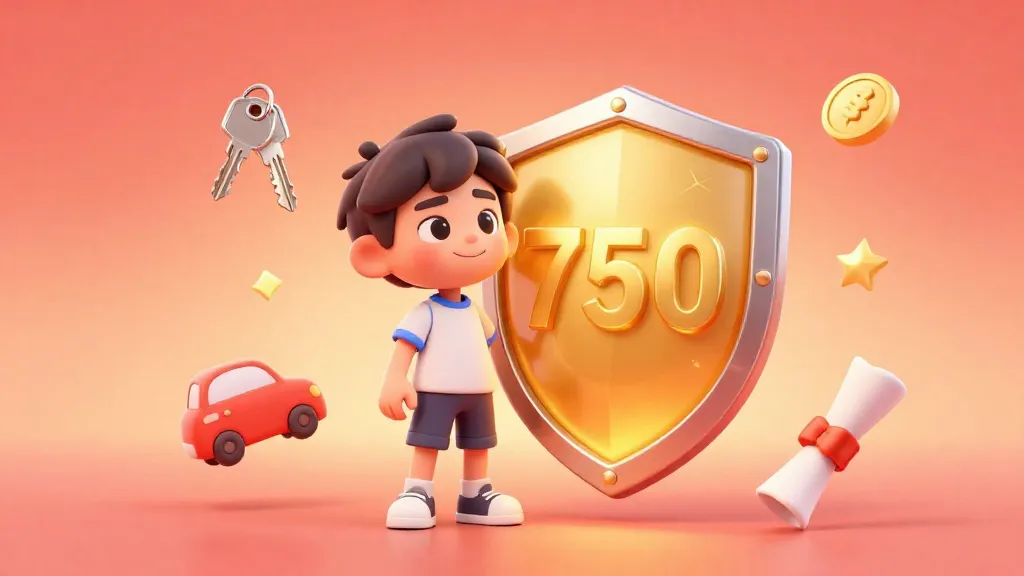
Imagine a number that follows you around for your entire adult life. Landlords check it before renting you a flat. Banks check it before giving you a loan. Even some employers look at it before hiring you.
That number is your credit score, and it is the ultimate measure of your financial reputation. While you do not have a score yet, the choices you start making as a teenager will determine whether this system works for you or against you.
Imagine you have a football that everyone wants to play with. Your friend Leo asks to borrow it. You say yes because Leo always brings things back in perfect condition. Later, your friend Sam asks. You hesitate because Sam lost your last ball and forgot to return your bike pump for a month.
That feeling of trust you have in Leo, and the lack of trust you have in Sam, is exactly what credit is in the grown-up world. It is not just about money: it is about your reputation for keeping your word.

Imagine you are a landlord with a beautiful flat for rent. Two people apply. Person A has a credit report showing they always pay their bills on the 1st of the month. Person B has a report showing they are often late and still owe money to three different shops. Who would you trust with your keys?
The System of Trust
In the financial world, credit is the ability to borrow money or access goods and services with the understanding that you will pay for them later. When a shop or a bank gives you credit, they are essentially saying: "I trust you to pay me back."
Because banks do not know you personally, they cannot just guess if you are like Leo or Sam. They need a way to measure your trustworthiness. This is where your credit report comes in, which is a detailed history of how you have handled money in the past.

Creditors have better memories than debtors.

Mira says:
"So, credit is basically like 'Street Cred' for your wallet! If you prove you're reliable, the whole financial world opens up its doors for you."
Your Financial GPA: The Credit Score
Think of your credit score as a grade for your financial behavior. It is a three-digit number, usually ranging from 300 to 850, that tells lenders how risky it is to lend you money. A high score means you are a "gold star" borrower, while a low score suggests you might be a bit like Sam and his lost football.
- 300 to 579: Poor reputation
- 580 to 669: Fair reputation
- 670 to 739: Good reputation
- 740 to 799: Very Good reputation
- 800 to 850: Exceptional reputation

The most common credit score is called a FICO score. It was created by the Fair Isaac Corporation in 1989. Before this, lenders had to manually look at your history and make a guess, which wasn't very fair or accurate!
How the Score Is Built
How do you get to that magic 850 number? It is not about how much money you have in the bank. You could be a billionaire and still have a terrible credit score if you never pay your bills on time. The score is built using five specific ingredients.
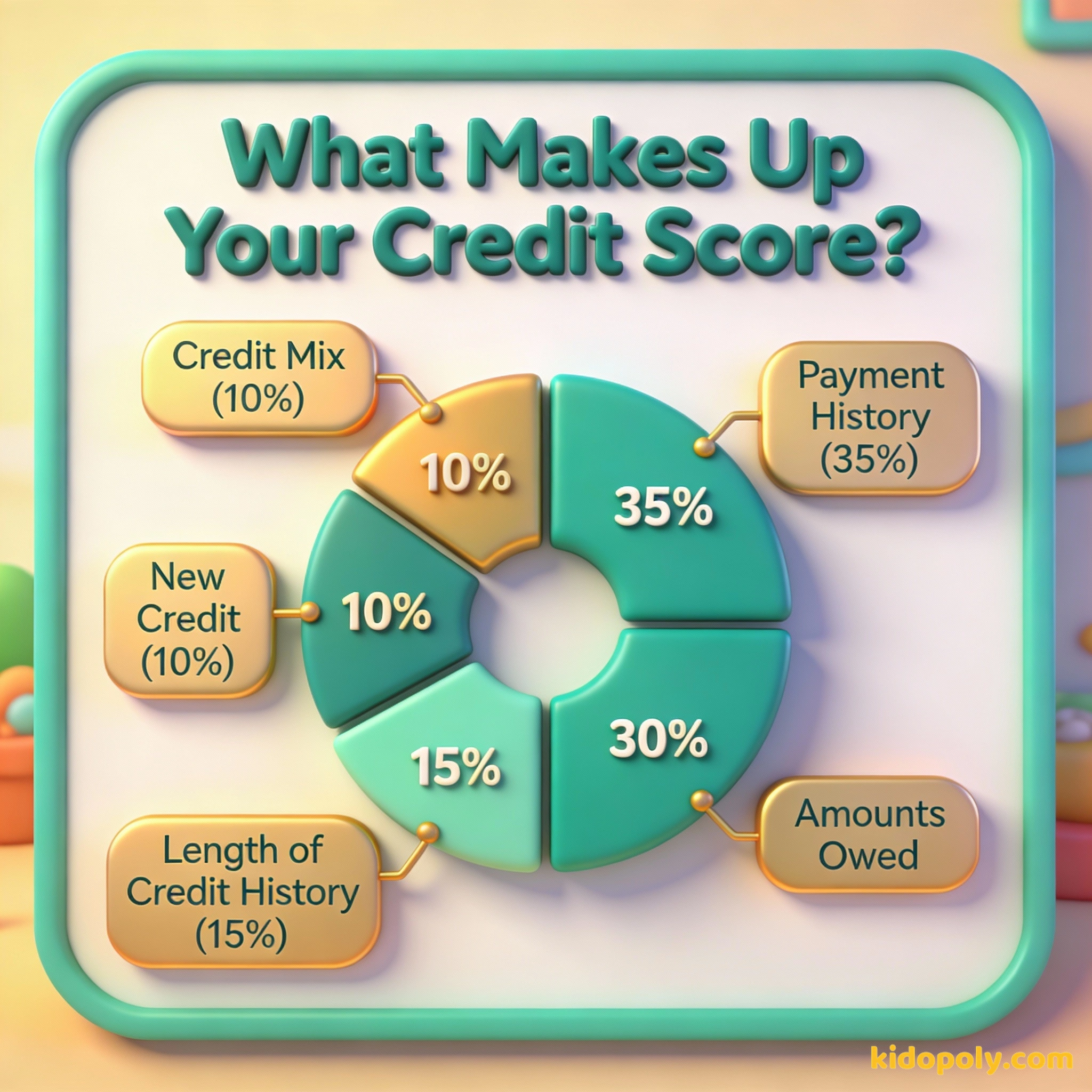
First, payment history is the biggest slice of the pie. If you are even a few days late on a payment, your score can drop. Second is the amount owed, which compares how much credit you have versus how much you are actually using. Lenders like to see that you have access to credit but are not using all of it at once.
Let's see how a score affects a £20,000 car loan over 5 years: High Score (780): 3% Interest = £359 per month. Low Score (620): 15% Interest = £475 per month. Difference: £116 extra every month. Over 5 years, the person with bad credit pays £6,960 more for the exact same car!

Finn says:
"Wait, if the length of history matters, does that mean I'm at a disadvantage just because I'm young? How do I start if I've never had a loan?"
Why Credit Is a Superpower
Having a great credit score is like having a VIP pass to the adult world. When you have "good credit," you get to pay less for almost everything that involves borrowing. This is because banks see you as a safe bet, so they offer you lower fees and better deals.
If you want to buy a car or a house in the future, your credit score will determine your interest rate. Over your lifetime, a high credit score could save you hundreds of thousands of pounds compared to someone with a low score. It also makes it much easier to rent a nice flat or even get a mobile phone contract without paying a huge deposit.

A credit score is a measurement of your financial integrity.
The Dark Side: Bad Credit
On the flip side, having bad credit makes life a lot more difficult. If your score is low, banks might refuse to lend you money at all. If they do lend to you, they will charge you much higher prices because they are worried you might not pay them back.
Bad credit can follow you for a long time. Negative marks on your credit report, like missing payments, can stay there for six to seven years. This is why it is so important to protect your financial reputation from the very start. It is much easier to keep a good reputation than it is to fix a broken one.
Lenders fight to give you the best deals, low interest rates, and high limits because they trust you completely.
Lenders may ignore your calls, charge you the highest possible rates, or demand huge cash deposits upfront.
Mira says:
"It's like a video game where you're at Level 0. You haven't lost any points yet, so you just need to make sure your first few 'quests' - like your first phone bill - are completed perfectly!"
When Does Your Journey Start?
As a teenager, you usually do not have a credit score yet. You cannot legally sign a contract for a credit card or a loan until you are 18. This means you have a clean slate: a fresh start to build the best reputation possible.
One way some teens get a head start is by becoming an authorised user on a parent's credit card. This allows the parent's good habits to rub off on the teen's credit report. However, this only works if the parent has great credit habits. Once you turn 18, you can start building your own history by paying your own bills, like a phone plan, on time every single month.

It takes 20 years to build a reputation and five minutes to ruin it.
Ask a parent or trusted adult if they know their credit score. You don't need to know the exact number, but ask them what steps they take to keep it high. Do they use auto-pay for bills? Do they check their report for errors? Learning their 'system' is great practice for your future.
Something to Think About
If your friends had a 'trust score' for how you handle borrowed items, what would your number be right now?
Think about the last three times you borrowed something. Was it returned on time? In the same condition? This is your personal reputation in action, and it is the foundation of your future financial life.
Questions About Money & Society
Do kids have a credit score?
Does having a lot of money in the bank help my credit score?
Can checking my own credit score hurt it?
Build Your Reputation Early
Now that you know credit is just another word for trust, you can see why it matters so much. You don't need a credit card yet to practice being trustworthy. By keeping your promises and taking care of things you borrow today, you are already building the habits of an 850-score adult. Want to know more about what happens when you actually use that credit? Head over to our page on credit-vs-debit to see the difference!
