
Would you rather have £1 million right now, or a single penny that doubles every day for 30 days?
Most people grab the million pounds immediately, but that tiny penny actually has a hidden superpower called compound interest. By the end of the month, that single penny would turn into more than £5 million because of how interest builds on itself over time.
Imagine you have a magical pet that has a baby every year. Then, the next year, that baby pet grows up and has its own baby, while the original pet has another one too. Soon, you would have a whole house full of pets!
This is exactly how compound interest works with your money. It is not just about the money you put into a savings account, it is about the extra money that money earns for you.
The word 'compound' actually comes from a Latin word that means 'to put together.' It's the perfect name because you are putting your interest and your savings together to make a bigger pile!
What is Compound Interest, Exactly?
To understand the compound version, we first need to know what interest is. When you put money into a bank, the bank uses that money to help other people buy houses or start businesses. Because you are letting them use your money, they pay you a small fee as a "thank you." That fee is called interest.

Compound interest is the eighth wonder of the world. He who understands it, earns it; he who doesn't, pays it.
In a normal world, you might get a little bit of interest every month. But compound interest is when you leave that interest in your account. Now, the bank is paying you interest on your original money AND on the interest you just earned.

Finn says:
"So if I just leave my money alone, the bank pays me... and then they pay me for the payment they already gave me? That feels like a total cheat code!"
It is like a chain reaction. Your money makes money, and then that new money makes even more money. Over a long time, this cycle turns a small amount of savings into a massive fortune.
The Magic of the Doubling Penny
Let's look back at that penny that doubles every day. It sounds impossible that it could beat £1 million, right? For the first two weeks, it looks pretty boring. On Day 10, you only have £5.12. Even on Day 20, you only have about £5,243.
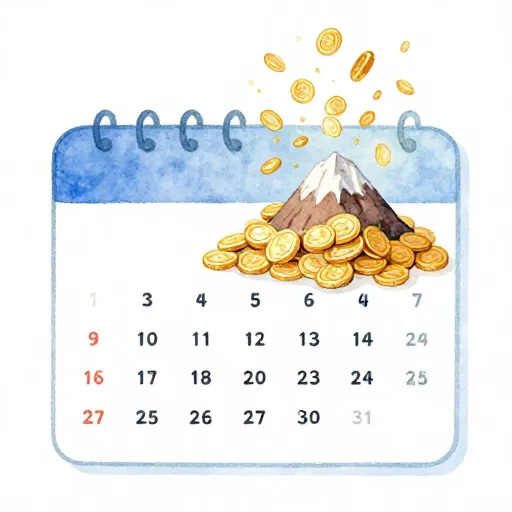
Imagine the 30-day penny doubling. On Day 1, you have 1p. On Day 15, you have £163.84. But on Day 30, you have £5,368,709.12! The magic really kicks in during that final week.
But then, something incredible happens. Because the amount is getting bigger, the "doubling" starts to add huge amounts of money. Between Day 29 and Day 30, the amount jumps from £2.6 million to over £5.3 million!

Mira says:
"It's like a video game where your character gets stronger every level. At first, you're just picking up copper coins, but by the end, you're finding giant chests of gold!"
This shows us the most important rule of compound interest: the biggest growth happens at the very end. You have to be patient to see the real magic happen.
Why Your Savings Love Compound Interest
You probably won't find a bank that doubles your money every day, but even a small interest rate makes a huge difference over time. Let's imagine you put £100 into a special savings account and never touch it.
Let's look at the growth of £100 at 5% interest: Year 1: £100 + £5.00 interest = £105.00 Year 2: £105 + £5.25 interest = £110.25 Year 3: £110.25 + £5.51 interest = £115.76 Every year, the interest payment gets bigger!
If you earn 5% interest every year, here is how your £100 grows:
- After 1 year: You have £105.00
- After 10 years: You have £162.89
- After 20 years: You have £265.33
- After 40 years: You have £704.00
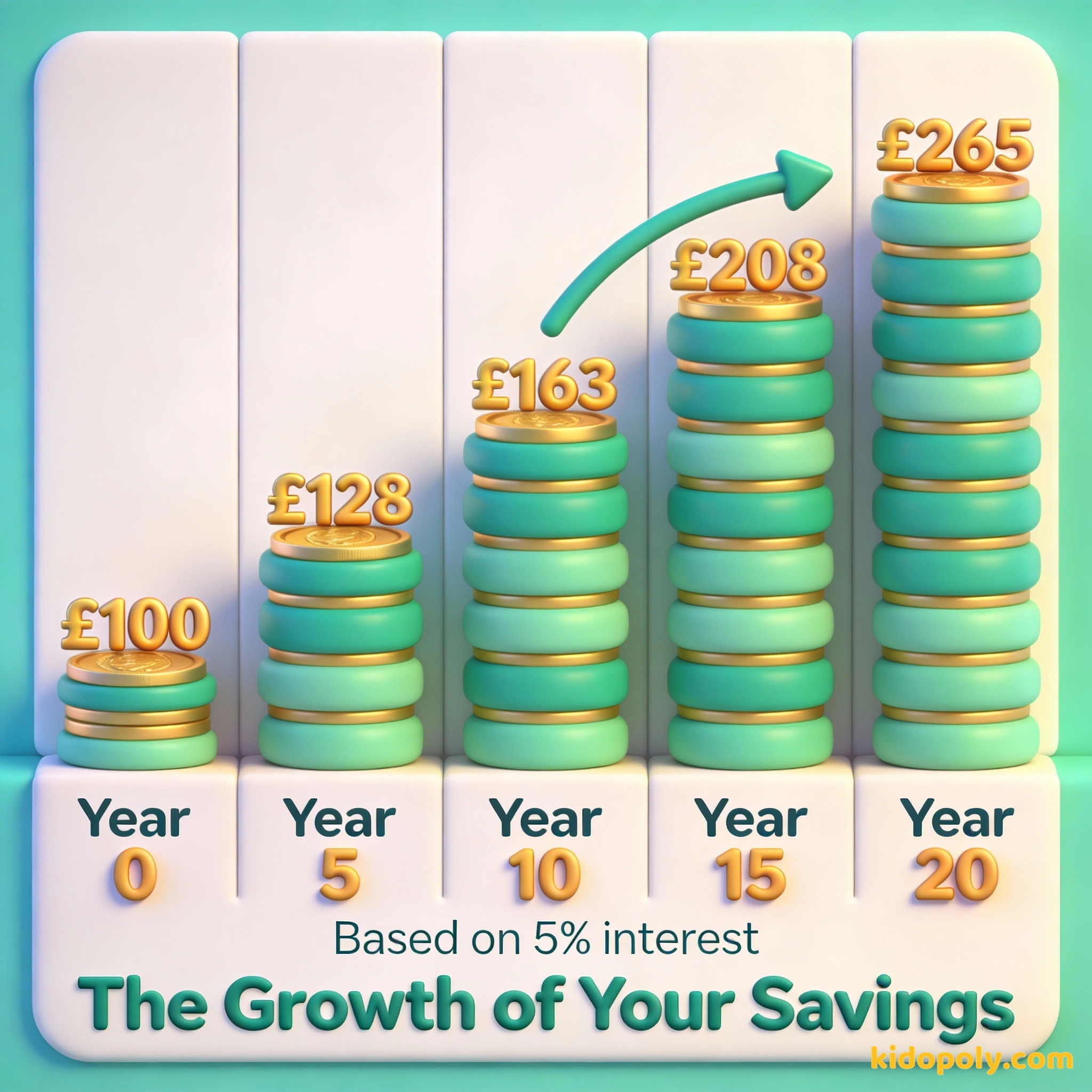
Notice how in the first year you only earned £5, but in the 40th year, you earned much more. You didn't add any extra money of your own, the interest just kept "compounding" or building on top of itself.
Time: The Secret Ingredient
The reason adults get so excited about compound interest is because of time. Since you are young, you have a massive advantage. You have years and years for your money to start its chain reaction.

Money makes money. And the money that money makes, makes money.
If you start saving when you are 10, your money has much more time to grow than someone who starts at age 30. Even if you save smaller amounts, you could end up with more money because you let the compounding process work for longer.
Starting with £50 at age 10 gives your money 50 years to grow before you turn 60. Even a small amount becomes huge.
If you wait until you are 40 to start saving, you only have 20 years. You would have to save way more money to catch up!
This is why financial experts call compound interest a "snowball effect." At the top of the hill, the snowball is tiny and moves slowly. But as it rolls down, it picks up more snow, gets heavier, and moves faster and faster.
The Rule of 72: A Mental Shortcut
How long does it actually take for your money to double? You don't need a giant computer to figure it out. Mathematicians use a cool trick called the Rule of 72.
Finn says:
"Wait, I can do that math in my head! If I find a high interest rate, my money doubles even faster. I need to find my calculator right now."
To use it, you just divide the number 72 by your interest rate. The answer is roughly how many years it will take for your money to double in size.

Grab a calculator and try the Rule of 72! If you had a savings account with a 4% interest rate, how many years would it take to double your money? (Hint: 72 divided by 4 = ?)
For example, if you have an interest rate of 6%, you do 72 divided by 6. The answer is 12, which means your money will double every 12 years. It's a quick way to see how powerful your savings can become.

My life has been a product of compound interest.
Something to Think About
If you started a 'doubling penny' challenge today, what is the one big thing you would want to buy with the money at the end of the month?
There are no wrong answers here! Whether it's a new bike, a trip for your family, or saving it for university, thinking about your goals makes saving much more fun.
Questions About Saving
Does compound interest work if I take money out?
Where can I get compound interest?
Is compound interest guaranteed?
Your Financial Superpower
Now that you know how compound interest works, you have a secret weapon for your future. You don't need to be a millionaire today to become one later. You just need a little bit of money, a decent interest rate, and plenty of time. Why not talk to your family about how you can start your own 'money snowball' today?
