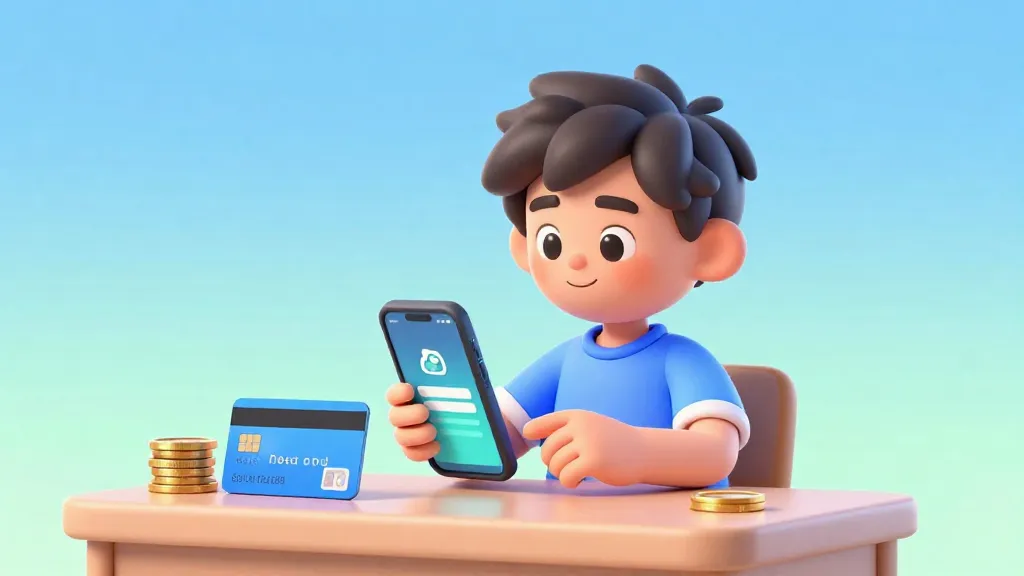
You are 14 years old and you have officially outgrown asking your parents to withdraw cash every time you want to go to the movies or buy a new game.
A youth savings account gives you your own login, your own card, and the ability to manage your money independently while still being safe. It is a specific type of financial account designed for the transition between childhood and adulthood.
Most people think of bank accounts for kids as simple piggy banks where parents hold all the keys. But once you hit your teen years, usually between ages 13 and 17, you are ready for something different. A youth savings account is designed specifically for this age range, offering more freedom than a standard savings-accounts-for-kids.
While a younger child might have a custodial account where a parent makes every decision, a youth account is a joint account. This means both you and your parent own the account, but you get the driver's seat. You get your own username and password to see your balance whenever you want.
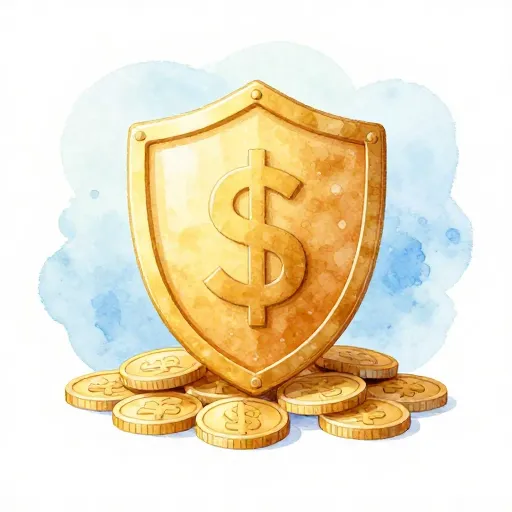
Most youth savings accounts in the U.S. are protected by the FDIC. This means that even if the bank goes out of business, the government guarantees your money is safe up to $250,000. It is much safer than keeping cash under your mattress!
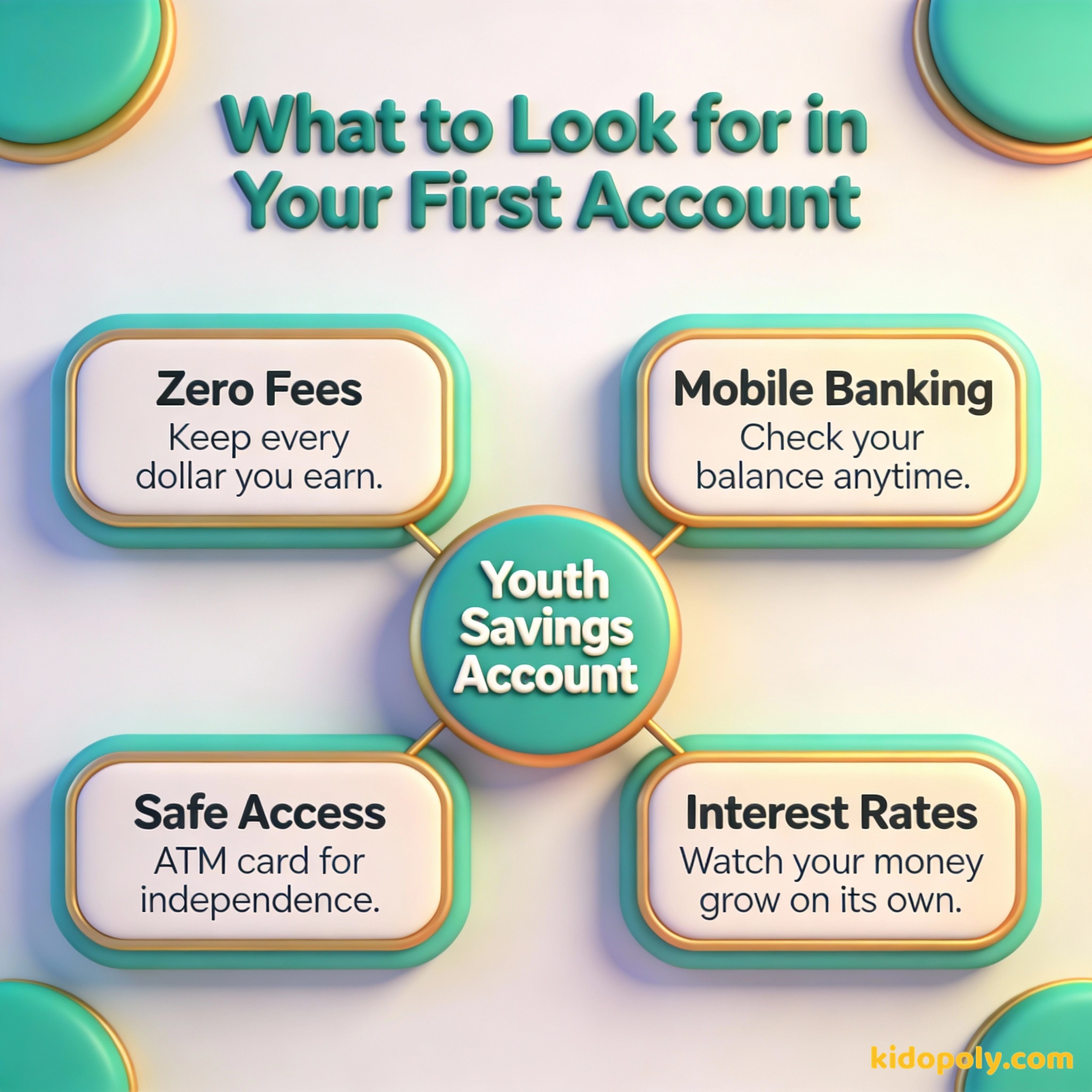
One of the biggest upgrades with a youth account is access. Many banks provide a debit card or an ATM card specifically linked to the savings account. This allows you to withdraw your own cash or make purchases without having to wait for a parent to go to the bank for you.
However, because you are still under 18, there are safety rails in place. Parents can usually see the transactions, set spending limits, or receive alerts when money moves. It is independence with a built-in safety net to help you learn the ropes.

Do not save what is left after spending, but spend what is left after saving.

Finn says:
"If I have my own login and a card, does that mean I can just buy whatever I want at the mall without asking?"
So, what exactly can you do on your own? Most youth accounts allow you to make deposits, which is great if you have a part-time job or receive birthday money. You can also handle transfers, moving money from your savings to a checking account if you have one.
The limits are usually on things like high-dollar withdrawals or changing the account's primary settings. You can't usually close the account or add new owners without your parent's permission. These rules exist to protect your money while you are still learning how the banking system works.
Let's look at why interest rates matter for your savings: If you save $1,000 for one year: At 0.01% interest: You earn $0.10. (Barely enough for a piece of gum!) At 4.00% interest: You earn $40.00. (Enough for a new video game or a nice dinner!) Always check the APY before you sign up.
When you are looking for the best-savings-account-for-kids in the teen category, you need to look at the Annual Percentage Yield, or APY. This is the interest the bank pays you for keeping your money with them. Some youth accounts offer higher rates than adult accounts to encourage teens to save.
Even a small difference in interest rates can matter over a few years. If you are saving up for a car or college, you want every penny working for you. A good youth account should also have zero monthly maintenance fees, because paying a fee just to have an account is like losing money every month.
A big part of financial freedom is having your heart and mind free from worry about the what-ifs of life.

Mira says:
"I like that my mom can see my account. Last month I forgot about a subscription I signed up for, and she helped me cancel it before I lost more money."
A huge part of the youth banking experience is the mobile app. Most banks now have high-tech apps that let you set savings goals. You can name a goal, like 'New Laptop' or 'Summer Trip,' and track your progress with visual charts and bars.
Some apps even offer 'round-ups.' Every time you spend $4.50, the bank rounds it up to $5.00 and puts that extra 50 cents into your savings automatically. It is an easy way to save without even thinking about it, turning small change into a big balance over time.
High-interest accounts are great because they make your money grow faster, but they are often at online-only banks with no local branches.
Big national banks have branches on every corner and great apps, but they often pay very low interest rates (like 0.01%).
Finn says:
"Wait, so if I find a bank that pays 4% interest instead of 0.01%, I actually get free money just for sitting there?"

It’s not how much money you make. It’s how much money you keep.
You might be wondering: what happens when you blow out the candles on your 18th birthday? At 18, you are legally an adult in the eyes of the bank. Most youth savings accounts will automatically convert into a standard adult savings account at that point.
This is a great time to check if that new account still has the best features. Sometimes, the 'no-fee' perk of a youth account disappears once you turn 18 unless you meet certain requirements. You might decide to keep the account or move your money to a completely new bank that offers better rewards for adults.

Imagine you get your first summer job at a coffee shop. Instead of getting a paper check and asking your parents to drive you to the bank, you set up 'Direct Deposit.' On payday, your money automatically appears in your youth savings account at 8:00 AM. You check your app, see your balance grew by $200, and immediately move $50 into your 'College' goal folder.
Sit down with your parent and look at three different banks. Compare their 'Youth' or 'Teen' savings accounts. Write down three things for each: 1. Is there a monthly fee? 2. What is the interest rate? 3. Do you get a debit card? Picking the right one together is a great way to start.
Building these skills now means you won't be confused when you have to manage a full salary, pay rent, or buy a home later. It is like practicing for a sport: you don't want your first time on the field to be the championship game. Your youth account is your practice field for a successful financial life.
Something to Think About
If you had your own bank account today, what is the first savings goal you would set for yourself?
There are no wrong answers here. Whether you're saving for something big next year or just want a small cushion for emergencies, your goals reflect what matters most to you right now.
Questions About Saving
Can I open a youth savings account without my parents?
What is the difference between a youth savings account and a checking account?
Do I have to pay taxes on the interest I earn?
Ready to take the wheel?
Opening a youth savings account is a major milestone. It moves you from being a passive observer of money to an active manager of your own future. Talk to your parents today about researching the right account for you, and start building that financial muscle!