Your favorite YouTuber just unboxed an amazing new gadget and said it 'changed their life.' Three of your friends already ordered one. What you didn't notice: the tiny #ad in the description, the affiliate link, and the fact that the YouTuber was paid £5,000 to say exactly that.
Understanding how companies use marketing to influence your choices is a superpower. When you learn to decode persuasion techniques, you stop being a target and start being a smart shopper who knows exactly what is a need-vs-want.
Imagine you are playing a game of hide-and-seek, but the person hiding is a giant corporation worth billions of dollars. That is what digital advertising feels like today. In the past, ads were easy to spot: they were the loud commercials between TV shows or the big posters on the side of a bus.
Today, ads have moved into your pocket. They hide inside your favorite games, appear in your social media feeds, and speak to you through the voices of people you trust. Advertisers use specific target audience data to show you exactly what they think you want to see, often before you even know you want it.
Companies spend over $20 billion every year just on advertising and marketing aimed specifically at children and teens. They spend this much because they know you have a lot of influence on what your family buys!
The Trick of Scarcity and FOMO
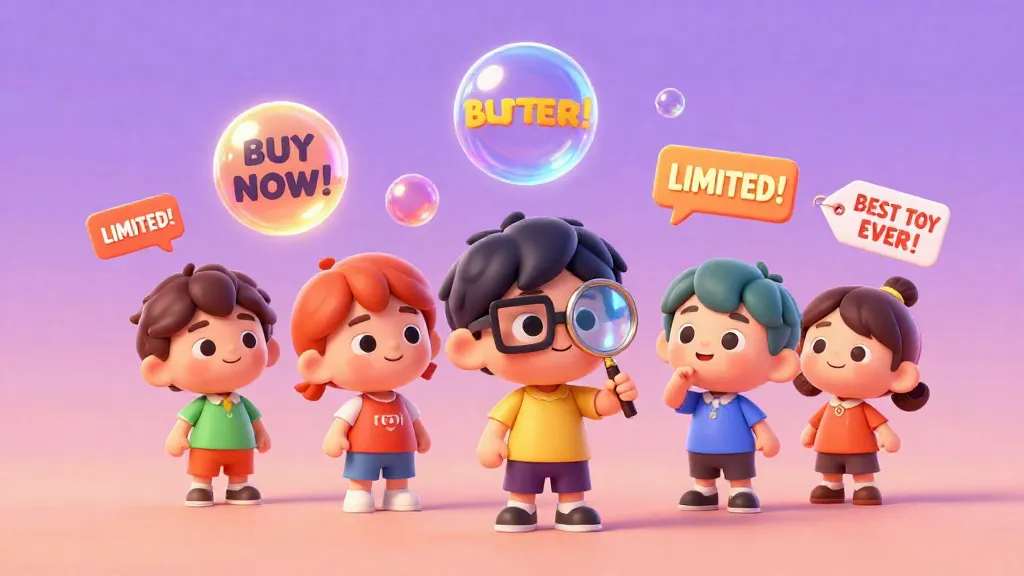
Have you ever seen a countdown timer on a website or a message saying 'Only 3 left in stock!'? This is a technique called scarcity. Advertisers want you to feel a sense of urgency. They want your brain to think that if you do not buy it right this second, you will miss out forever.
This leads to FOMO, or the Fear Of Missing Out. By making a product seem rare or 'limited edition,' companies make it feel more valuable than it actually is. They are trying to bypass your logical brain and trigger an emotional reaction that leads to impulse-buying.

Finn says:
"Wait, so when a game says '24 hours left for this special skin,' they might just be trying to rush me into spending my coins before I can think about it?"
Social Proof: Why We Want What Others Have
When you see a game on the App Store that says '10 Million Downloads' or a TikTok trend where everyone is wearing the same brand of sneakers, you are seeing social proof. Humans are wired to want to belong. Advertisers know that if they can convince you that 'everyone else is doing it,' you are much more likely to join in.

Advertising says to people, 'Here's what we've got. Here's what it will do for you. Here's how to get it.'
Social proof is especially powerful on social media. When a post has thousands of likes or glowing comments, it creates a 'halo effect.' You start to believe the product must be amazing because so many other people seem to love it, even if many of those comments are part of a coordinated marketing campaign.
The Ad-Spotter Challenge: Next time you watch a 10-minute YouTube video from a big creator, count how many times they mention a brand or show a product logo. Don't forget to check the video description for links!
Decoding the Influencer Secret
Influencers are the new superstars of advertising. Unlike a celebrity in a TV ad, an influencer feels like a friend. You see them in their bedroom, they talk directly to you, and you follow their daily life. This makes their recommendations feel like advice from a buddy rather than a sales pitch.
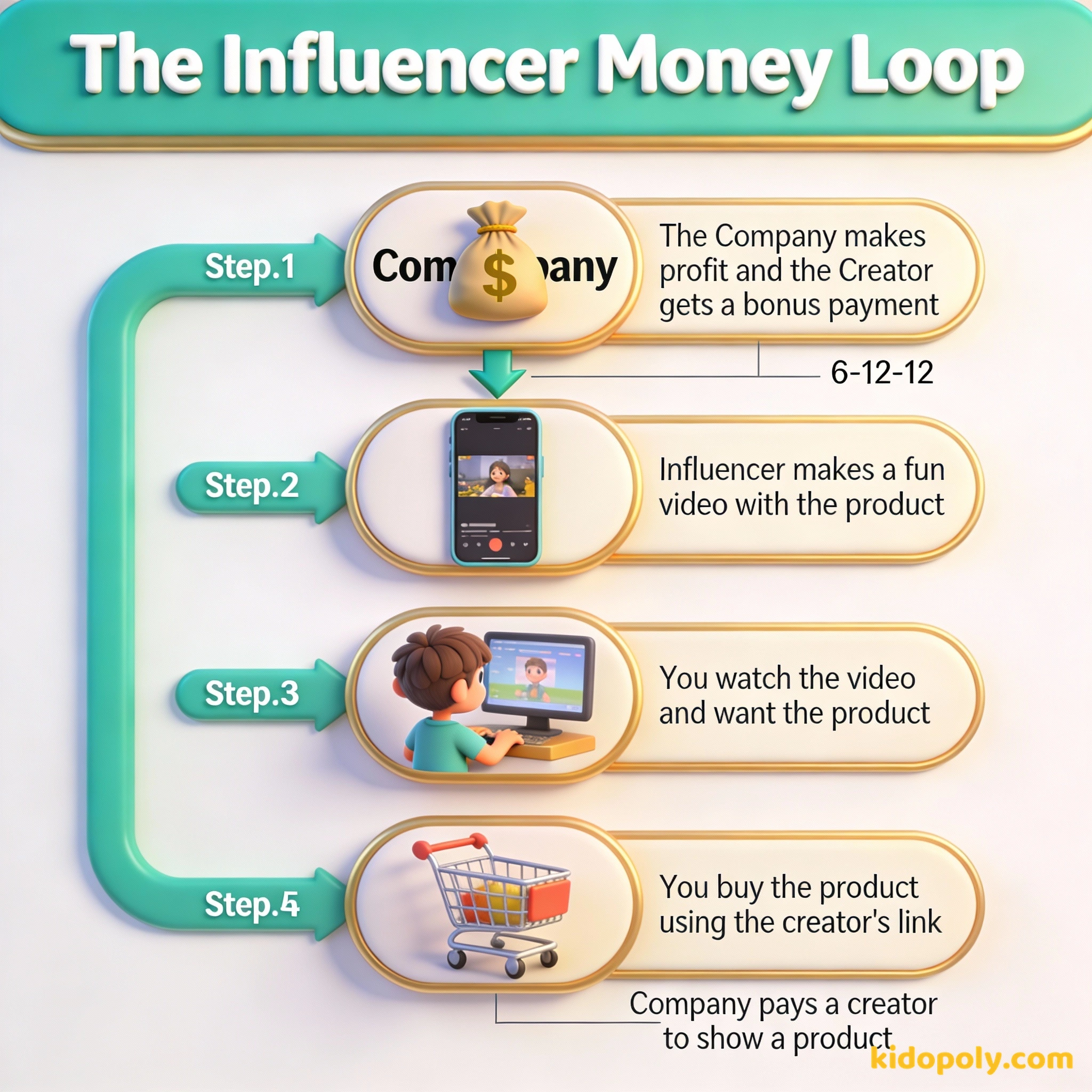
However, most big creators are also businesses. When they show off a new gaming chair or a skincare kit, they are often using sponsored content. This means a company paid them to talk about the product. They might also use affiliate links, which are special links that give the creator a small payment every time someone clicks and buys something.
The 'Hidden Ad' Problem
Not all ads look like ads. Some of the most effective marketing is product placement, where a brand's logo is just 'randomly' sitting on a creator's desk or mentioned in a story. Because there is no loud 'BUY NOW' button, your brain does not put up its usual advertising shield.

Mira says:
"It is like the 'suggested for you' posts on my feed. They know I like space, so they show me cool telescope ads to get me to click!"
In-game advertising is another huge area. Many 'free' games use ads to make money. This might be a video you have to watch to get extra lives, or a 'limited time' skin that looks like your favorite movie character. These ads are designed to keep you inside the game's economy and eventually lead to spending real-world money.
Imagine an influencer with 100,000 followers shares an affiliate link for a $20 game skin. - If 1% of followers buy it (1,000 people), the company makes $20,000. - If the influencer gets a 10% commission, they earn $2,000 just from that one post!
Your Ad-Spotter’s Toolkit
You do not have to stop using the internet to avoid being tricked. You just need to become an active viewer instead of a passive one. Next time you see a product being promoted, ask yourself these three questions:
- Who paid for this? If the creator received the product for free or was paid to show it, their opinion might not be 100% honest.
- What emotion are they trying to make me feel? Are they making me feel worried that I am missing out, or excited to be part of a 'cool' group?
- Do I still want this if I wait 24 hours? Taking time to think helps you decide if it is a real interest or just a clever ad trick.

He that buys what he does not want, will soon want what he cannot bear to lose.
When Ads Are Actually Useful
Advertising isn't always the villain of the story. Sometimes, ads can be a great way to discover a new book you would love or a hobby you didn't know existed. When an ad provides helpful information about a product you were already looking for, it can save you time.
Ads help me find cool stuff I actually need, like a new book from my favorite author or a sale on the shoes I've been saving for.
Ads try to make me feel like my life isn't complete unless I have the newest gadget, which makes me want to spend money I don't have.
The goal is to use ads as a source of information, not as the boss of your wallet. Once you know the tricks, you can enjoy your favorite videos and games without letting the 'hidden sellers' make your spending decisions for you.
Finn says:
"I'm going to start a '24-hour rule.' If I see something cool in an ad, I have to wait a whole day before I even ask my parents about it. That usually stops the 'must-have-it-now' feeling!"

It takes 20 years to build a reputation and five minutes to ruin it.
Something to Think About
Can you think of a time you bought something because of an ad or an influencer, only to realize later you didn't actually like it that much?
There is no right or wrong answer here. Thinking about these moments helps you understand your own 'spending triggers' so you can make choices that fit your personal values in the future.
Questions About Spending & Budgeting
Why do 'free' games show me so many ads?
Is it illegal for ads to lie to kids?
How can I tell if a YouTuber is being paid to talk about a product?
You are the Boss of Your Brain
Now that you know how the 'advertising hide-and-seek' game works, you have the upper hand. You can enjoy the entertainment without falling for every trick in the book. Want to learn more about how to handle that 'I need it now' feeling? Check out our guide on impulse-buying or learn the difference between needs-vs-wants to keep your savings safe.