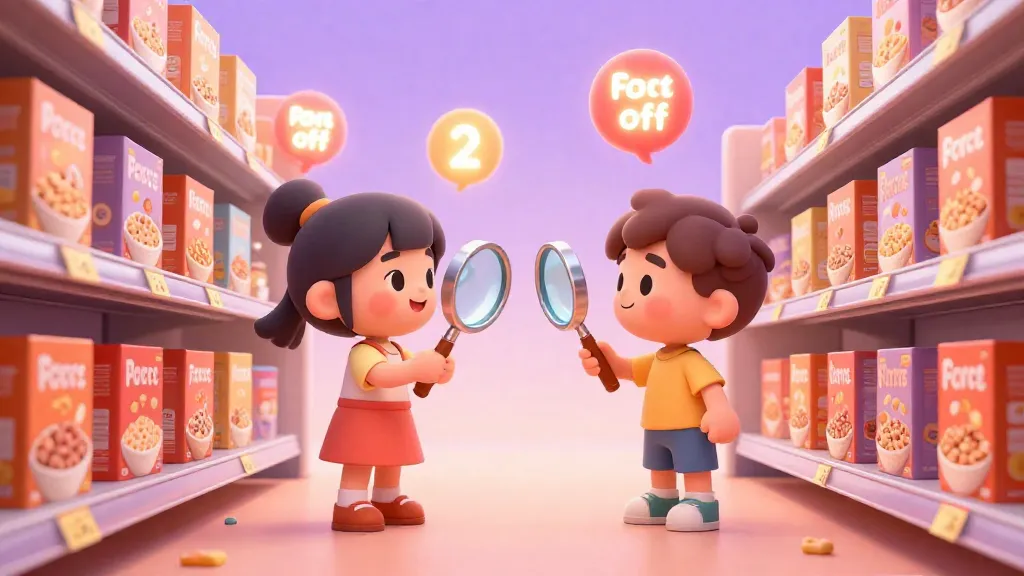
Imagine you are at the shop with £3 in your pocket. You want to buy some crisps for a party.
A 6-pack of crisps costs £1.80, but a 12-pack costs £3.00. Which one is actually the better deal? To figure it out, you need to use price comparison, which is like having a superpower that lets you see the true value of every item on the shelf.
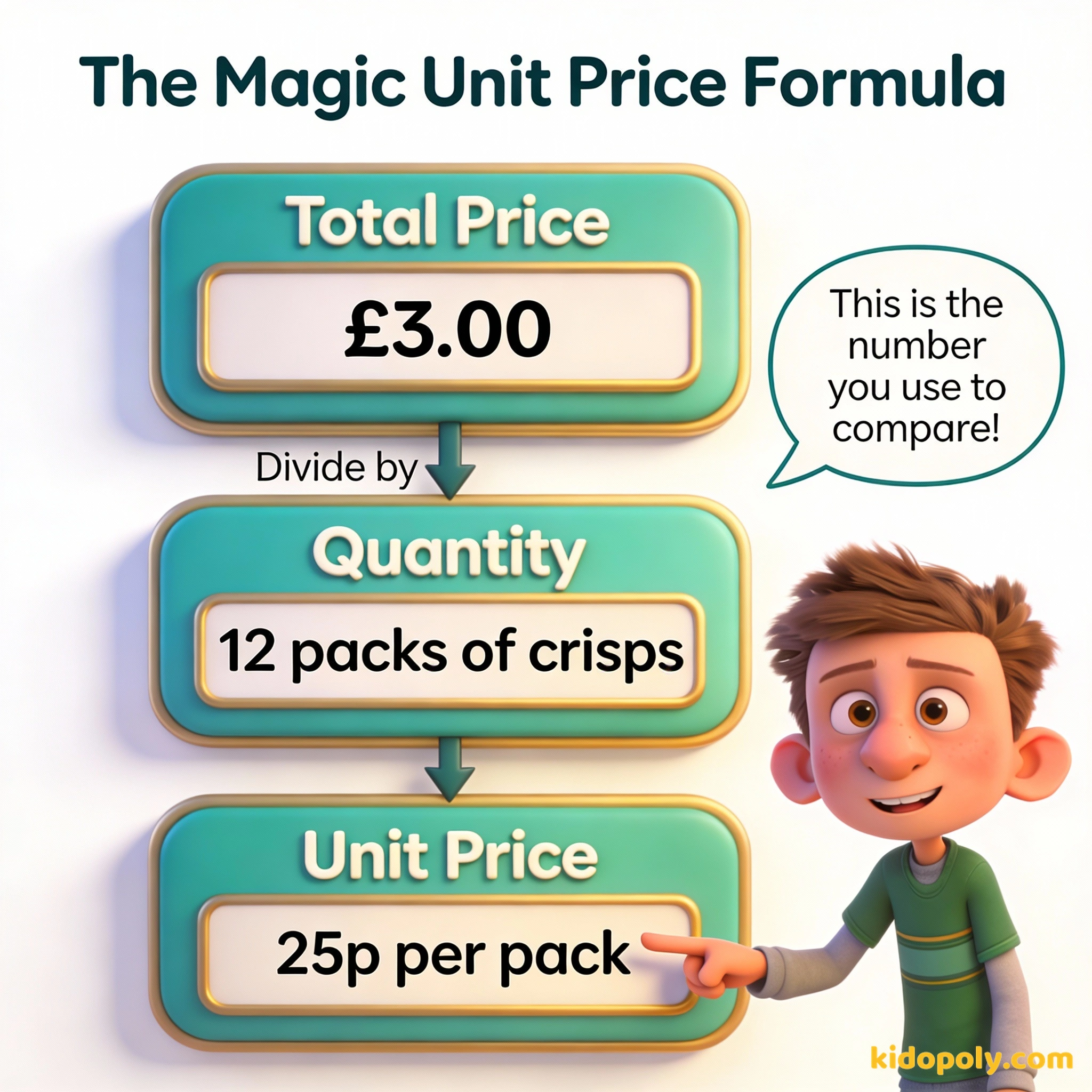
Most people think the 'best deal' is just the lowest price, but that is not always true. If you buy the 12-pack for £3.00, each bag costs you 25p. If you buy the 6-pack, each bag costs 30p.
By choosing the bigger pack, you saved 5p on every single bag! But wait: what if you only need 4 bags and the rest will go stale before you eat them? Suddenly, that 'deal' is a waste of money. Comparing prices is about using maths to find the smartest way to spend your hard-earned cash.
CRISP COMPARISON: 6-Pack: £1.80 / 6 = 30p per bag 12-Pack: £3.00 / 12 = 25p per bag SAVINGS: 5p per bag if you buy the 12-pack!
Mastering the Unit Price
The most important tool in your price-detective kit is the unit price. This is the cost of just one part of a bigger pack: like the price of one single battery in a pack of ten, or the price of 100g of cereal in a giant box.
To find the unit price, you just take the total price and divide it by the quantity. If a 4-pack of glue sticks costs £2.00, you divide £2.00 by 4 to get a unit price of 50p per glue stick.

Finn says:
"Wait, do I really have to bring a calculator to the grocery store every time I want to buy snacks?"
Knowing the unit price allows you to compare things that are different sizes. You might find a small bottle of shampoo that costs £3.00 for 300ml and a large bottle that costs £5.00 for 400ml.
- Small bottle: £3.00 divided by 3 = £1.00 per 100ml
- Large bottle: £5.00 divided by 4 = £1.25 per 100ml
- In this case, the smaller bottle is actually the better deal!

Price is what you pay. Value is what you get.
The 'Bigger Pack' Trap
Shops often want you to believe that bulk buying, which means buying a lot of something at once, is always cheaper. Most of the time it is, but they sometimes set 'traps' where the bigger size actually costs more per gram.
Always check the shelf labels! In many countries, the shop is required to print the unit price in tiny letters right on the price tag. If they do not, use your phone calculator to check for yourself.
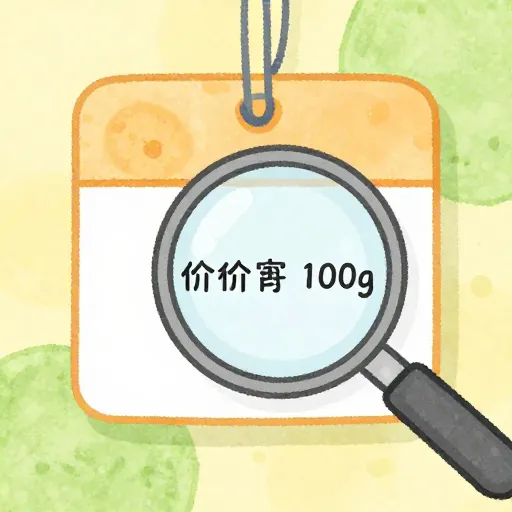
Many supermarket shelf tags already show you the unit price! Look in the bottom corner of the tag for a price per 100g or price per item. It does the math for you!
There is one more thing to consider with bulk buying: do you actually need that much? If you buy a massive tub of 500 pens because they are cheap, but you lose them all or they dry out, you have spent more than you needed to.

Mira says:
"It's like playing a strategy game. The biggest army isn't always the best if you can't afford to feed all the soldiers!"
Sales: Truth vs. Hype
When you see a bright red 'SALE' sign, your brain gets excited. Shops know this! They use was/now pricing to make you feel like you are winning. For example, a game might say 'Was £40, Now £25!'
Before you celebrate, ask yourself if £25 is actually a good price for that game. Sometimes, shops raise the price for a few days just so they can 'lower' it back to the normal price and call it a sale.
The price is low right now, so I should buy it even if I don't need it yet!
If I wasn't going to buy it anyway, spending money on a sale is still spending money I could have saved.
- Check other shops to see their 'normal' price.
- Look at the original price and see if the discount is really a big deal.
- Don't let a 'limited time only' timer rush you into a bad decision.

Beware of little expenses: a small leak will sink a great ship.
Online vs. In-Store
Comparing prices is even more interesting when you shop online. A pair of trainers might be £50 in a local shop but only £45 on a website. It looks like the website wins, right?
Not so fast! You have to add in the shipping cost. If the website charges £7 for delivery, your total is £52. Now the local shop is the better deal, and you get to take the shoes home today instead of waiting a week.

Imagine you see a massive 5-gallon tub of glue on sale for only £10. It is a legendary deal! But by the time you finish the first inch of glue, the rest has dried into a giant plastic rock. Was it still a bargain?
Don't forget to think about returns. If those trainers don't fit, can you take them back to the shop for free, or do you have to pay to post them back to the website? These hidden costs change the 'price' significantly.
The Quality Factor
There is a famous saying: 'Buy cheap, buy twice.' This means that the cheapest option can sometimes be the most expensive in the long run.
Imagine you need a new school bag. Bag A costs £10 but the zip breaks after two months. Bag B costs £20 but lasts for three years.
- Bag A: You have to buy 3 bags a year, costing you £30.
- Bag B: You only spend £20 once.
Finn says:
"So, sometimes spending more money today actually means I'll have more money left over next month?"
This is called cost-per-use. When comparing prices, think about how long the item will last. Sometimes, paying a little more for a quality item saves you a lot of money later because you don't have to replace it.
THE RECEIPT SCAVENGER HUNT: Next time your family goes shopping, ask for the receipt. Pick three items and see if you can calculate their unit price. Did your family choose the best deal?

Look everywhere you can to cut a little bit from your expenses. It will all add up to a big savings.
Quick Mental Maths Shortcuts
You don't always need a calculator to compare prices. You can use estimation to get close enough. If one pizza is £9.99 and another is £14.95, just think of them as £10 and £15.
To compare a 200g bar of chocolate for £2.20 with a 100g bar for £1.20, just double the price of the small one. If the 100g bar doubled is £2.40, then the 200g bar at £2.20 is the winner!
Comparing prices is a skill that gets better with practice. The next time you are at the shop, try to find three items where the unit price is different for different sizes. You will be surprised at what you find!
Something to Think About
Think about the last thing you bought. Did you choose it because it was the cheapest, or because it was the best value?
There is no 'right' answer here! Sometimes we just want something right now, and sometimes we want the highest quality. Understanding why you chose it is the first step to becoming a money expert.
Questions About Spending & Budgeting
Why do shops make the unit price so small on the labels?
Is it ever okay to buy the more expensive unit price?
How do I compare prices for things like apps or digital games?
You are now a Price Detective!
Now that you know how to calculate unit prices and spot 'bulk buying' traps, you have a massive advantage. You can make sure every penny you spend is working hard for you. Ready to level up your spending skills even more? Check out our guide on smart-spending or learn the difference between needs-vs-wants to master your money!