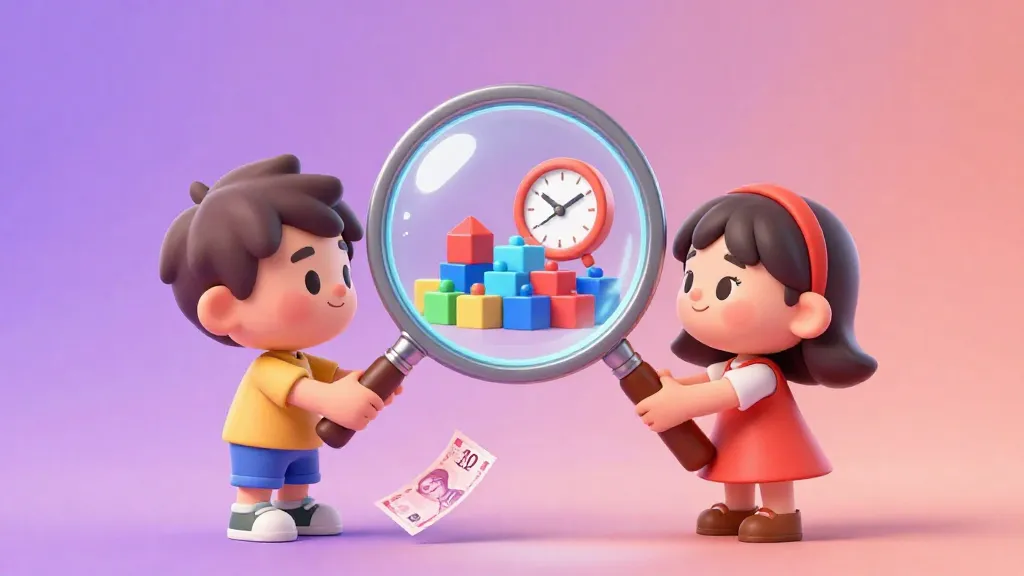
That £60 video game costs your parents about 3 hours of work. It costs you 6 weeks of pocket money. And if you play it for 200 hours, it works out to 30p per hour of fun.
But if you get bored after a week? Suddenly it is the most expensive thing you own. Understanding value changes everything about how you spend and helps you see what money is really worth.
Imagine you are standing in a shop holding a £10 note. To some people, that is just a piece of paper with a number on it. But to a financial expert like you, it is actually a container for your time, your effort, and your choices.
Price is what you pay. Value is what you get.
Value is not just the number printed on a price tag. It is a measurement of what you had to give up to get that money, and what you get back when you spend it. When you understand this, you stop seeing just prices and start seeing the real world behind the coins.
The Time-to-Earn Clock
One of the best ways to understand value is to translate money into time. Everything has a time-price. If you get £5 a week for doing chores, a £20 Lego set does not just cost £20, it costs four weeks of work.
The Hour Power Calculation: £20 (Price of Item) ÷ £5 (Your Hourly Pay) = 4 Hours of Work. Is that toy worth 4 hours of your time? If yes, buy it! If no, keep your hours!
When you think about a purchase in terms of hours or weeks, your brain looks at it differently. You might decide that a giant chocolate bar is worth 30 minutes of tidying your room, but is a plastic toy that breaks in a day worth two whole weeks of work?

Finn says:
"Wait, so if I work three hours to buy a game, does that mean the game is actually three hours of my life in plastic form?"
This is called the time-to-earn framework. It helps you decide if the trade-off is fair. Your time is the most valuable thing you have, so spending it wisely is the ultimate money skill.
Why Earned Money Feels Different
Have you ever noticed that the £10 you got for your birthday feels easier to spend than the £10 you earned by washing the car? This is a real thing that even adults experience. It is called the effort-value connection.
When you put physical or mental effort into earning money, you attach more value to it. You remember the sore arms from scrubbing that car or the patience it took to wait for your allowance. That effort makes the money feel 'heavier' and more important.

Remember that time is money.
Money you find on the street or get as a surprise gift feels 'light.' Because you didn't trade your time for it, you might be tempted to spend it on something silly. To be a master of value, try treating 'found' money with the same respect as 'earned' money.
The Secret Math of Cost-per-Use
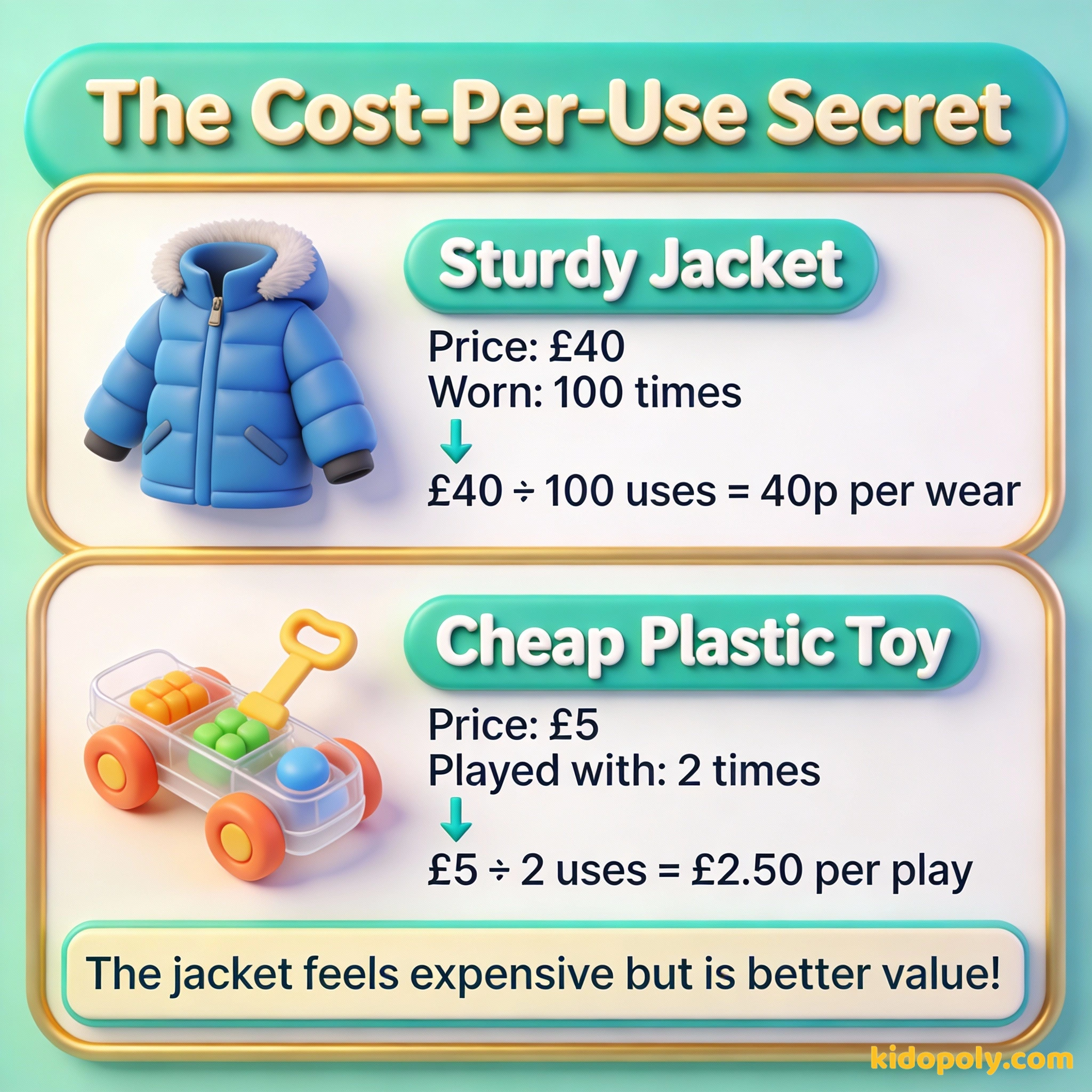
Sometimes, the most expensive item in the shop is actually the best value, and the cheapest item is a total rip-off. To figure this out, you need to use a tool called cost-per-use. This looks at how many times you will actually use something.

Imagine you buy a fancy £10 kite. You take it to the park, it flies for 10 minutes, and then it gets stuck in a tree forever. That kite cost you £1 per minute of fun! Now imagine a £1 ball you play with every day for a month. That ball is much better value.
Imagine a pair of sturdy trainers costs £40, but you wear them every single day for a year. That is about 11p per wear. Now imagine a pair of 'cheap' shoes costs £10, but they hurt your feet and you only wear them twice. That is £5 per wear!
- High Value: A £15 book you read five times and then lend to a friend.
- Low Value: A £2 magazine you look at for five minutes and then throw away.
- Great Value: A £30 basketball you use every afternoon at the park for three years.

Mira says:
"It's like how a cold drink is worth way more when you're at a hot park than when you're at home next to the fridge. The value depends on where you are!"
Price vs. Value: They Aren't the Same!
There is a big difference between the price of something and its value. Price is what the shopkeeper tells you it costs. Value is how much that thing improves your life or helps you reach a goal.
Focusing on price often means buying the cheapest thing possible, even if it doesn't last or work well.
Focusing on value means looking at quality and how much you will use it, even if it costs more today.
Think about a bottle of water. At the supermarket, the price might be 50p. But if you are halfway through a long hike on a scorching hot day, the value of that same bottle of water feels like £100! The price stayed the same, but the value changed because of your circumstances.

Nowadays people know the price of everything and the value of nothing.
Does Money Lose Its Power?
Money also changes its value over time. You might hear your grandparents say they could buy a whole bag of sweets for a penny. This is because of a concept called purchasing power, which is how much stuff your money can actually buy.
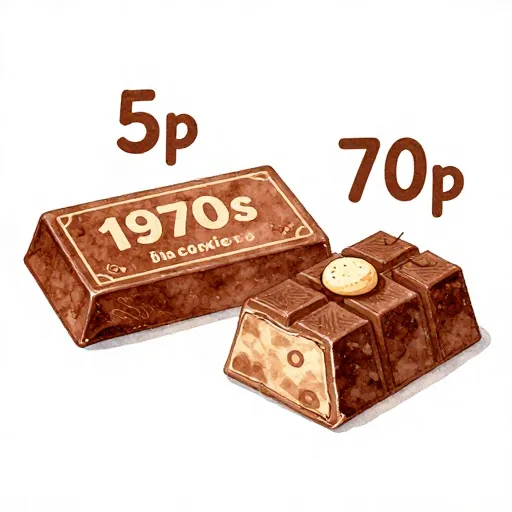
In 1971, a chocolate bar in the UK cost about 5p. Today, that same bar costs about 70p! The chocolate didn't change much, but the value of the 5p coin did. This is why money's 'buying power' is always moving.
Over many years, the prices of things tend to go up. This means £1 today might buy a chocolate bar, but in 30 years, that same £1 might only buy half a chocolate bar. This is why saving is important, but understanding how to grow your money is even better.
Finn says:
"Does this mean the cheapest thing in the shop is actually sometimes the most expensive if it breaks right away?"
Becoming a Value Detective
Learning to appreciate what money is worth takes practice. It is about looking past the flashy packaging and the 'Sale' signs to see the reality. Every time you reach for your wallet, ask yourself: 'Is this worth the time it took to earn?'
The 24-Hour Value Test: Before you buy something that costs more than one week of pocket money, wait 24 hours. Ask yourself: Do I still want to trade my hard-earned hours for this? If the answer is still yes tomorrow, you've found something you truly value!
You won't always get it right, and that is okay! Every spending choice is a chance to learn more about what you truly value. When you master value, you don't just have money, you have the power to create the life you want.
Something to Think About
If you had to work for 5 hours to buy anything you wanted, what would you choose, and why is it worth that much of your life?
There is no right or wrong answer here. What one person values is totally different from another, and that is what makes your choices special!
Questions About Spending & Budgeting
Is something 'good value' just because it's on sale?
Why do some things cost more in different shops?
How do I know if I'm overpaying for something?
You are the Master of Value
Now that you know the secrets of time-to-earn and cost-per-use, you are ready to make smarter choices. Want to see how to separate what you truly need from what you just want? Check out our guide on needs-vs-wants next!
