Bullying Statistics 2026 - Key Facts and Trends
Understanding bullying is the first step toward stopping it. While the data can be worrying - showing rising incidents in some areas and a shift toward digital harassment - it also reveals the immense power of parental involvement and peer intervention. For families and educators, these numbers aren't just statistics; they are a roadmap for where to look, when to step in, and how to protect the children in our care.
Key Takeaways
- 1 in 5 students report being bullied at school, a figure that remains stubbornly significant.
- Cyberbullying has risen, with 1 in 6 children globally and 46% of U.S. teens experiencing it.
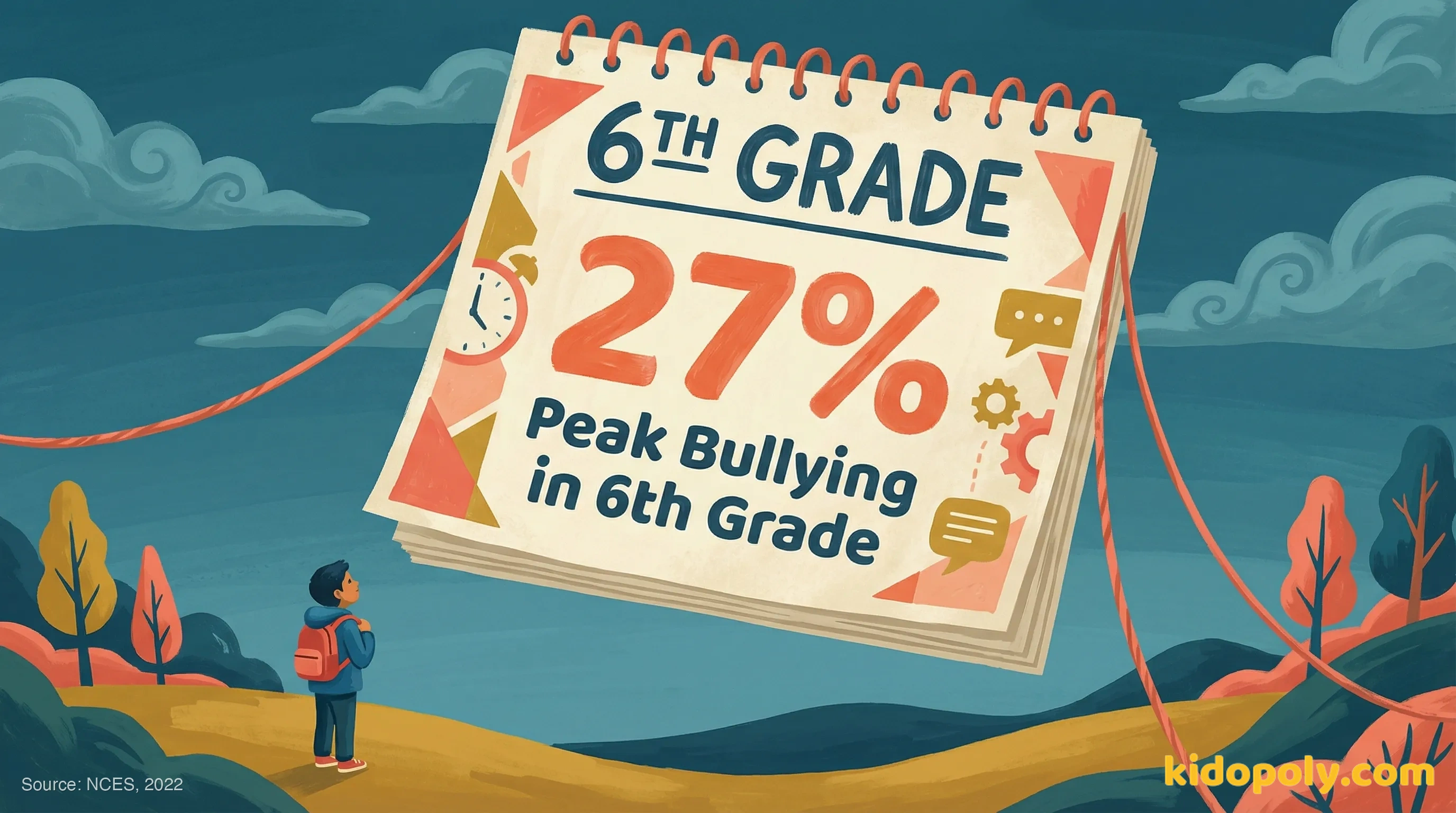
- Bullying peaks in Middle School, with 27% of 6th graders reporting incidents.
- Bystanders are powerful: Bullying stops within 10 seconds in 57% of cases when a peer intervenes.
- Reporting is low: Only 46% of bullied students notify an adult at school, highlighting a need for safer communication channels.
The Current Landscape: Prevalence and Scope
Students Report Being Bullied
Nearly 1 in 5 students ages 12-18 reported being bullied at school during the school year.
Source: National Center for Education Statistics (NCES) (2022)
Children Cyberbullied
A 2024 WHO Europe study found this ratio among school-aged children, a figure that has risen since 2018.
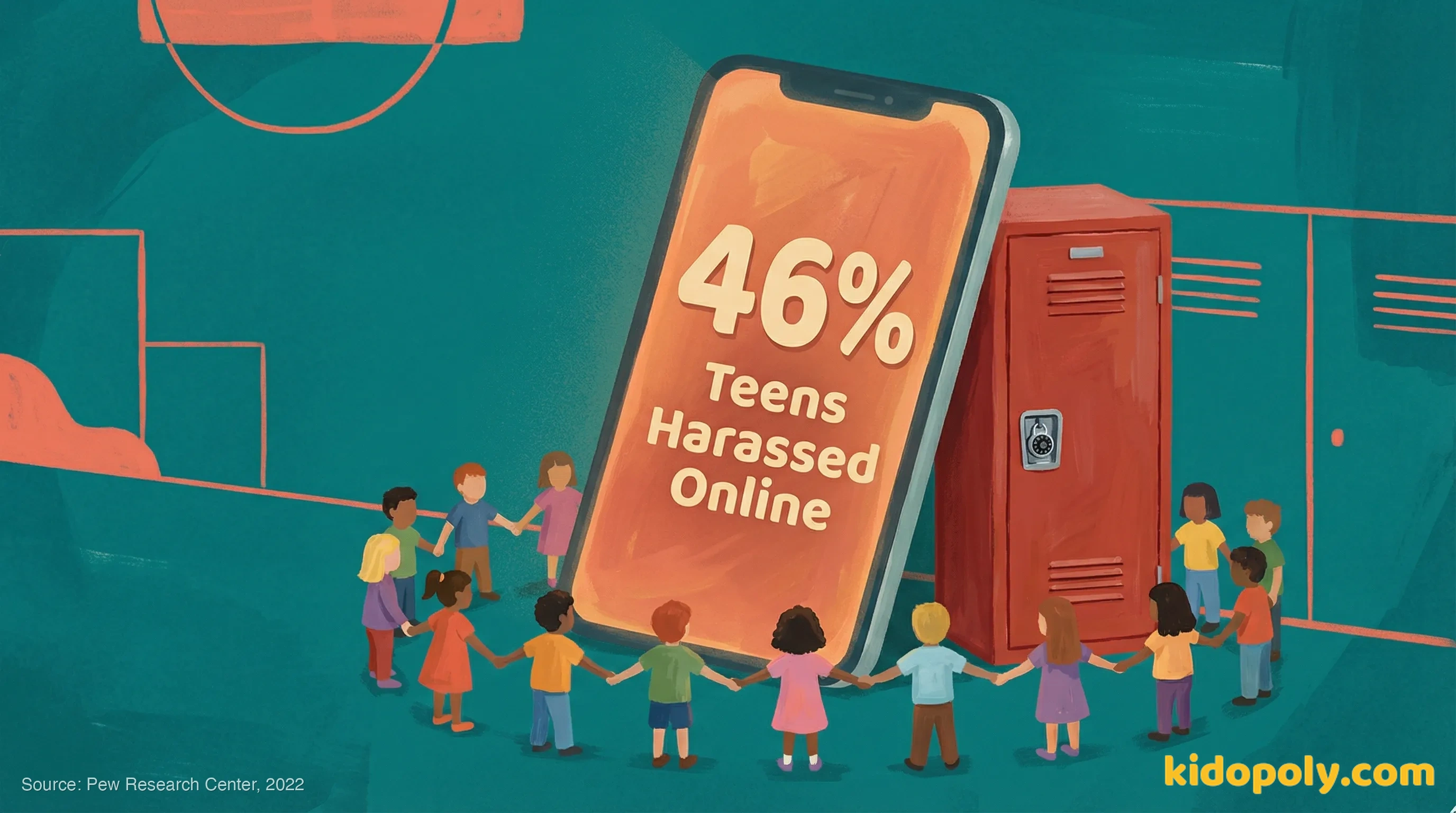
Teens Harassed Online
Nearly half of U.S. teens ages 13-17 have experienced at least one cyberbullying behavior.
Source: Pew Research Center (2022)
Where and How Bullying Happens
Locations Where Bullying Occurs (School Premises)
| Location | Percentage of Reports |
|---|---|
| Hallway or stairwell | 43.4% |
| Classroom | 42.1% |
| Cafeteria | 26.8% |
| Outside on school grounds | 21.9% |
| Online or by text | 15.3% |
| Bathroom or locker room | 12.1% |
Source: National Center for Education Statistics (NCES) (2022)
Most Common Types of Cyberbullying
Source: Pew Research Center (2022)
What counts as cyberbullying?
The Gender Gap and Demographics
Cyberbullying Rates by Gender (U.S. Teens)
| Demographic | Any Cyberbullying | False Rumors | Explicit Images |
|---|---|---|---|
| Teen Girls | 54% | 28% | 22% |
| Teen Boys | 44% | 19% | 14% |
Source: Pew Research Center (2022)
Gender Difference in Cyberbullying
Girls (54%) are more likely than boys (44%) to report experiencing cyberbullying harassment online.
Source: Pew Research Center (2022)
Bullying Frequency by Grade Level
Source: National Center for Education Statistics (NCES) (2022)
Global Perspectives: A Worldwide Challenge
Cyberbullying Prevalence in Selected Countries (Boys vs Girls)
| Country | Boys (11-15 yrs) | Girls (11-15 yrs) |
|---|---|---|
| Bulgaria | 28% | 26% |
| Moldova | 28% | 24% |
| Poland | 26% | 25% |
| Spain | 6% | 6% |
Adolescents Cyberbullied Others
Globally, about 1 in 8 adolescents admitted to cyberbullying others, a number that has increased since 2018.
The Power of Intervention
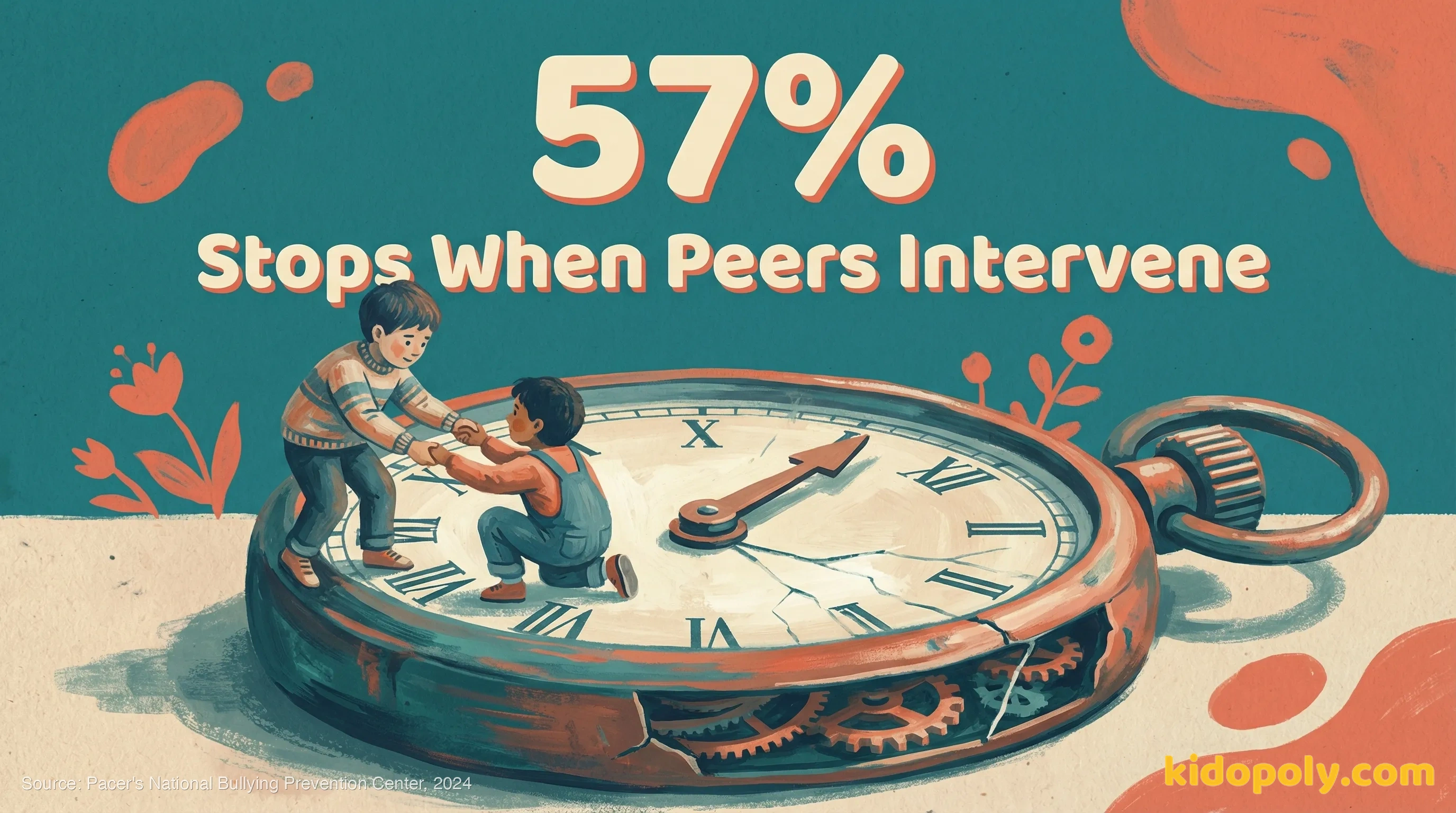
Bullying Stops When Peers Intervene
When bystanders intervene, bullying stops within 10 seconds in 57% of cases.
Reporting and Notification Statistics
| Action | Percentage |
|---|---|
| Bullied students who notified an adult | 46% |
| Students who thought bullying would happen again | 42% |
Source: National Center for Education Statistics (NCES) (2022)
Does reporting bullying actually help?
Common Questions from Families
Is cyberbullying really increasing or just reported more?
At what age is bullying most severe?
Are private schools safer from bullying than public schools?
What are the warning signs I should look for?
Taking Action: What Families and Educators Can Do
What Parents Can Do
- Start the conversation before it happens. Since bullying peaks in 6th grade (27%), talk about healthy friendships and digital boundaries in 4th and 5th grade.
- Watch for the 'Silent Signs'. Since only 46% of kids report bullying, look for changes in sleep, appetite, or a sudden reluctance to go to school.
- Teach the 'Bystander Power'. Remind your child that if they see something, speaking up or getting an adult works 57% of the time.
What Educators Can Do
- Monitor the 'Hotspots'. Data shows 43% of bullying happens in hallways and stairwells. Increase adult presence in these transition zones.
- Create anonymous reporting channels. Fear of retaliation is real; give students a safe, traceless way to alert you to problems.
- Intervene immediately and consistently. When adults respond quickly and consistently to bullying behavior, they send the message that it is not acceptable.
Sources (6)
- 1.
- 2. National Center for Education Statistics (NCES) (2022) https://nces.ed.gov/fastfacts/display.asp?id=719
- 3. FingerLakes1 (Reporting on NY Comptroller Data) (2026) https://www.fingerlakes1.com/2026/02/03/bullying-and-drugs-rise-as-school-violence-data-shifts-video/
- 4. World Health Organization (WHO) Europe (2024) https://www.who.int/europe/news/item/27-03-2024-one-in-six-school-aged-children-experiences-cyberbullying--finds-new-who-europe-study
- 5.
- 6. Pew Research Center (2022) https://www.pewresearch.org/internet/2022/12/15/teens-and-cyberbullying-2022/
