Childhood Obesity Statistics 2026 - Key Facts and Trends
For parents and educators, seeing the latest data on childhood health can feel overwhelming, but understanding the landscape is the first step toward supporting our children. The statistics for 2026 reveal that childhood obesity is not just a medical statistic but a complex challenge interwoven with how our families live, eat, and play. This page breaks down the numbers with empathy and clarity, offering a path forward for the adults who care most.

Key Takeaways
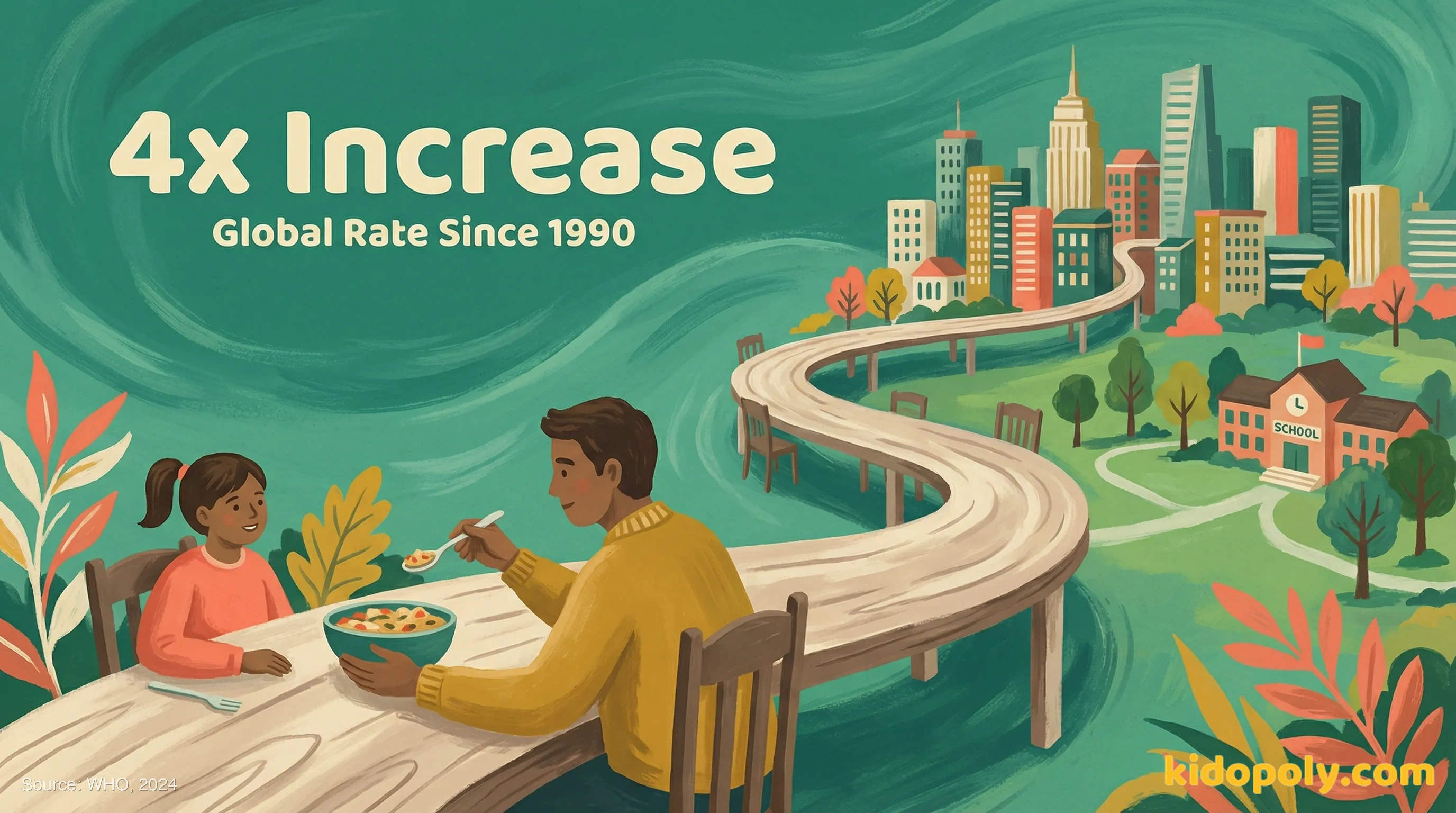
- 160 million children and adolescents globally were living with obesity in 2022, a fourfold increase since 1990.
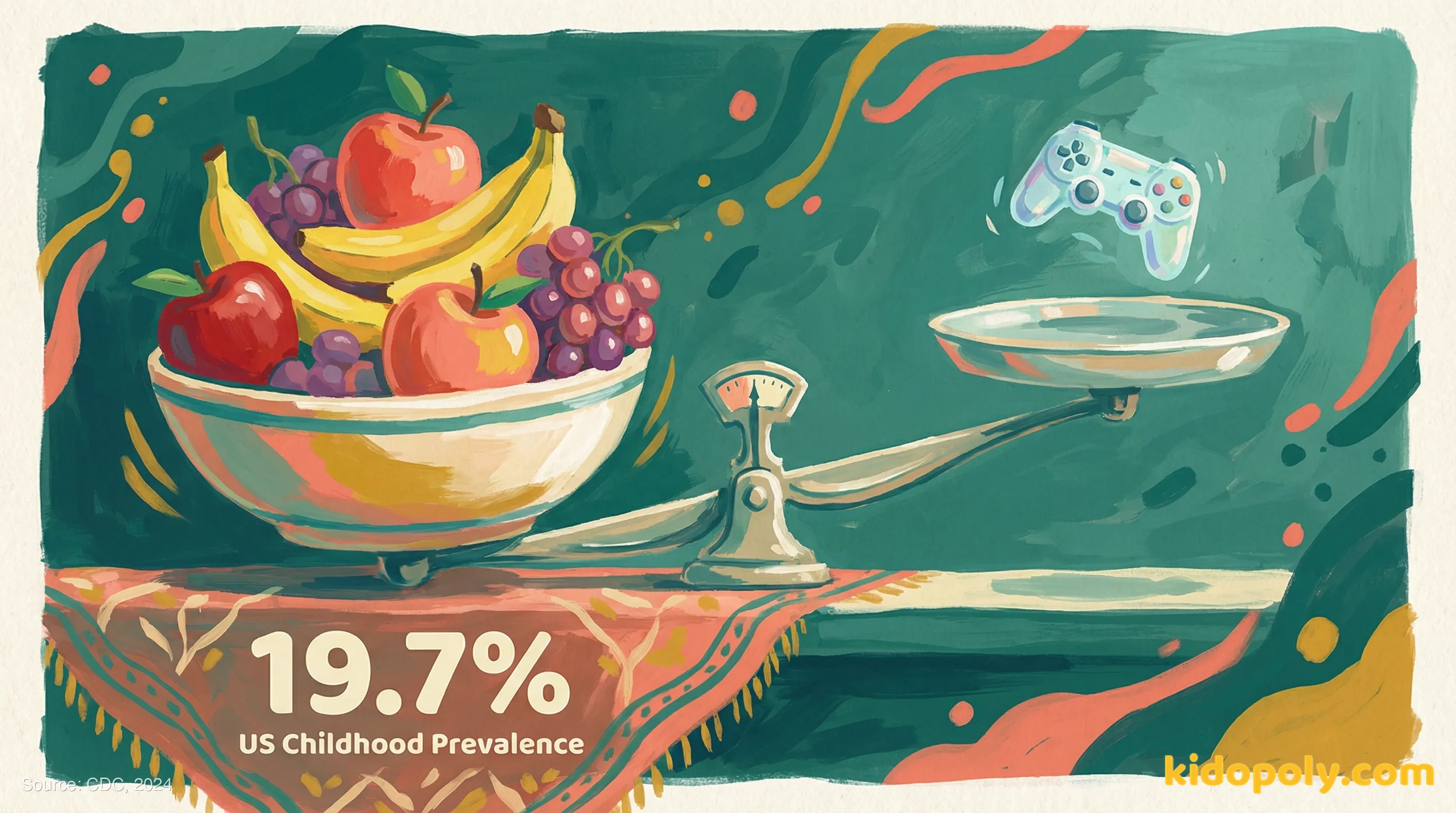
- In the US, 19.7% of children and adolescents are affected by obesity, totaling about 14.7 million kids.
- Obesity rates in the US are highest among Hispanic (26.2%) and Non-Hispanic Black children (24.8%).
- Globally, obesity has surpassed underweight prevalence among school-age children for the first time.
- Early onset is common, with 12.7% of US children aged 2-5 already meeting the criteria for obesity.
Global Overview: The Scale of the Challenge
Children and adolescents living with obesity globally
Based on the most recent comprehensive global analysis released in 2024.
Source: The Lancet (2024)
Global Rise in Obesity Rates (1990-2022)
Source: World Health Organization (2024)
United States: A Closer Look at Our Kids
US children and adolescents affected by obesity
Approximately 14.7 million children in the United States.
US Obesity Prevalence by Age Group
| Age Group | Prevalence |
|---|---|
| 2-5 years | 12.7% |
| 6-11 years | 20.7% |
| 12-19 years | 22.2% |
How is 'obesity' actually defined for children?
Socioeconomic Factors and Disparities
US Obesity Prevalence by Race and Ethnicity
| Demographic | Prevalence |
|---|---|
| Hispanic Children | 26.2% |
| Non-Hispanic Black Children | 24.8% |
| Non-Hispanic White Children | 16.6% |
| Non-Hispanic Asian Children | 9.0% |
Higher rate of severe obesity in lowest income groups
Compared to the highest income groups in the UK.
Source: World Health Organization (2024)
Health and Emotional Impact
Children aged 5-19 were overweight in 2022
This includes both those with overweight and obesity.
Source: WHO Fact Sheet (2024)
What health risks should parents look out for?
Supporting Your Child's Mental Health
- Focus on health and energy rather than appearance or numbers on a scale.
- Model a positive relationship with food by avoiding negative self-talk about your own body.
- Encourage physical activities that are fun and social, rather than 'exercise' for weight loss.
Global Shifts: A Double Burden
Obesity exceeds underweight globally
In 2022, obesity surpassed underweight prevalence in school-age children and adolescents.
Source: UNICEF (2024)
Global Prevalence of Overweight Children (Under 5) by Region (2022)
| Region | Percentage |
|---|---|
| Americas | 7.6% |
| Europe | 7.5% |
| Western Pacific | 6.7% |
| Africa | 3.6% |
Source: WHO Data Indicator (2022)
Common Questions from Families
At what age does obesity typically start?
Is it just about diet and exercise?
Are schools doing enough to help?
Moving Forward: What We Can Do
What Parents Can Do
- Prioritize family meals: Eating together is linked to better nutritional intake.
- Ensure adequate sleep: Lack of sleep is a known risk factor for weight gain in children.
- Replace sugary drinks with water: This is one of the single most effective ways to reduce daily sugar intake.
What Schools Can Do
- Strengthen wellness policies that limit access to competitive foods (vending machines) high in sugar and fat.
- Integrate movement into the classroom, not just during PE or recess.
- Provide access to free, clean drinking water throughout the school day.
Sources (7)
- 1.
- 2. World Health Organization (2024) https://www.who.int/news-room/fact-sheets/detail/obesity-and-overweight
- 3. Centers for Disease Control and Prevention (2024) https://www.cdc.gov/obesity/childhood-obesity-facts/childhood-obesity-facts.html
- 4.
- 5. American Academy of Child & Adolescent Psychiatry (2023) https://www.aacap.org/AACAP/Families_and_Youth/Facts_for_Families/FFF-Guide/Obesity-In-Children-And-Teens-079.aspx
- 6.
- 7.
