Screen Time Statistics 2026 - Key Facts and Trends
In 2026, the average teenager spends nearly 9 hours a day in front of a screen - more time than they spend sleeping or in school. For parents and educators, these aren't just numbers; they represent missed opportunities for play, connection, and real-world learning. This report synthesizes the latest verified data to help you navigate the digital landscape with confidence and empathy.
Key Takeaways
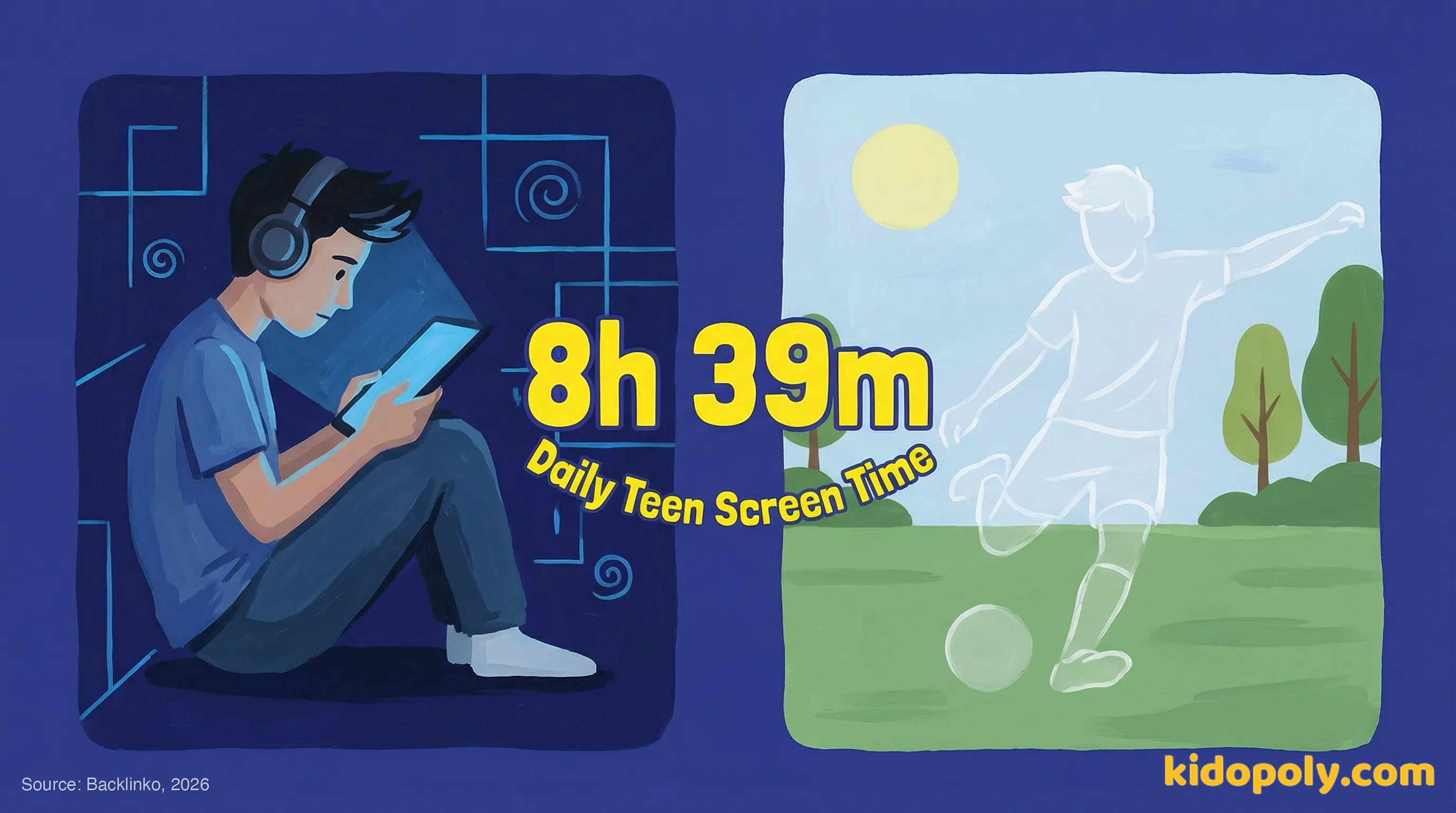
- Teens now average 8 hours and 39 minutes of daily screen time for entertainment alone.
- Mental health risk doubles for teens using screens 4+ hours daily (27.1% anxiety rate vs 12.3%).
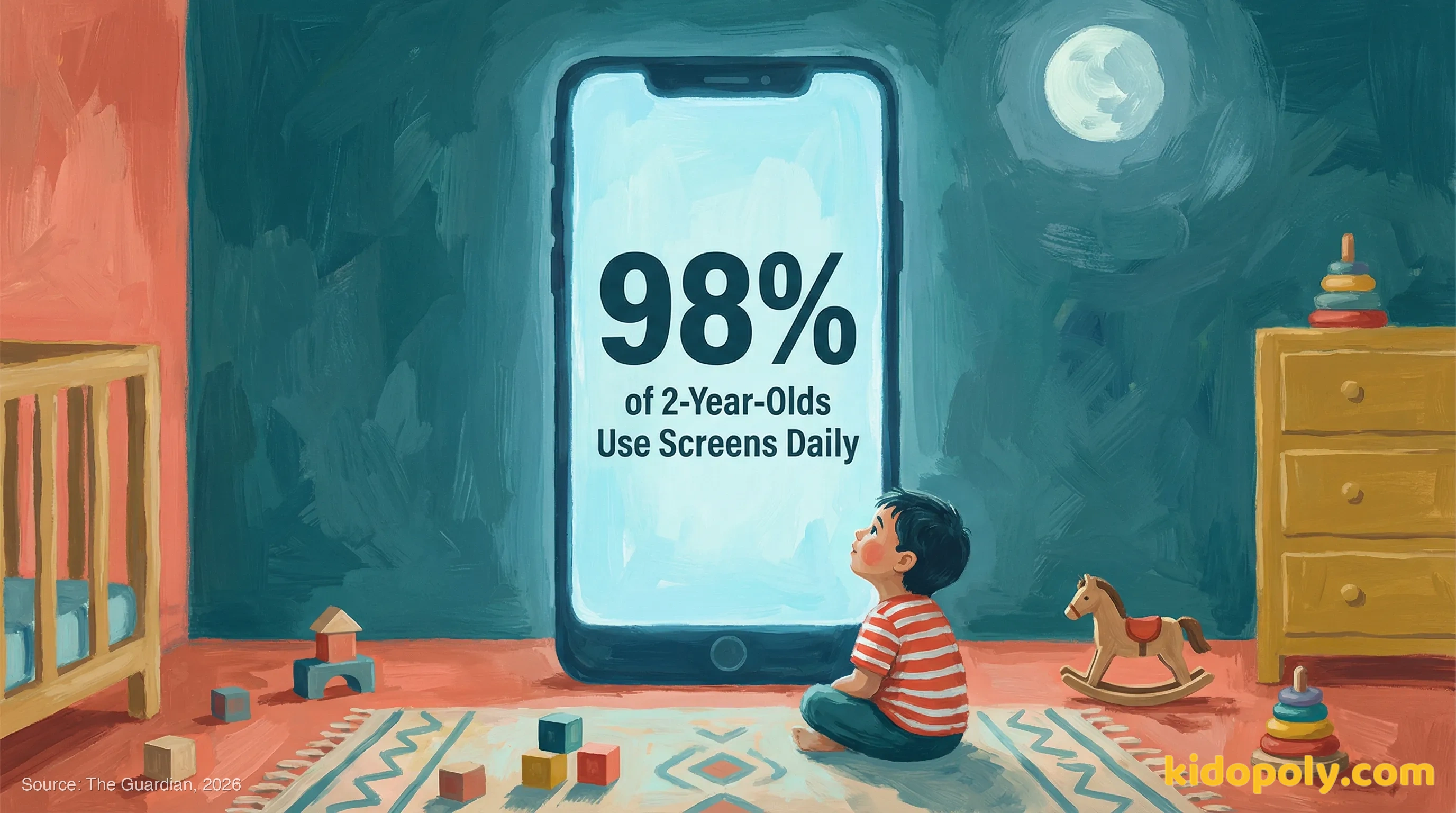
- 98% of two-year-olds interact with screens daily, impacting school readiness and vocabulary.
- Gen Z spends nearly 9 hours daily on screens, triple the average of Baby Boomers.
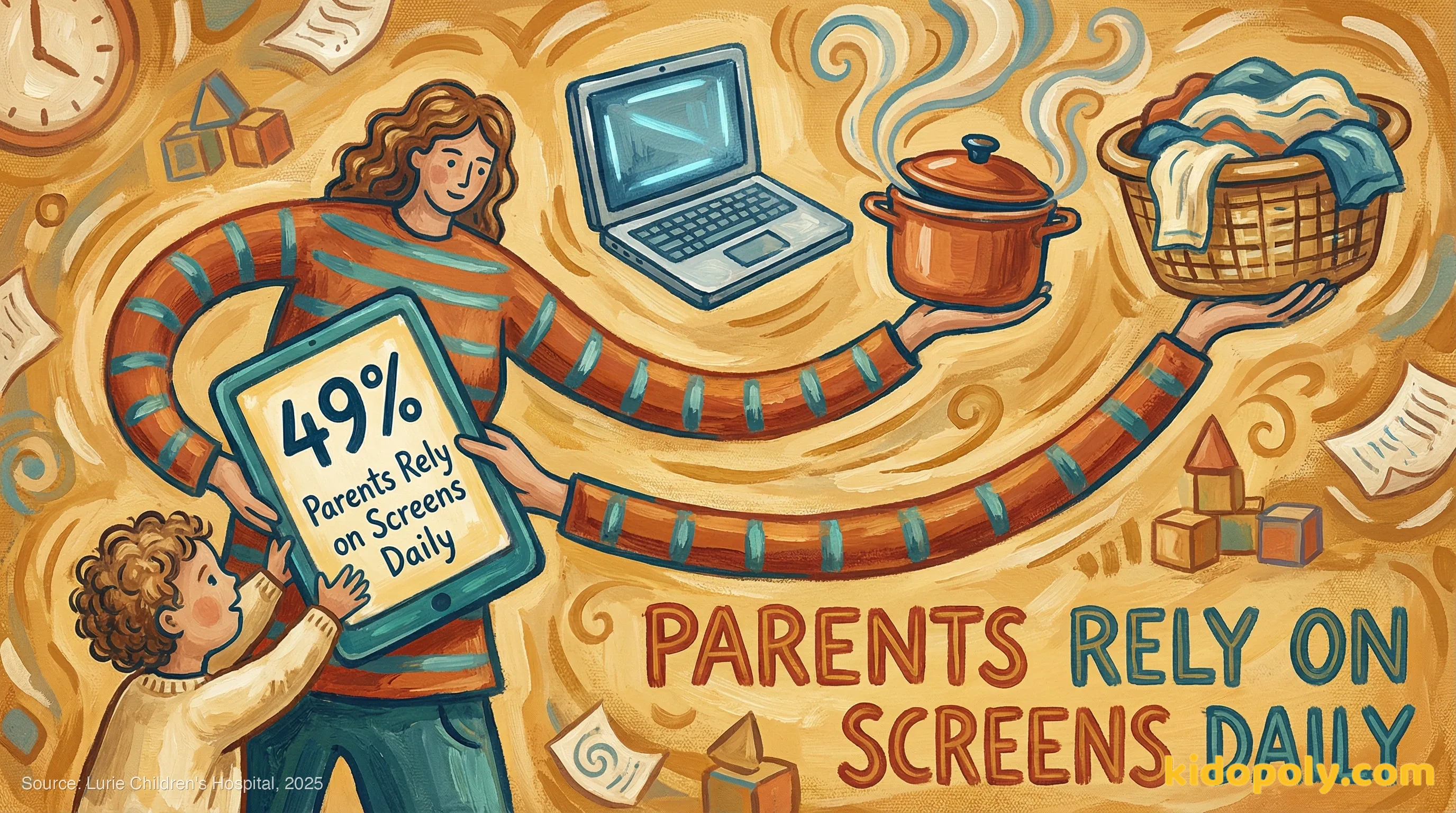
- 49% of parents rely on screens daily to manage parenting duties, despite 54% fearing addiction.
The Big Picture: 2026 Overview
Global Average Daily Screen Time
The average person worldwide spends nearly 40% of their waking hours looking at a screen.
Source: Demand Sage (2026)
Average Daily Screen Time by Generation
| Generation | Daily Average | Context |
|---|---|---|
| Gen Z | 9 hours | Highest usage group |
| Millennials | 6h 42m | Work & social blend |
| Gen X | 4h 10m | Moderate usage |
| Baby Boomers | 3h 31m | Lowest usage group |
Source: Magnet ABA (2025)
Children and Teens: A Deep Dive
Daily Entertainment Screen Time for Teens (13-18)
This figure excludes time spent on schoolwork.
Source: Backlinko (2026)
The Rise of Teen Screen Time (US)
Source: Exploding Topics (2026)
Screen Habits of Young Children
| Metric | Statistic | Note |
|---|---|---|
| 2-Year-Olds Daily Use | 98% | Watch screens on a typical day |
| Under 5s with Smartphone | 8% | Have their own device |
| Social Media Use (3-5y) | 37% | Use at least one social app |
Source: The Guardian (2026)
At what age are kids getting their own devices?
Mental Health and Development Impact
Anxiety in High-Use Teens
Teens with 4+ hours of screen time reporting anxiety symptoms (vs 12.3% for lower use).
Mental Health Symptoms by Screen Duration
| Symptom | 4+ Hours Daily | <4 Hours Daily |
|---|---|---|
| Anxiety Symptoms | 27.1% | 12.3% |
| Depression Symptoms | 25.9% | 9.5% |
The Parenting Dilemma
Parents Relying on Screens Daily
Percentage of parents using screens to manage parenting responsibilities.
Source: Lurie Children's Hospital (2025)
Fear of Addiction
Percentage of parents who feel their child is addicted to screens.
Source: Lurie Children's Hospital (2025)
How do I know if my child is addicted to screens?
Global Comparisons
Average Daily Screen Time by Country
| Country | Daily Average | Vs Global Avg |
|---|---|---|
| South Africa | 9h 24m | +2h 39m |
| Philippines | 8h 52m | +2h 07m |
| USA | 7h 03m | +18m |
| UK | 5h 36m | -1h 09m |
| Japan | 4h 09m | -2h 36m |
Source: Demand Sage (2026)
Common Questions from Families
Does screen time actually affect my toddler's speech?
Is it true that most teenagers are online 'constantly'?
What are the physical effects of all this screen time?
Moving Forward: Actionable Steps
What Parents Can Do
- Delay ownership: 59% of kids use screens by age 3, but delaying personal device ownership can protect early development.
- Establish screen-free zones: With 49% of parents relying on screens daily, create specific 'sanctuaries' like the dinner table or bedrooms to ensure face-to-face connection.
- Co-viewing for toddlers: For children under 2, limit use to video chatting. For ages 2-5, watch with them to turn passive consumption into active learning.
What Educators Can Do
- Reintroduce physical manipulatives: Since 28% of young children struggle with physical books, emphasize tactile play (Lego, paper, puzzles) in early years.
- Teach digital balance, not just skills: Incorporate lessons on how tech companies design apps to keep us scrolling, empowering students to recognize 'sticky' design.
Sources (8)
- 1.
- 2.
- 3.
- 4. CDC National Center for Health Statistics (2024) https://www.cdc.gov/nchs/products/databriefs/db513.htm
- 5.
- 6.
- 7.
- 8.
