1The Secret Volcanic Recipe
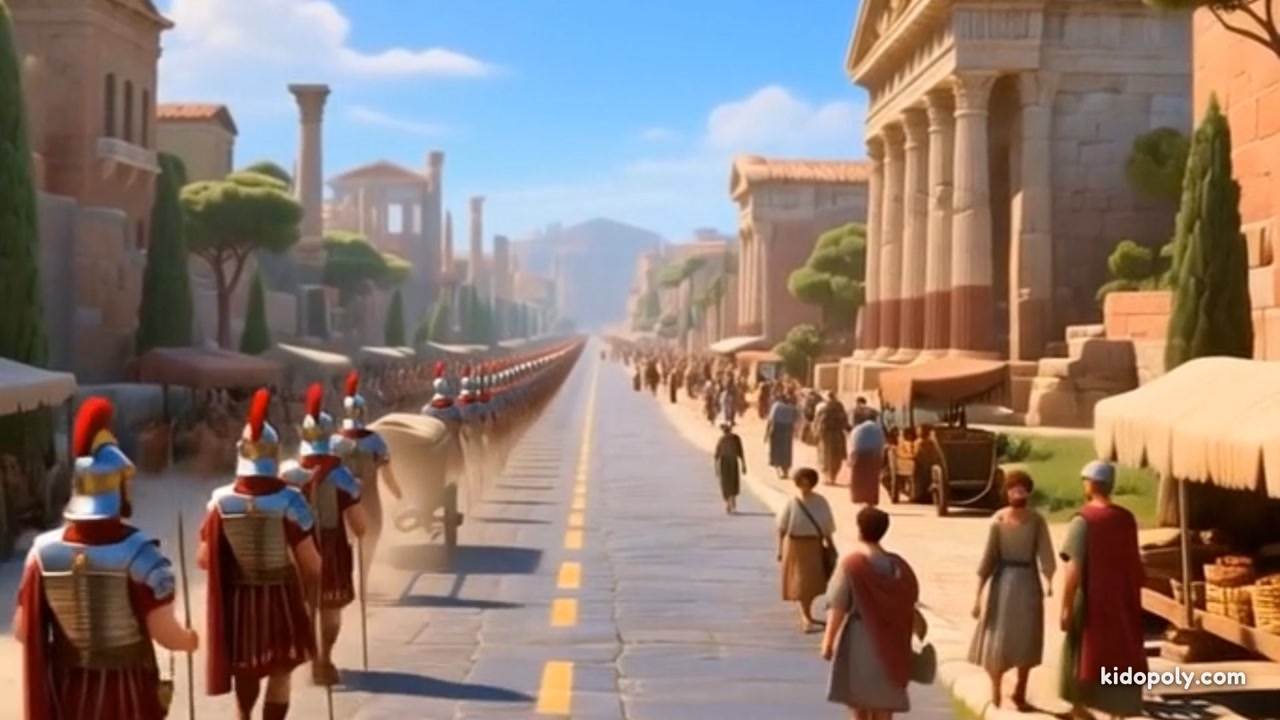
Ancient Romans weren't just great soldiers; they were master chemists! While we build modern skyscrapers with concrete that lasts about 50 years, the Romans created a "super-material" that has survived for over 2,000 years. Their secret ingredient was a special volcanic ash called pozzolana, found near Mount Vesuvius. By mixing this ash with lime and seawater, they triggered a chemical reaction that created a rock-like material so tough it can actually withstand earthquakes and crashing ocean waves without breaking.
2Buildings That Heal Themselves
Imagine if a scratch on your bike could fix itself overnight! Roman concrete actually has a "self-healing" power. Inside the concrete, there are tiny white chunks called lime clasts. When a small crack forms and rainwater seeps in, it hits these lime chunks and creates a fresh chemical reaction. This process grows new crystals that fill the crack like a biological scab, making the structure even stronger than it was before. This is why Roman sea walls and harbors are still standing in the Mediterranean today, even after two millennia of salt-water erosion.
3Engineering the Impossible
The ultimate proof of this ancient mystery is the Pantheon in Rome. Completed around 126 AD, its massive dome is over 142 feet wide and is made entirely of unreinforced concrete. This means there are no metal bars or supports inside to hold it up! To make it work, Roman engineers used heavier volcanic stones at the bottom and lighter, air-filled stones called pumice at the very top. Even today, with all our modern computers and machines, we still look at Roman buildings to learn how they built things to last forever.