Space 1:00

Dancing Sky Lights for Kids

1The Greatest Light Show on Earth

Imagine the night sky suddenly turning into a giant, glowing painting of neon greens, soft pinks, and deep purples! These amazing light shows are called the Aurora Borealis in the North and the Aurora Australis in the South. While they look like magic, they are actually a spectacular interaction between our planet and the Sun. People have been watching these dancing lights for thousands of years, and some ancient cultures even told stories about them being dragons, spirits, or celestial bridges in the sky.

2Particles from a Solar Wind

The journey of an aurora actually begins 93 million miles away at the Sun! Our Sun is constantly blowing out a "solar wind" filled with tiny, invisible charged particles. When these particles reach Earth, our planet’s magnetic field acts like a giant superhero shield, protecting us from most of them. However, Earth's magnetic field lines pull some of these particles toward the weakest spots—the North and South Poles. When they crash into the gases in our upper atmosphere at speeds of up to 45 million miles per hour, they release energy that we see as brilliant, shimmering light.

3A Rainbow of Cosmic Gases

Did you know that the color of the aurora depends on how high up the particles are and which gas they hit? Oxygen usually creates the most famous ghostly green light when it's about 60 to 150 miles high, but it can turn bright red if the collision happens even higher up! Nitrogen gas is responsible for producing beautiful blue or deep purple edges on the light curtains. These displays happen way above where airplanes fly—usually starting around 60 miles above the ground and reaching hundreds of miles into space. It is a colorful reminder of how connected our world is to the rest of the solar system.
Video Transcript

Introduction

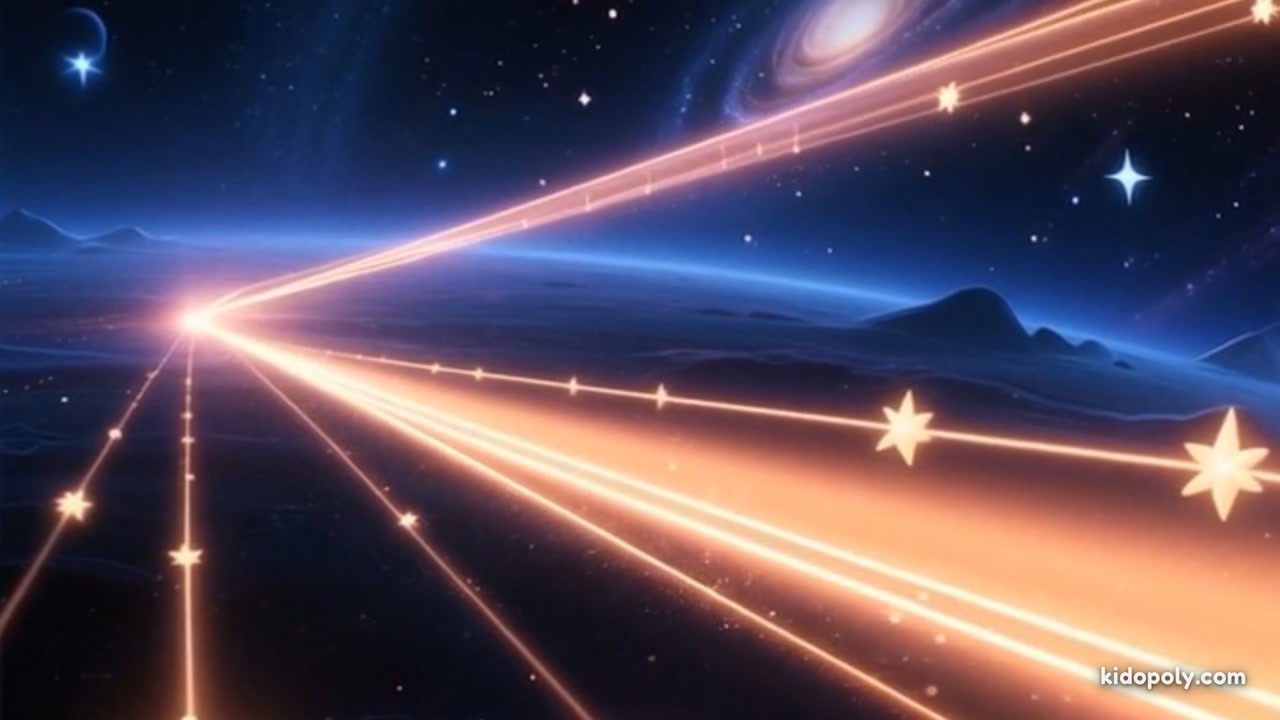
Beautiful dancing lights in Earth's sky, like a cosmic disco! These natural light displays are best seen near the North and South Poles, painting the night sky with brilliant greens, reds, and purples. It creates a truly magical experience for anyone lucky enough to witness them.

Key Facts

Did you know that auroras happen when tiny, fast-moving particles from the Sun hit Earth's atmosphere? These particles get pulled by Earth's magnetic field towards the poles, where they crash into gases like oxygen and nitrogen, making them glow. Different gases glow different colours.

Think About It

Why are auroras usually seen near Earth's North and South Poles?

The Answer

Auroras are seen near the poles because Earth's magnetic field acts like a giant shield, directing the charged particles from the Sun towards these regions. When these particles reach the upper atmosphere near the poles, they collide with gas atoms, causing them to light up and create the beautiful aurora displays.

Frequently Asked Questions

Can you see the Northern Lights from anywhere on Earth?

While auroras are occasionally seen further south during massive solar storms, they are usually only visible near the 'Auroral Oval' around the North and South Poles. Places like Alaska, Canada, Norway, and Iceland are the best spots to see them because they are closest to the magnetic North Pole.

Does the Moon have its own auroras?

No, the Moon does not have auroras because it doesn't have a strong magnetic field or an atmosphere. Auroras need gases like oxygen or nitrogen to 'glow' when hit by particles, so planets like Earth, Jupiter, and Saturn are much better at making these light shows.

How long do the dancing lights usually last?

An aurora can last for just a few minutes or stretch on for several hours depending on how active the Sun is. Sometimes they look like still curtains of light, and other times they 'dance' or pulse quickly across the sky when the solar wind is particularly strong.

Why are they called 'Aurora Borealis'?

The name comes from 'Aurora,' the Roman goddess of the dawn, and 'Boreas,' the Greek name for the north wind. In the Southern Hemisphere, they are called Aurora Australis, which means 'Southern Lights' in Latin.

Watch More Videos

Discover fun educational videos about science, history, animals, and more.

Explore All Videos
Audience Debug