Sports 1:00

Boomerang Science for Kids

1The Secret of the Return

A boomerang is essentially two wings joined together. These wings are shaped like airfoils—the exact same shape used for airplane wings! When you throw a boomerang with a flick of your wrist, it doesn't just sail through the air; it spins at about 10 to 15 revolutions per second. This spinning motion is crucial because it creates a force called "lift." Because the top wing is moving faster through the air than the bottom wing as it rotates, the boomerang feels an uneven push. This imbalance is what prevents it from flying straight and instead coaxes it into a giant, invisible circle.

2Physics in Action

Scientists call the magic behind the return "gyroscopic precession." Imagine the boomerang is a spinning top. If you try to tilt a spinning top, it doesn't just fall over; it moves sideways. In the air, the wind pushes against the spinning boomerang, but because it is rotating so fast, that force gets shifted 90 degrees. This constant shifting of force acts like a steering wheel, guiding the boomerang through a wide U-turn. Some high-tech sports boomerangs are so efficient they can travel over 100 feet away before making their perfect return right back to your hand!

3From Hunting to Sport

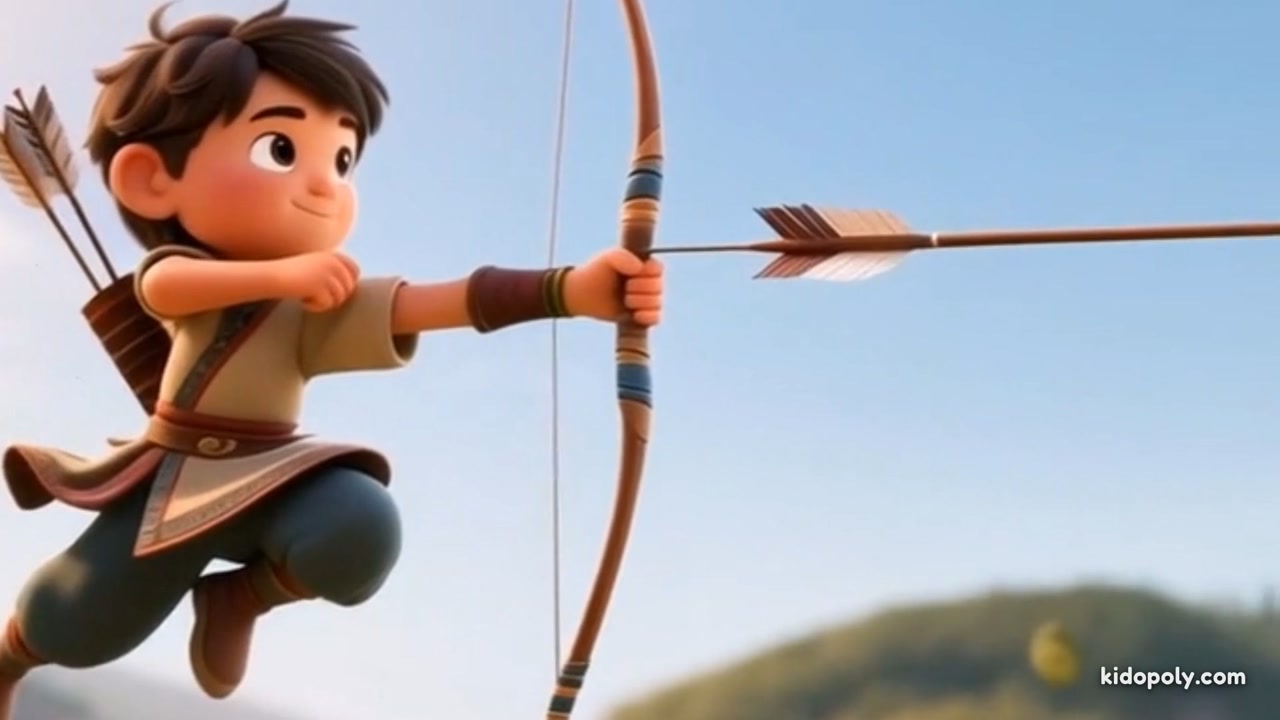
Boomerangs have a long and surprising history, dating back over 20,000 years! While the Indigenous people of Australia are world-famous for them, ancient boomerangs have also been found in places like Poland and Egypt. The very first ones were actually "throwing sticks" used for hunting. These were designed to fly straight and far—up to 200 yards—to hit a target with great power. Today, boomerangs are used in global sports competitions where athletes test their accuracy, how long they can keep the device in the air, and even their ability to catch them behind their backs!

Video Transcript

Introduction

Imagine throwing something that comes right back to you! That is the magic of a boomerang. It is not just a trick; it is clever science at play. The shape of a boomerang, with its special curved arms, interacts with the air in a unique way, making it fly in a big circle and return to its thrower.

Key Facts

Did you know that some of the earliest boomerangs were not designed to return but were used for hunting? The returning boomerang works because of a scientific principle called gyroscopic precession, which means its spin affects how it turns in the air, creating a curved path that brings it back.

Think About It

What would happen if you threw a flat, round plate instead of a boomerang, and why would it not come back?

The Answer

A flat, round plate would not come back because it does not have the special curved arms and angled surfaces of a boomerang. These features create different air pressures on the top and bottom of the arms as it spins, making it lift and curve in a way that allows it to return. A plate would just fall to the ground.

Frequently Asked Questions

Why does a boomerang have a curved shape?

The curved shape acts like a pair of wings that create lift as they spin through the air. This shape, called an airfoil, causes air to move faster over the top than the bottom, creating a pressure difference that helps the boomerang stay airborne and turn.

Can any piece of wood be a boomerang?

No, a regular piece of wood will just fall because it lacks the specific aerodynamic shape needed to interact with the wind. To return, a boomerang must be carved with precision so that its arms are angled correctly to generate the forces of lift and spin.

How fast does a boomerang spin?

A typical returning boomerang can spin between 10 and 15 times every single second while it is in flight. This rapid rotation is what creates the gyroscopic stability needed to keep it from wobbling and ensures it follows a predictable circular path.

Do all boomerangs come back to the thrower?

Not all of them! There are two main types: returning boomerangs used for sport, and non-returning boomerangs used historically for hunting. Hunting boomerangs are usually heavier and designed to fly in a very straight line for a long distance to hit a specific target.

Watch More Videos

Discover fun educational videos about science, history, animals, and more.

Explore All Videos
Audience Debug