1Nature’s Tiny Architects
Imagine if you could build a skyscraper using nothing but microscopic building blocks that know exactly where to go! That is exactly what happens when a crystal forms. Whether it is a sparkling diamond or a grain of salt, crystals are created when minerals dissolved in liquid—like hot magma or salty seawater—begin to cool down or evaporate. As the liquid disappears or loses heat, the atoms inside don't just clump together randomly. Instead, they follow mathematical blueprints to snap into a repeating 3D grid called a crystal lattice. This is why crystals have such flat, shiny faces and sharp points; they are showing us the secret organized patterns of the atoms inside them!
2Giant Caves and Frozen Stars
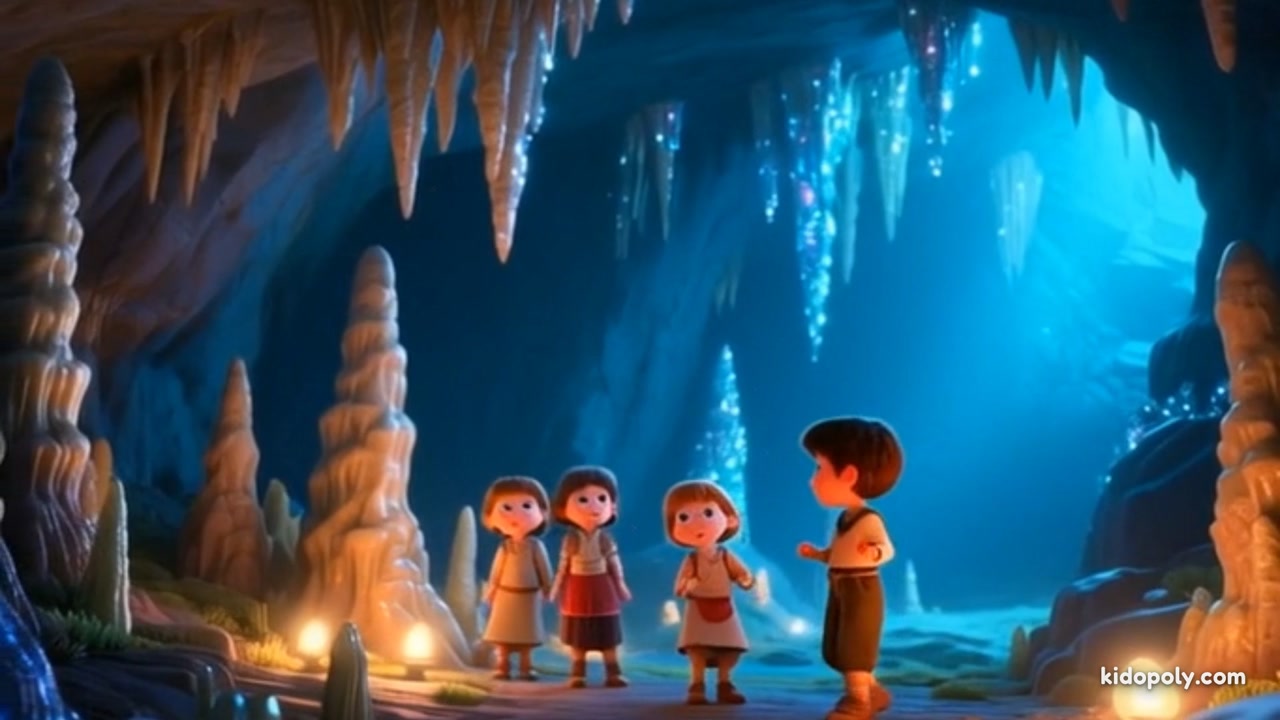
Crystals come in all sizes, from microscopic dust to giants that could fill a gymnasium. Deep beneath the Earth in places like the Naica Mine in Mexico, huge beams of selenite crystal have been growing in hot, mineral-rich water for over 500,000 years, reaching lengths of up to 39 feet! On the flip side, every time it snows, the sky is creating billions of tiny ice crystals. Because of the way water molecules bond together, these frozen crystals almost always grow with six sides, creating the beautiful hexagonal symmetry we see in snowflakes. No two are exactly alike because the temperature and humidity change slightly as each one falls through the air.
3The Secret Ingredient: Time
Why isn't every rock a beautiful, clear crystal? The secret ingredient is time! To grow a perfect, see-through crystal, the atoms need a very slow and peaceful environment. If a liquid cools down too fast—like lava exploding out of a volcano—the atoms get frozen in place before they can find their "comfortable" organized positions, resulting in rough, chunky rocks. However, when minerals have millions of years to settle in a quiet underground pocket, they can grow into incredible geometric shapes. We even find crystals in space! When asteroids are heated up and then slowly cool down in the vacuum of the universe, rock vapors can settle into crystalline structures that are billions of years old.