Dinosaurs 1:00

How Dinosaurs Slept for Kids

1Standing Giants and Heavy Nappers

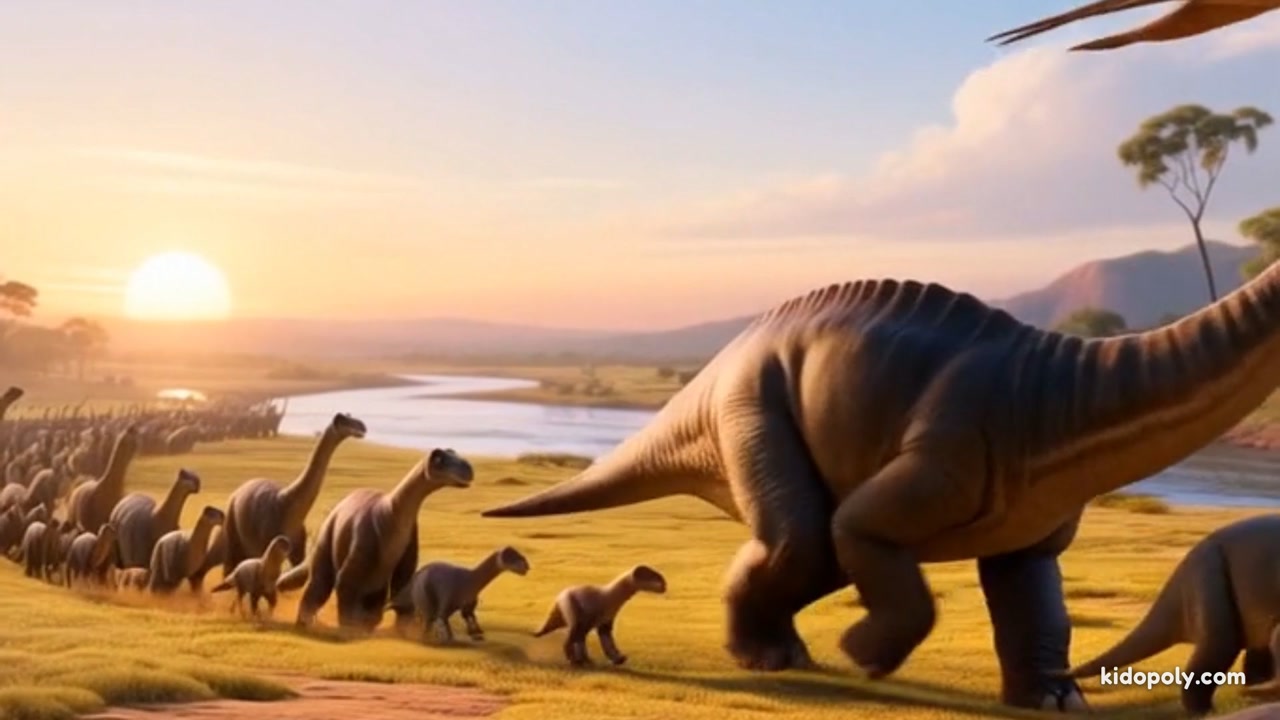
When you weigh as much as ten school buses, getting back up from the ground is a lot of work! This is why scientists believe giant, long-necked sauropods like the Brachiosaurus often slept standing up. Just like modern elephants and giraffes, these massive herbivores probably locked their knees and took short power naps while remaining on their feet. This helped them stay ready to stomp away quickly if a hungry predator arrived. For a 40-ton dinosaur, lying down wasn't just a nap—it was a major workout!

2The Sleeping Dragon Fossil

How do we know some dinosaurs liked to get cozy? Scientists found a fossil of a small dinosaur called Mei long, which means "sleeping dragon." This amazing find shows the dinosaur curled up in a tight ball with its tail wrapped around its body and its head tucked under its arm. This is exactly how many birds sleep today to keep their body heat from escaping. It suggests that many smaller dinosaurs were warm-blooded and loved a good snuggle to stay warm during the chilly prehistoric nights.

3Danger at Bedtime

Finding a safe place to rest was a matter of life and death in the Mesozoic era. While a T-Rex was the king of the day, even it had to be careful when closing its eyes. Smaller, faster dinosaurs likely hid in thick ferns or perched on low tree branches to stay out of sight. Armored dinosaurs, like the spiky Ankylosaurus, had a built-in security system. Even while resting, their thick skin and bony plates acted like a suit of armor, making it very difficult for a hunter to take a bite without getting a mouthful of bone!
Video Transcript

Introduction

Imagine a giant Diplodocus needing a nap! It's tricky to know exactly how dinosaurs slept, as we don't have fossilised sleep poses. But scientists use clues from modern animals, like elephants and birds, and dinosaur bone structures to make educated guesses. Did they lie down completely, or perhaps sleep standing up for quick escapes? It's a fascinating puzzle!

Key Facts

Did you know some dinosaurs, like the giant long-necked sauropods, might have slept standing up, much like today's giraffes, to avoid predators or simply because lying down and getting back up was too much effort? Did you know other smaller, bird-like dinosaurs might have slept in tucked-in positions, similar to how birds rest their heads under a wing, perhaps even perching on branches?

Think About It

If a very spiky dinosaur like Stegosaurus needed to sleep, where would be the safest place for it to rest?

The Answer

A Stegosaurus might have rested in a sheltered spot, perhaps amongst dense plants or close to a rock formation. Its spiky tail and back plates offered protection, so even when resting, it was a formidable sight to any predator, though lying down would have exposed its soft belly.

Frequently Asked Questions

Did dinosaurs sleep at night or during the day?

It depended on the dinosaur! Some predators had extra-large eyes that helped them see in the dark, meaning they were active at night and slept during the day. However, many plant-eaters likely slept at night when it was harder for hunters to find them.

Did any dinosaurs sleep in trees?

Yes, scientists believe that small, bird-like dinosaurs with curved claws probably perched on branches. This kept them high above the ground and safe from large ground-dwelling meat-eaters who couldn't climb.

How long did a dinosaur need to sleep?

Big dinosaurs like the Diplodocus probably only needed a few hours of sleep a day, similar to how modern elephants live. Smaller, high-energy dinosaurs probably needed much more rest to recover from all the running and hunting they did.

Could a T-Rex lie down to sleep?

A T-Rex could lie down, but it was a risky move because it took time to stand back up. If they did lie down, they likely used their small but very strong arms to help push their massive bodies off the ground in a hurry.

Watch More Videos

Discover fun educational videos about science, history, animals, and more.

Explore All Videos
Audience Debug