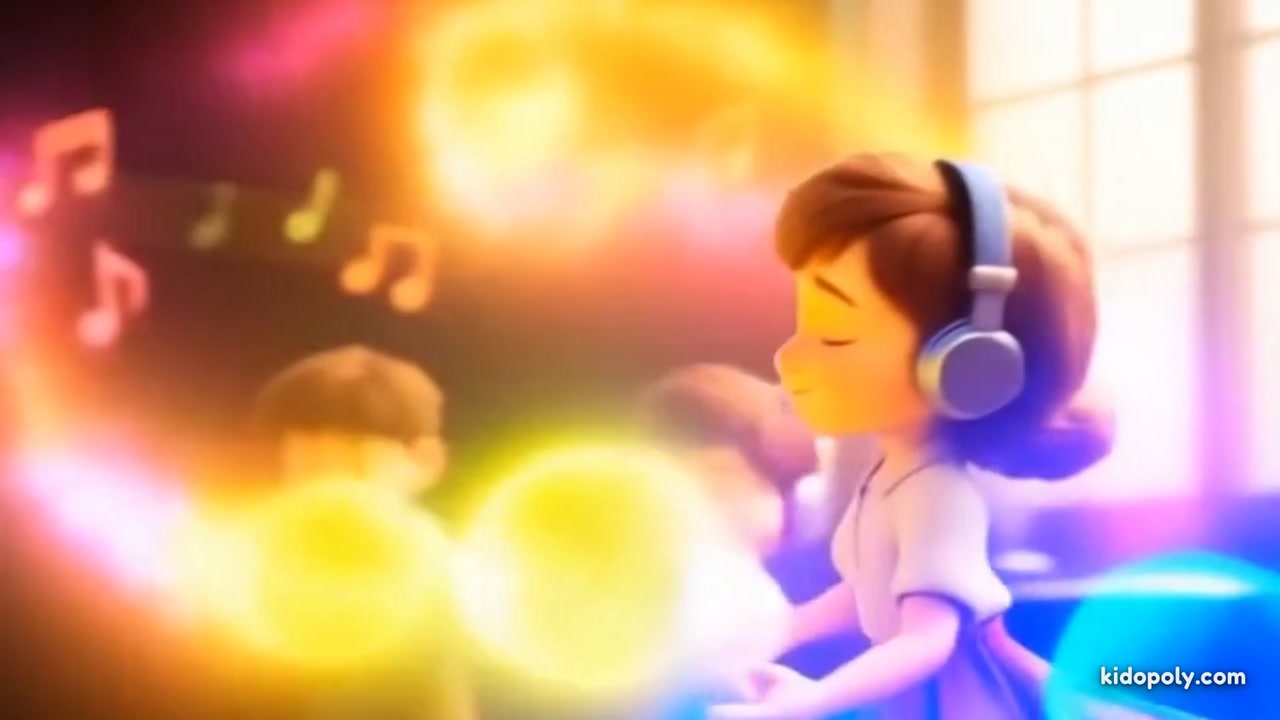
Music 1:00

Feeling The Beat for Kids

1How Sound Becomes a Feeling

Did you know that every time you hear a song, the air around you is actually dancing? Sound travels in waves, which are tiny vibrations that move through the air, water, and even solid floors. When a drummer hits a big bass drum, they push a huge "puff" of air forward, creating a strong wave that can travel at over 700 miles per hour! These waves do not just hit your ears; they bump into your whole body. This is why you might feel a powerful "thump" in your chest when you are standing near a loud speaker at a concert or a parade.

2Sensing the Rhythm Through Your Bones

Your skin and bones are incredibly good at picking up these tiny movements. Humans have special receptors in their skin called mechanoreceptors that can detect vibrations as small as a few micrometers! This means your hands and feet are like natural antennas for music. Low-frequency sounds, like those from a tuba or a bass guitar, create wider, slower waves that are much easier for your body to feel than high-pitched sounds like a bird's chirp. This physical connection to the beat helps us stay in sync when we dance, even if we aren't focusing on the sound with our ears.

3A World of Inclusive Music

Because music is a physical vibration, it is a universal language that does not require hearing to enjoy. Many members of the deaf and hard-of-hearing community use "Vibrotactile" technology to experience songs. These are special wearable vests or backpacks that turn musical notes into specific patterns of touch on the back and chest. Some dance floors are even built on springs or made of resonant wood to help dancers feel the rhythm through their feet. It proves that music is not just something we listen to—it is something we experience with our entire hearts and bodies!


Video Transcript

Introduction

Music is not just something we hear with our ears; it is also something we can feel with our whole body! When a powerful beat plays, you might feel the vibrations in your chest or through the floor. For people who cannot hear, music can be experienced through these incredible vibrations. Feeling the rhythm is a magical way to connect with music, showing us it is truly for everyone.

Key Facts

Did you know that sound travels as vibrations through the air, and these vibrations can be felt by your skin and bones, not just your ears? Or that special vests and floors are sometimes used at concerts for people who are deaf or hard of hearing, allowing them to feel the music's powerful vibrations and experience the rhythm? Your body is actually incredibly sensitive to these vibrations, especially when the sounds are low and strong, like a bass drum.

Think About It

How can someone enjoy music if they cannot hear it with their ears?

The Answer

Someone can enjoy music if they cannot hear it by feeling the vibrations! Sound waves cause things to vibrate, and these vibrations can be felt through the skin, especially in parts of the body like the chest, hands, and feet. Loud music with strong bass notes creates powerful vibrations that can be felt strongly. Some people also use special devices that turn sound into patterns of touch or light, allowing them to experience the music in a different way.

Frequently Asked Questions

Why can I feel loud music in my chest?

You feel music in your chest because sound is a physical wave of pressure. When the music has a lot of 'bass' or low notes, the sound waves are powerful enough to physically push against your body, and your chest is a large, hollow area that resonates with those vibrations.

How do people who are deaf enjoy music?

People who are deaf often enjoy music by feeling the vibrations through their skin and bones. They might use special vibrating platforms, hold a balloon to feel the air move, or use haptic vests that translate different instruments into different 'touches' on their skin.

What part of the body is most sensitive to music vibrations?

Your fingertips and the soles of your feet are among the most sensitive parts of your body for feeling vibrations. This is because they have a high density of nerve endings that can detect even the smallest movements in the air or the floor.

Do different instruments feel different?

Yes! A deep bass drum feels like a heavy, slow thumping or a 'punch' in the air. A violin or a flute creates much faster, lighter vibrations that might feel like a tiny tingle or a buzz if you were to touch the instrument while it was playing.

Watch More Videos

Discover fun educational videos about science, history, animals, and more.

Explore All Videos
Audience Debug