Dinosaurs 1:00

Fossil Formation for Kids

1The Perfect Recipe for a Fossil

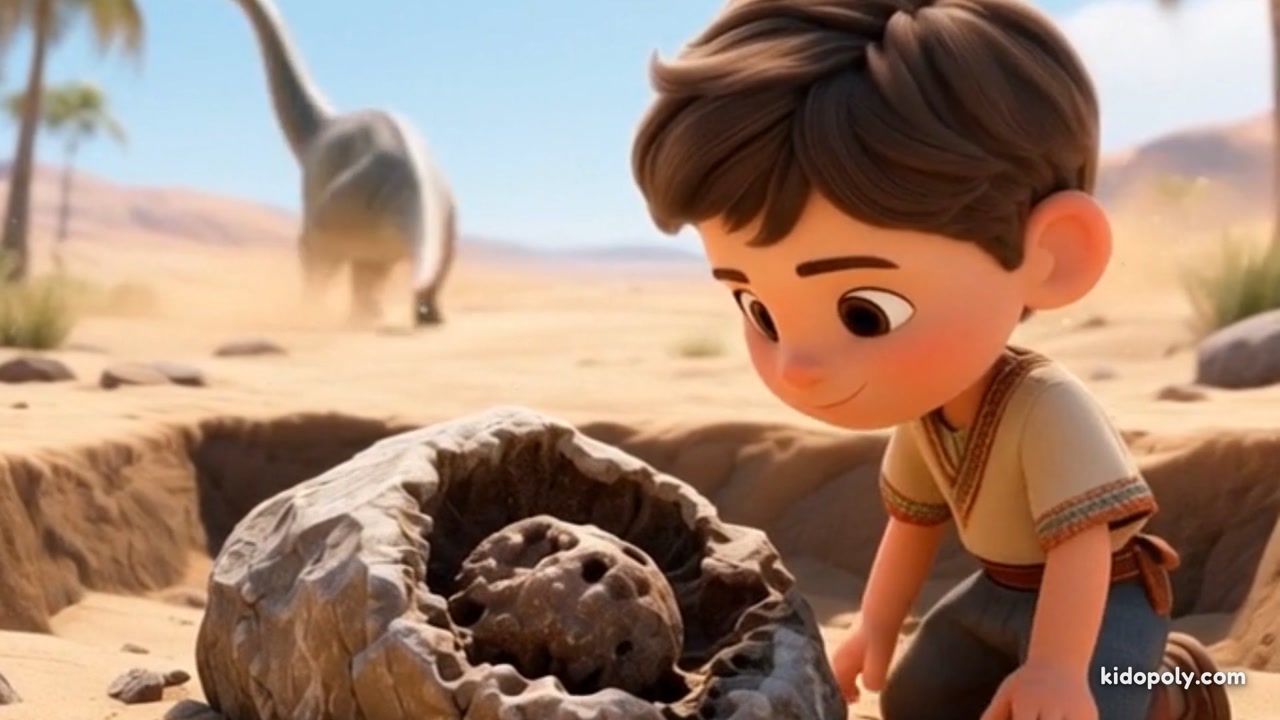
Creating a fossil is actually very difficult and requires the perfect conditions! When a dinosaur died, its journey to becoming a "stone time capsule" began with a quick burial. This usually happened near rivers or floodplains where rushing water could dump huge amounts of sediment—like sand and silt—over the body. This heavy blanket of earth was vital because it protected the remains from being scattered by hungry scavengers or worn away by the wind and rain. Out of the millions of dinosaurs that once roamed the Earth, only a tiny fraction were buried fast enough to start this incredible transformation.

2The Magic of Turning into Stone

Once buried deep underground, a process called permineralization begins. Over thousands and millions of years, water from rain and underground streams soaks through the layers of sediment. This water is filled with tiny minerals like silica and calcite. As the water seeps into the microscopic pores of the dinosaur's bones, the minerals stay behind, slowly crystallization and filling in the gaps. Eventually, the original bone material dissolves away entirely, leaving behind a rock that is the exact shape of the bone. It is like replacing every single brick in a house with a piece of gold until you have a gold house that looks exactly like the old one!

3More Than Just Old Bones

While we usually think of giant T-Rex skeletons, fossils can tell us so much more about the prehistoric world. Scientists have discovered "trace fossils," which are things like footprints, tail drags, and even fossilized dinosaur poop called coprolites! On very rare occasions, if a dinosaur was buried in extremely fine mud, even the texture of its scaly skin or the patterns of its feathers can be preserved. These rare finds act as a 3D map of the past, helping us understand not just what dinosaurs looked like, but how they moved, what they ate, and how they cared for their young 65 million years ago.
Video Transcript

Introduction

Fossils are like nature's time capsules that preserve dinosaurs for millions of years! When a dinosaur died, layers of mud, sand, and sediment slowly buried its bones. Over time, minerals replaced the bone material, turning them into stone while keeping their exact shape.

Key Facts

Did you know that only about one in a million dinosaurs became fossils? Most dinosaur bones were eaten by scavengers or rotted away! Did you know some fossils preserve dinosaur skin, feathers, and even their last meals inside their stomachs?

Think About It

Why do you think we find more fossils of dinosaurs that lived near rivers and lakes than those that lived in mountains?

The Answer

Dinosaurs near water had a much better chance of being quickly buried by mud and sediment when they died. Mountain dinosaurs were more likely to be exposed to weather and scavengers, so their bones disappeared before they could fossilize.

Frequently Asked Questions

How long does it take for a fossil to form?

It generally takes at least 10,000 years for remains to be considered a fossil, but most dinosaur fossils we find today are tens of millions of years old! The process of mineral replacement is incredibly slow, requiring the weight of massive rock layers to press down over ages.

Can you find fossils in your backyard?

It depends on where you live! Fossils are almost always found in sedimentary rock, so if your backyard sits on top of old layers of dried-up oceans or riverbeds, you might find shells or small imprints. However, finding a dinosaur bone is very rare because the conditions for preservation have to be just right.

Why aren't all dead animals turned into fossils?

Most animals are eaten by predators or decomposed by bacteria and weather before they can be buried. To become a fossil, an animal must be covered by sediment very quickly after it dies to protect it from oxygen and scavengers. This is why we find more fossils of water-dwelling creatures than land animals.

What is the difference between a bone and a fossil?

A bone is made of organic material like calcium and marrow, while a fossil is actually a piece of rock. During the fossilization process, minerals from the earth replace the organic bone material, essentially turning the skeleton into a heavy, durable stone replica.

Watch More Videos

Discover fun educational videos about science, history, animals, and more.

Explore All Videos
Audience Debug