Robots 1:00

Robot Sensors Vision for Kids

1Beyond Human Eyes

While humans rely on two eyes to see color and depth, robots can have dozens of "eyes" located all over their bodies! These specialized tools are called sensors. Unlike us, robots don't just see visible light; they can detect things that are totally invisible to the human eye. For example, many high-tech robots use LiDAR, which stands for Light Detection and Ranging. This sensor works by firing thousands of tiny laser pulses every second and measuring exactly how long they take to bounce back. This allows a robot to build a perfect 3D map of its surroundings, even in a room with no lights at all!

2Hearing with Light and Sound

Have you ever wondered how a self-driving car knows there is a obstacle in the street? It uses a clever mix of cameras and ultrasonic sensors. Ultrasonic sensors work almost exactly like a bat's echolocation. They send out high-frequency sound waves that hit an object and echo back to the robot. By timing that echo, the robot's computer brain knows exactly how many centimeters away a wall or a person is. Some robots even use infrared sensors to "see" heat signatures. This is incredibly helpful for search-and-rescue robots that need to find people trapped in dark or smoky buildings by looking for their warm body heat.

3Building a Robot Super Brain

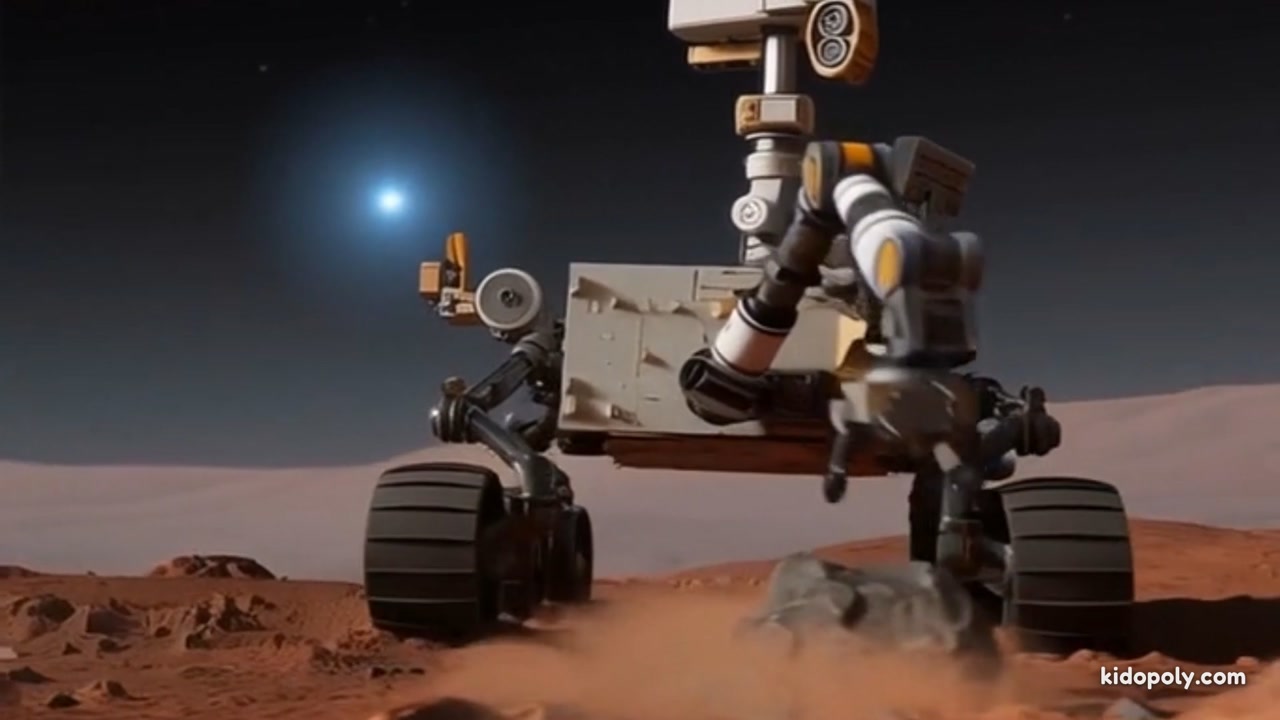
The most amazing part of robot vision is a process called "sensor fusion." This is when a robot's computer takes information from the camera, the laser, and the sound sensors all at the same time to make a decision. If a bright sun-glare blinds the camera, the laser sensor still knows where the obstacles are. If a laser pulse goes straight through a glass door, a touch sensor or sonar will warn the robot to stop. By combining these different superpowers, robots can navigate through busy factories, explore the deep ocean, and even drive across the rocky surface of Mars without ever getting lost!
Video Transcript

Introduction

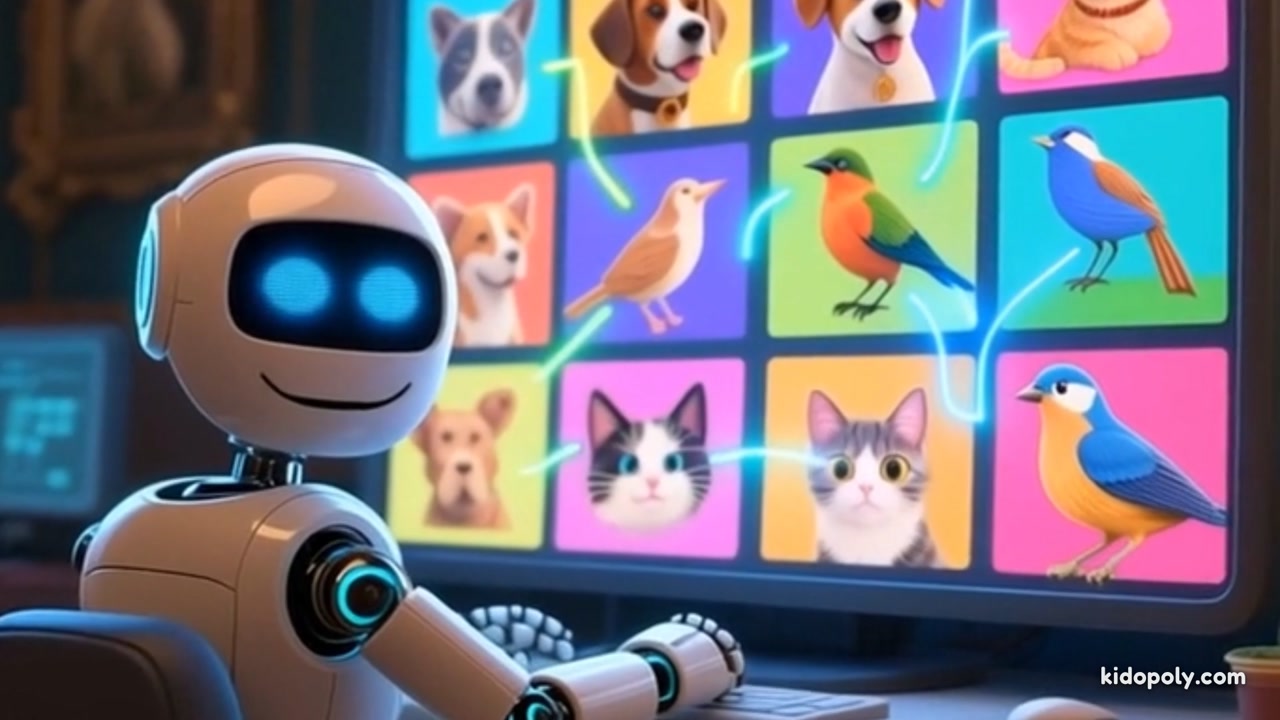
Robots see the world very differently from humans! They use special sensors like cameras, lasers, and sound waves to understand their surroundings. Some robots can see heat signatures, measure distances with laser beams, or detect objects by bouncing sound waves off them, giving them superpowers humans do not have.

Key Facts

Did you know some robots can see in complete darkness using infrared heat sensors? Did you know robot sensors can detect movements so tiny that humans would never notice them? Did you know some robots use the same echolocation principles as bats to navigate in the dark?

Think About It

Why do you think robots often need multiple different types of sensors instead of just using cameras like humans use eyes?

The Answer

Each sensor gives robots different superpowers for different situations! Cameras work great in good light but fail in darkness. Laser sensors measure exact distances but cannot see colors. Heat sensors detect living things but miss cold objects. Multiple sensors working together make robots much more capable than any single sensor alone.

Frequently Asked Questions

Can robots see colors just like we do?

Many robots use digital cameras that see colors similarly to how your smartphone camera does. However, some robots are designed to see in 'thermal vision,' where they view the world as a map of temperatures, seeing hot things as bright red and cold things as dark blue.

Why do robots use lasers to see instead of just cameras?

Lasers are much faster and more accurate at measuring distance than a standard camera. While a camera might struggle to tell exactly how far away a flat white wall is, a laser sensor can calculate the distance down to a few millimeters in a fraction of a second.

Do robots get confused by mirrors or glass?

Yes, mirrors and glass can be tricky because light and lasers often pass right through them or bounce off at weird angles. To solve this, engineers give robots extra sensors like sonar, which uses sound waves that bounce off solid glass even when light doesn't.

Can robots see through walls?

Most everyday robots cannot see through solid walls, but some advanced robots use ground-penetrating radar or special radio waves to detect movement on the other side. This technology is mostly used by emergency workers to find people after a natural disaster.

Watch More Videos

Discover fun educational videos about science, history, animals, and more.

Explore All Videos
Audience Debug