Geology 1:00

Rock Time Layers for Kids

1The Giant Sandwich of History

Imagine if every time it rained or the wind blew, a new layer of dust and sand was added to your backyard. Over millions of years, these layers get squished down by the weight of everything on top of them until they turn into solid rock! Geologists call this "stratigraphy," and it is just like reading a giant history book. Because new layers always land on top of old ones, the oldest "pages" are at the very bottom, while the newest ones are at the top. In places like the Grand Canyon, you can see nearly 40 different rock layers stacked up like a massive geological sandwich that is over a mile deep!

2Fossils: Clues From the Past

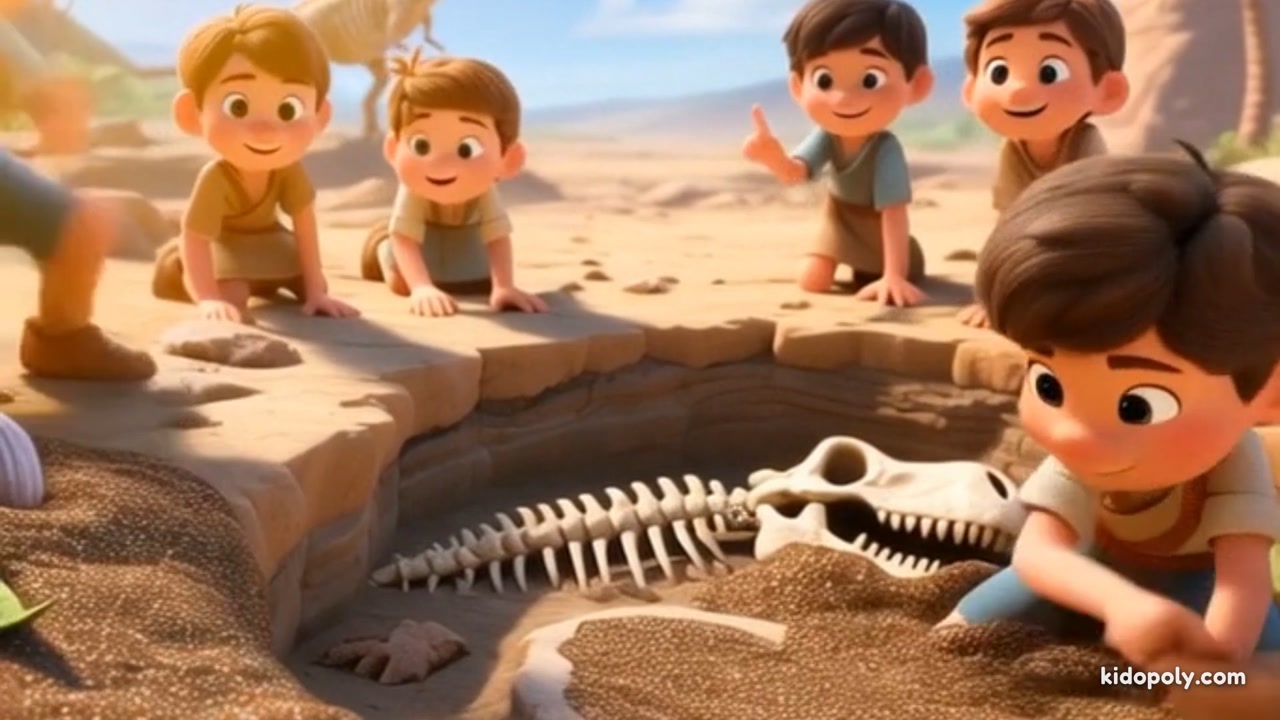
Inside these stone pages, Earth hides secret treasures called fossils. Each layer acts like a time capsule from a specific moment in history. For example, if one layer is filled with ancient shark teeth and seashells, we know that millions of years ago, that dry land was actually a deep, blue ocean. Another layer might contain fossilized tree ferns or dinosaur footprints, telling us the area was once a lush, swampy jungle. By studying these clues, scientists can track exactly when different creatures appeared and how the Earth’s climate has changed over its 4.5 billion-year life.

3Mountains on the Move

You might think rocks stay still, but Earth is actually very busy! Over huge amounts of time, the Earth’s outer shell moves and shifts. This is why we sometimes find fossils of sea creatures at the very top of the tallest mountains. These rocks started at the bottom of the sea, but powerful forces inside the Earth pushed the land upward to create mountain peaks. So, the next time you see a striped cliffside or a rocky hill, remember you aren't just looking at stone—you're looking at a timeline of our planet’s incredible journey through time!
Video Transcript

Introduction

Imagine Earth as a giant book, and rocks are its pages! Each page, or layer of rock, tells a story about what happened long, long ago. From ancient seas to dusty deserts, these layers stack up like delicious geological sandwiches, showing us Earth's incredible past, one event at a time, waiting for us to read them.

Key Facts

Did you know that the Grand Canyon's rock layers are like a massive timeline, showing nearly two billion years of Earth's history? Geologists can even find clues like dinosaur footprints or ancient seashell fossils in different layers, helping them understand when and where creatures lived millions of years ago.

Think About It

If you found a fossil of a sea creature in a rock at the top of a tall mountain, what would that tell you about what that area was like long ago?

The Answer

It would tell you that the mountain top used to be covered by an ocean! Over millions of years, Earth's mighty forces pushed the seabed upwards, forming mountains, but the ancient sea creatures' fossils remained to tell the tale of a once-submerged landscape.

Frequently Asked Questions

Why are there different colors in rock layers?

The colors in rock layers come from different minerals and chemicals present when the layer was formed. For example, red and orange colors often come from iron rusting in the air, while green or grey layers might mean the rock was formed underwater where there was less oxygen.

Which layer of rock is usually the oldest?

In a normal stack of rocks, the oldest layer is always at the bottom! This is because new layers of sediment, like sand and mud, settle on top of the older ones over time. It's just like a laundry basket—the clothes you wore on Monday are at the bottom, and the ones you wore today are on top.

How long does it take for a new rock layer to form?

It can take thousands or even millions of years for a single layer of rock to form and harden. Some layers are created quickly by big events like volcanic eruptions, but most are built very slowly as tiny grains of sand settle one by one at the bottom of lakes and oceans.

Can we see rock layers everywhere on Earth?

Rock layers are everywhere, but they are often hidden under soil, grass, or cities. You can see them best in places where the Earth has been cut away, like at the Grand Canyon, along highway roadcuts, or on steep cliffs by the ocean.

Watch More Videos

Discover fun educational videos about science, history, animals, and more.

Explore All Videos
Audience Debug