Ocean 1:00

Ocean's Living Chains for Kids

1Meet the Deep Sea Super-Team

Imagine a creature so long that it could stretch across an entire football field! That is the amazing siphonophore. While it might look like one giant, wiggly rope or a strange jellyfish, it is actually a massive team of thousands of tiny individuals called zooids. These zooids are all physically connected to one another, forming a living chain that drifts through the dark waters of the deep ocean. Some siphonophores, like the Giant Siphonophore, can grow to be over 150 feet long, making them even longer than a Blue Whale!

2A Body with Many Jobs

Every member of the siphonophore chain has a very specific career. Think of it like a busy city where everyone has a different chore to keep things running. Some zooids are shaped like tiny bells and pulse to push the colony through the water, acting like a motor. Others have long, stinging tentacles used to catch tiny fish or shrimp. There are even zooids whose only job is to eat and digest food for the whole group! Because they all share a single digestive system and a nervous system, when one part of the chain eats, the entire team gets the energy it needs to survive.

3Glowing Giants of the Dark

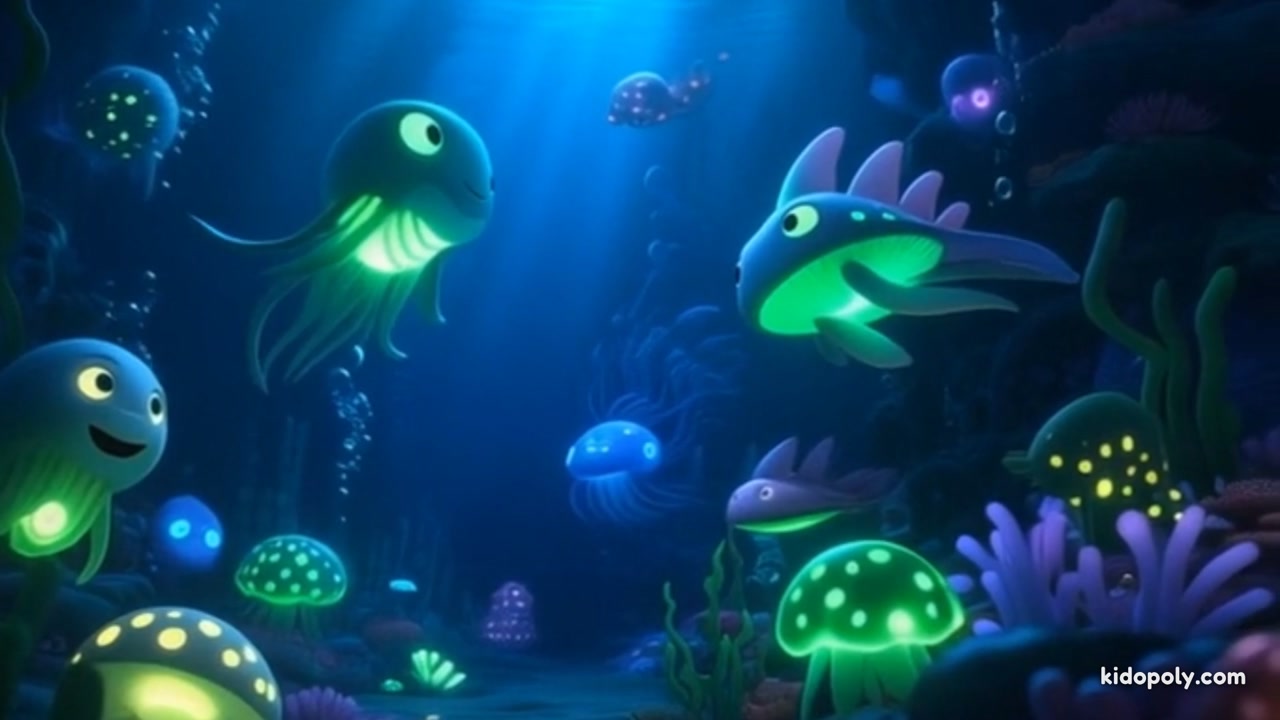
Since most siphonophores live in the deep, dark parts of the ocean where sunlight cannot reach, they have developed some incredible superpowers. Many species are bioluminescent, which means they can make their own light! They use beautiful glowing colors to trick curious fish into coming closer before they strike with their stinging tentacles. Even though they don't have a central brain like we do, they are perfectly coordinated. They show us that by working together and playing our specific roles, a team can achieve things that are impossible for just one individual alone.
Video Transcript

Introduction

Imagine an animal that is not just one creature, but many tiny, individual creatures all connected and working together like a super team! That is what a siphonophore is: a long, drifting 'colony' of specialised animals, each playing a vital role to help the whole amazing chain survive in the ocean.

Key Facts

Did you know that siphonophores are not a single animal, but a colony of smaller, interconnected units called zooids? Each zooid has a special job: some are for moving the colony, some are for catching food with long stinging tentacles, and others are for reproducing. They cannot survive alone, but together they form one of the ocean's longest and most fascinating predators.

Think About It

If a siphonophore is made of many parts, how do they all know what to do to keep the whole colony alive?

The Answer

Each tiny zooid in a siphonophore colony is genetically identical and develops to perform a specific task. They are connected by a shared digestive system and a nervous system, which allows them to communicate and coordinate their actions. It is like a well-organised team where everyone knows their role to ensure the survival and growth of the entire living chain.

Frequently Asked Questions

Is a siphonophore a type of jellyfish?

Siphonophores are close relatives of jellyfish, but they are not exactly the same. While a jellyfish is a single animal, a siphonophore is a colony of many specialized individuals called zooids working as one.

How long can a siphonophore grow?

They are among the longest animals on Earth! Some species can reach lengths of over 150 feet, which is significantly longer than the largest whales in the ocean.

Do siphonophores have a brain?

They do not have a single central brain, but they do have a shared nervous system. This allows all the different parts of the colony to communicate and move together in total harmony.

Can the tiny zooids live all by themselves?

No, the individual zooids cannot survive on their own because they are too specialized. For example, a swimming zooid cannot eat, and a feeding zooid cannot swim, so they must stay connected to stay alive.

Watch More Videos

Discover fun educational videos about science, history, animals, and more.

Explore All Videos
Audience Debug