1The Secret of the Cone
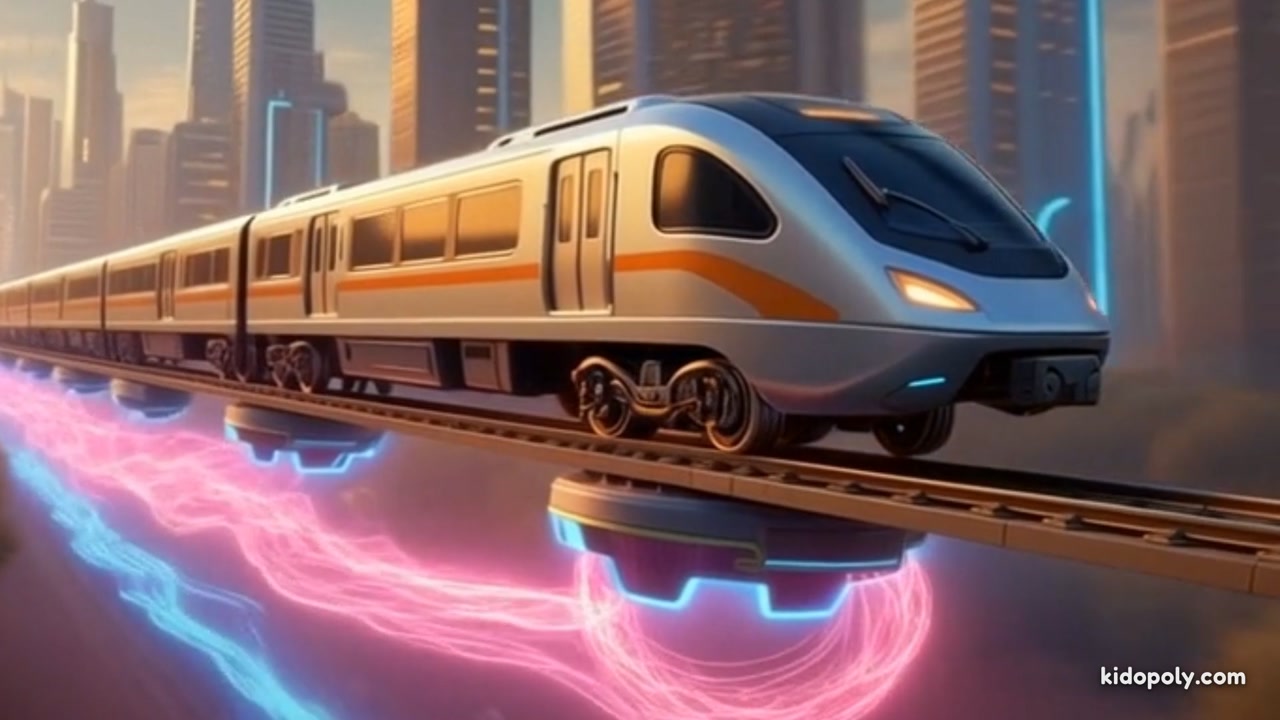
Trains are massive machines that can weigh over 200 tons per locomotive! To keep these giants moving smoothly, engineers use a clever bit of geometry. Instead of being flat cylinders, train wheels are shaped like cones that point slightly inward. This conical shape is the secret to how trains steer. When a train enters a curve, centrifugal force naturally pushes it toward the outside of the track. Because of the cone shape, the wheel on the outside of the curve sits on its wider part (a larger diameter), while the wheel on the inside sits on its narrower part. This allows the outer wheel to travel a slightly longer distance than the inner wheel, guiding the train around the bend without any friction or sliding.
2Safety First with Flanges
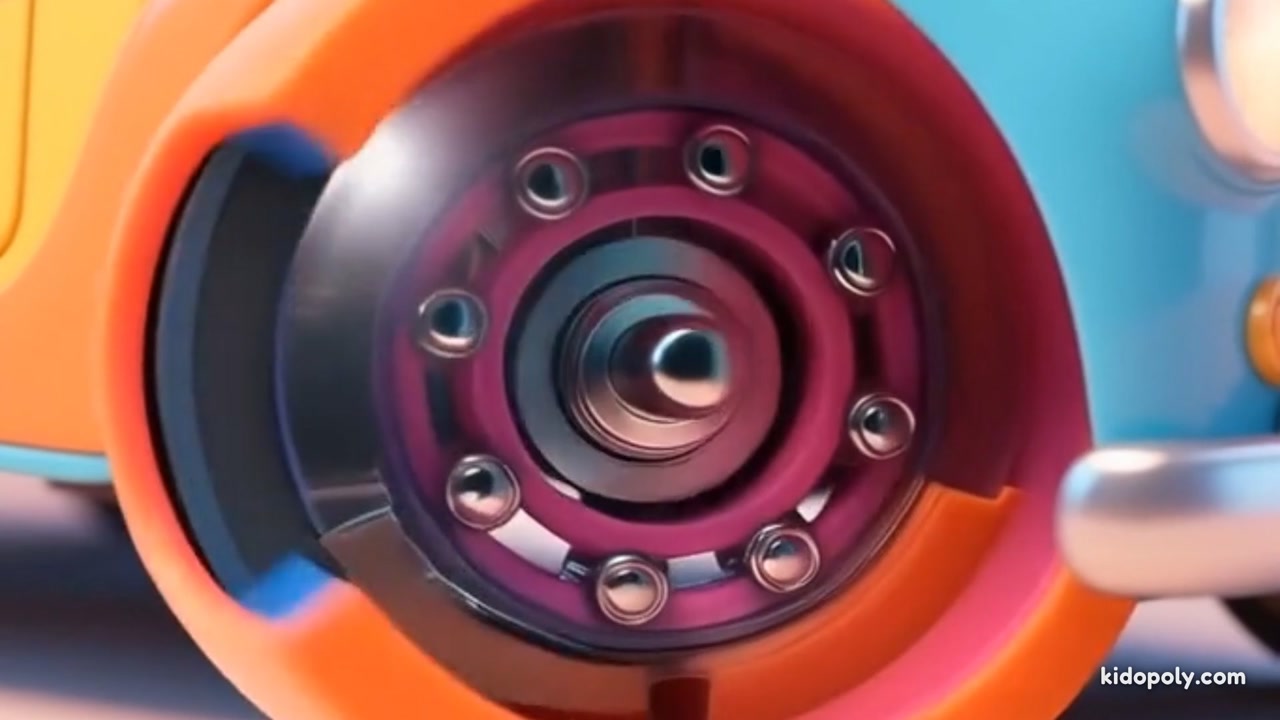
If you look closely at a train wheel, you will see a raised, sharp rim on the inner edge. This is called a 'flange.' While the cone shape does most of the steering work, the flange acts as a superhero backup plan. It is a safety barrier that prevents the wheel from ever jumping off the steel rails. Most modern train tracks are built with a 'Standard Gauge,' meaning they are exactly 1,435 millimeters apart. The flanges ensure the wheels stay locked into this precise path, even when the train is traveling at speeds over 100 miles per hour!
3No Steering Wheel Required
Unlike a car or a bus, a train driver—often called an engineer—doesn't have a steering wheel to turn. Instead, they focus on controlling the speed and the brakes. The tracks actually do all the 'thinking' for the train! Because the rails are fixed into the ground with heavy wooden or concrete 'sleepers,' the train simply follows the path laid out before it. This incredible partnership between the steel track and the conical wheel has been helping people travel across continents for over 200 years, making trains one of the most efficient and safest ways to move heavy goods and passengers around the world.