Physics Fun 1:00

Water Walking Bugs for Kids

1The Secret Power of Water Molecules

Have you ever noticed how a raindrop stays in a perfect little ball? That is because water has a hidden superpower called surface tension! Water is made of tiny molecules that act like little magnets. They love to stick together as closely as possible. At the very surface of a pond or a glass of water, these molecules huddle up so tightly that they create a thin, invisible layer that acts just like a stretchy piece of skin. This "skin" is strong enough to support the weight of very small things, allowing some animals to move across the water without ever breaking through the surface!

2Meet the Amazing Water Strider

The most famous water-walkers are insects called Water Striders. These bugs don't just sit on the water; they can zoom across it at speeds of up to 3 feet per second! They stay afloat thanks to their incredible legs. A water strider has thousands of tiny, microscopic hairs on its feet called microsetae. These hairs are covered in a special wax that repels water. By spreading their six long legs out wide, they distribute their body weight across a large area, much like how a person uses snowshoes to keep from sinking into deep snow. Because their weight is so spread out, the water's surface tension stays intact, and the bugs stay perfectly dry.

3Testing Surface Tension at Home

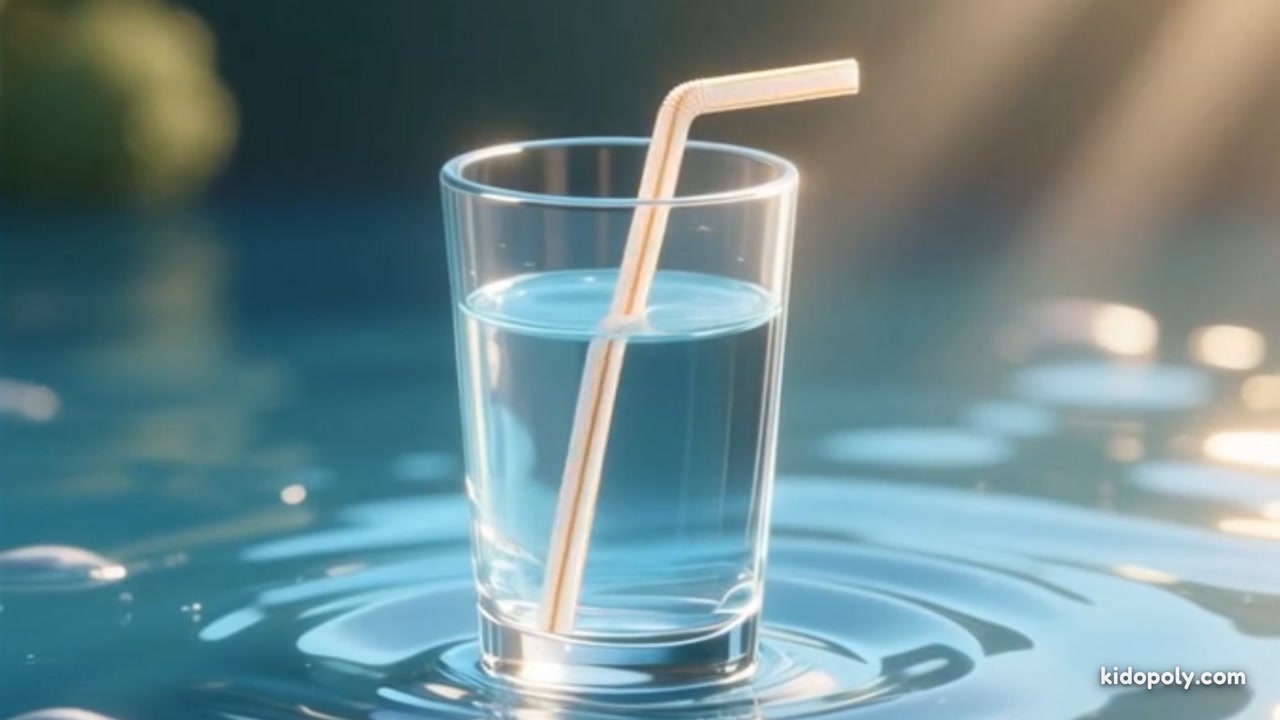
You can see this physics magic in action using a simple paperclip! Even though a paperclip is made of metal and is denser than water, you can make it float if you are very careful. If you lower a dry paperclip onto the water perfectly flat, you will see the water's surface dip slightly under the metal, like a tiny person standing on a trampoline. This is the surface tension holding it up! However, if you add just a single drop of dish soap to the water, the metal will instantly sink. This is because soap molecules get between the water molecules, breaking their tight grip and destroying the surface tension that held the paperclip aloft.
Video Transcript

Introduction

Have you ever seen tiny bugs zoom across a pond's surface without sinking? They are not actually swimming, but walking on a stretched skin of water! This amazing trick is called surface tension, a hidden power in every drop, letting tiny creatures defy gravity.

Key Facts

Did you know water molecules love to stick together, especially at the surface, creating a thin, stretchy 'skin' stronger than you think? A water strider's legs have special hairs that repel water, spreading their weight perfectly across this surface, so it does not break.

Think About It

What happens if you try to make a paperclip float on water very carefully?

The Answer

If you gently place a paperclip flat on water, it can float! The water's surface tension is strong enough to hold up its small weight, much like a tiny trampoline. But if you push it, the tension breaks, and it sinks because the paperclip is denser than water.

Frequently Asked Questions

Can humans ever walk on water using surface tension?

Unfortunately, humans are way too heavy and our feet are too small to stay up using surface tension. To walk on water like an insect, a human would need to have feet over 7 miles long to spread their weight out enough not to break the water's surface!

What do water striders eat while they are walking?

Water striders are actually predators that hunt other small insects that fall onto the pond. They use their sensitive legs to feel ripples in the water's surface, acting like a spider web to detect whenever a snack is nearby.

Does soap really break the 'skin' of the water?

Yes, soap is a 'surfactant,' which means it weakens the bond between water molecules. When soap is added, the water molecules stop pulling on each other so tightly, causing the surface tension to pop like a balloon and making objects sink.

Do water striders ever sink during a rainstorm?

Water striders are very hard to sink because their special leg hairs are excellent at repelling water. Even if a raindrop hits them, their waxy coating and the air trapped in their hairs help them pop right back up to the surface instantly.

Watch More Videos

Discover fun educational videos about science, history, animals, and more.

Explore All Videos
Audience Debug