Best Of Last updated: January 12, 2026

Best Educational Shows for Kids

Screen Time That Actually Teaches Something Valuable

Parents, your search for worthwhile screen time ends here. This list is curated for families demanding that passive viewing converts into actual learning. We cut the fluff to bring you 20 critically acclaimed shows that masterfully weave science, literacy, critical thinking, and social-emotional concepts into genuinely captivating adventures. These aren't just branded as educational; they deliver on the promise.

The List

1
Bluey poster

Bluey

2018-present 7 min Ages 4-8

While not strictly academic, *Bluey* is unparalleled for teaching emotional intelligence, creative problem-solving, and healthy family dynamics. The imaginative play is a masterclass in child-led learning, encouraging cooperation, negotiation, and emotional regulation through relatable, funny scenarios. Parents consistently praise its authentic portrayal of modern family life, making social skill development an organic part of the fun.

Watch if: your child needs a masterclass in empathy, imagination, and positive family interaction.
2
Ada Twist, Scientist poster

Ada Twist, Scientist

2021-2023 25-29 min Ages 4-7

Produced by the Obamas' Higher Ground Productions, this series deeply embeds the scientific method into every story. Ada uses observation, hypothesis, testing, and iteration to solve everyday mysteries. It powerfully models scientific curiosity and, crucially, normalizes failure as a necessary part of the discovery process, which is a vital lesson for young learners.

Watch if: your kid asks 'why?' constantly and needs to see STEM championed by relatable role models.
3
Odd Squad poster

Odd Squad

2014-present 22 min (paired segments) Ages 5-9

This show is pure math in action. Agents use fundamental concepts like addition, subtraction, graphing, and logical reasoning to literally stop odd occurrences from destroying the world. It’s hilarious, fast-paced, and treats math not as a subject, but as the essential superpower for problem-solving. The live-action format keeps energy high.

Watch if: your child excels with logic puzzles and enjoys the concept of being a secret agent.
4

The Magic School Bus (Original)

1994-1997 26 min Ages 6-10

The gold standard for science immersion. Ms. Frizzle shrinks, grows, and travels through time and space to demonstrate concepts firsthand, from ecosystems to the human body. It inspires deep scientific curiosity by making the impossible tangible and exciting, covering earth, life, and physical sciences exceptionally well.

Watch if: your kid is ready to tackle complex science topics through wildly imaginative field trips.
5
Elinor Wonders Why poster

Elinor Wonders Why

2021-present 22 min (paired segments) Ages 3-6

This series excels at modeling the entire inquiry process for preschoolers. Elinor and her friends actively observe the natural world, ask 'why' questions, and then figure out ways to test their theories, often using simple tools. It builds a strong foundation for observation skills and natural science appreciation.

Watch if: you are looking for a gentle, observation-focused science show for your emerging preschooler.
6
Cyberchase poster

Cyberchase

2002-present 28 min Ages 8-12

This show tackles advanced math concepts like fractions, measurement, data analysis, and algorithms for older elementary kids, wrapped in an engaging sci-fi adventure. The heroes must use specific math to defeat the villain Hacker. It champions critical thinking and shows math as the key to saving the digital universe.

Watch if: your older elementary kid needs a fun, high-stakes way to master middle-grade math concepts.
7
Daniel Tiger's Neighborhood poster

Daniel Tiger's Neighborhood

2012-present 11 min (per segment) Ages 2-5

The essential program for social-emotional learning (SEL). It directly models age-appropriate strategies for managing big feelings—frustration, anger, excitement—using memorable musical 'strategy songs.' It explicitly teaches empathy, self-control, and school readiness skills in a way preschoolers instantly internalize.

Watch if: your preschooler is navigating big feelings or preparing for preschool/kindergarten social hurdles.
8
Ask the StoryBots poster

Ask the StoryBots

2016-2023 30 min Ages 3-7

This show takes literal inspiration from real kids' questions (e.g., 'Why is the sky blue?'). The StoryBots then embark on elaborate, fact-checked, musical journeys to find the answers. It showcases research, teamwork, and provides digestible scientific explanations for complex phenomena across science and history.

Watch if: your child loves trivia and wants genuine, surprising answers to their biggest, most random questions.
9
Wild Kratts poster

Wild Kratts

2011-present 22 min Ages 6-11

A powerhouse for zoology and biology. The Kratt brothers use incredible technology to 'activate creature powers,' giving kids an up-close look at animal anatomy, adaptation, and habitats. It powerfully teaches biology concepts through high-energy action and real-world animal facts.

Watch if: your kid is obsessed with animals, ecosystems, and hands-on science adventure.
10
Sesame Street poster

Sesame Street

1969-present 30 min (modern) Ages 2-5

The undisputed pioneer in educational media. It remains incredibly relevant, expertly blending literacy (letters, phonics, sight words), numeracy, and crucial social concepts like diversity, inclusion, and kindness. Its decades of research-backed content ensure every segment hits a measurable learning outcome.

Watch if: you want a time-tested foundation in letters, numbers, and basic social competency.
11
Work It Out Wombats! poster

Work It Out Wombats!

2022-present 22 min (paired segments) Ages 3-6

Focuses heavily on executive functioning skills—planning, focusing attention, and managing multiple steps—presented through teamwork. The Wombats approach challenges by creating visual 'maps' or plans, making abstract organization concrete for young viewers learning to sequence tasks.

Watch if: your child needs gentle guidance on planning, organizing, and perseverance in teamwork.
12
Octonauts poster

Octonauts

2010-2021 11 min (per segment) Ages 4-8

This show is an exceptional deep dive into marine biology and oceanography. Every mission focuses on a real sea creature, teaching its name, habitat, and unique adaptations. It mixes teamwork and problem-solving with hard science, providing solid facts about the often-unseen world beneath the waves.

Watch if: your child has an intense fascination with the ocean, sea life, and marine science.
13
Peg + Cat poster

Peg + Cat

2013-2018 28 min Ages 4-7

Brilliantly visualizes foundational math concepts. Peg and Cat face unexpected numerical crises, forcing them to use counting, sorting, geometry, and basic algebra to solve problems. The unique, hand-drawn aesthetic keeps the math concepts grounded in a creative, tactile, problem-solving context.

Watch if: you want to introduce basic arithmetic, geometry, and abstract problem-solving through music and charm.
14
Xavier Riddle and the Secret Museum poster

Xavier Riddle and the Secret Museum

2019-present 22 min (paired segments) Ages 4-7

This series is an excellent entry point into history and social studies. Xavier and his friends travel back in time to meet childhood versions of famous figures (like Amelia Earhart or Helen Keller) to solve a problem related to that person's life or character trait, linking history to modern social skills.

Watch if: you are starting to introduce historical figures and their impact on the world.
15
Dinosaur Train poster

Dinosaur Train

2009-2014 22 min (paired segments) Ages 3-7

Masterfully covers paleontology, evolution, and comparative anatomy. Buddy the T-Rex travels with his Pteranodon family across different Mesozoic eras, learning about real dinosaur species, their diets (herbivore vs. carnivore), and physical characteristics in a factual, yet gentle way.

Watch if: your child is currently in the 'everything dinosaur' phase and needs factual backing.
16
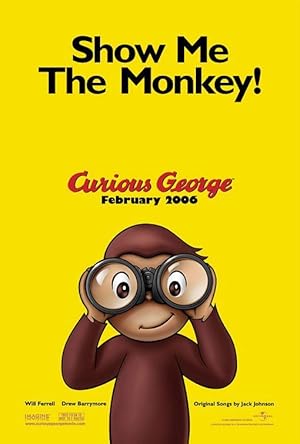
Curious George poster

Curious George

2006-2022 22 min (paired segments) Ages 3-6

The series excels at basic engineering, physics, and experimentation, directly stemming from George’s relentless curiosity. Each episode often features a short live-action segment demonstrating the science concept introduced in George’s adventure, bridging animation with real-world STEM application.

Watch if: your child is learning about basic mechanics, simple machines, and the process of invention.
17
WordGirl poster

WordGirl

2007-2015 22 min (paired segments) Ages 6-10

This is vocabulary training disguised as superhero action. WordGirl consistently uses complex, high-level vocabulary words to thwart silly villains whose plans rely on the characters misunderstanding a word. It provides direct instruction, context, and repetition, significantly boosting reading comprehension.

Watch if: your child is a budding reader who needs an engaging, high-energy push to expand their lexicon.
18
Arthur poster

Arthur

1996-2022 22 min (paired segments) Ages 5-9

A long-running champion of social and emotional literacy. It tackles complex, realistic issues like bullying, homework stress, parental divorce, and learning disabilities with nuance and humor. It validates kids' complex feelings while modeling constructive dialogue and compromise.

Watch if: your child is in early elementary and navigating nuanced friendships and common school challenges.
19
Sid the Science Kid poster

Sid the Science Kid

2008-2012 28 min (paired segments) Ages 4-7

Focuses on physical science and the scientific method through the lens of a child’s everyday world. Sid asks fundamental questions about things he observes—like why his ice cream melts—and then conducts simple, safe experiments to find the answer, making basic physics and chemistry accessible.

Watch if: your child learns best through simple, hands-on experiments and direct observation.
20

The Thrilling Adventures of Waldo: Where Are You?

2019-2020 11 min (per segment) Ages 3-6

While deceptively simple, the core mechanic is rigorous visual processing and sustained attention. The show directly trains children's ability to scan large amounts of visual information, filter out irrelevant details, and maintain focus to achieve a goal—a precursor to complex reading skills.

Watch if: your child needs focused practice on visual scanning, pattern recognition, and attention span.

Honorable Mentions

Mister Rogers' Neighborhood
Mister Rogers' Neighborhood 1968

The foundational masterclass in SEL, empathy, and patience; essential viewing for understanding modern social-emotional curriculum.

The Big Blue House
The Big Blue House 1997-2007

Focuses on nurturing children's social skills, exploring complex emotions, and respecting differences through the cozy life of an animal caretaker.

StoryBots ABCs 2024-present

A newer, highly engaging, fact-based series dedicated solely to teaching letters, phonics, and early reading in a fun, Song-based format.

The Magic School Bus Rides Again
The Magic School Bus Rides Again 2017-2020

A solid modern update with a new teacher, continuing the tradition of science immersion, though the original retains more nostalgic educational weight.

Little Einsteins
Little Einsteins 2005-2009

Excellent for introducing classical music and world art history in a structured, interactive, adventure-based format that encourages musical engagement.

Super Why!
Super Why! 2007-2016

Integrates literacy directly into fairy tale plots, explicitly teaching word recognition and phonics by having characters jump *into* the stories.

Frequently Asked Questions

How is 'genuinely educational' defined for this list?

Genuinely educational means the show's core narrative consistently revolves around a curriculum objective—science concepts, mathematical principles, or explicit social-emotional strategies—rather than just incidental learning. These picks feature research-backed curricula that build sequentially, ensuring kids aren't just entertained, but actively learning new skills or knowledge sets.

Are these shows suitable for toddlers (under 3)?

While some shows like *Sesame Street* and *Daniel Tiger's Neighborhood* are perfect for ages 2-3 due to their focus on basic social skills and simple concepts, others like *Cyberchase* and *WordGirl* are explicitly targeted at older elementary students (8-12) due to the complexity of the math and vocabulary.

What subjects do these shows cover the most?

The list shows a strong emphasis on **Science/STEM** (*Wild Kratts*, *Ada Twist*, *Magic School Bus*) and **Social-Emotional Learning (SEL)** (*Bluey*, *Daniel Tiger*), as these areas are critical for early development. We also included strong representation for **Math** (*Odd Squad*, *Peg + Cat*) and **Literacy** (*WordGirl*, *Sesame Street*).

Why are there no history-heavy shows on the main list?

For the under-8 demographic, abstract history can be difficult to convey through engaging narrative alone. We prioritized shows teaching foundational cognitive skills. However, *Xavier Riddle* is included as an excellent introduction to historical figures, and several honorable mentions and related links offer deeper dives for when your child is ready.

Link copied!