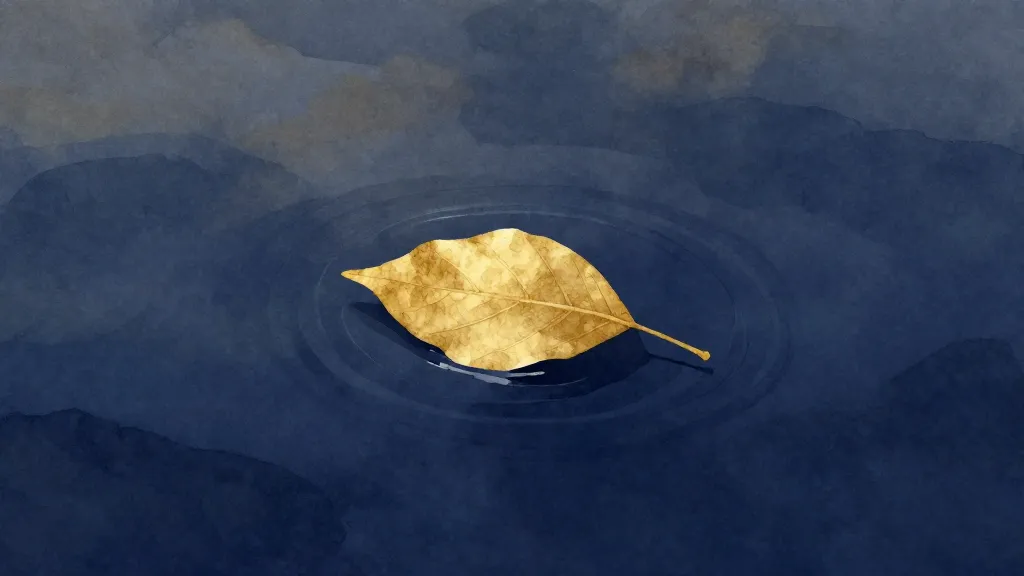
Why does your brain suddenly 'wake up' when you see a perfect sunset or hear your favorite song?
Human beings have spent thousands of years trying to figure out why some things feel beautiful and others do not. This study of beauty and art is called Aesthetics, and it explores the deep connection between our eyes, our minds, and the world around us.
Imagine you are walking through a forest in Ancient Greece. You stumble upon a marble temple where every pillar is perfectly spaced and every carved stone seems to hum with a strange kind of power.
To the people living there 2,500 years ago, beauty wasn't just a lucky accident. They believed it was a secret code written into the very fabric of the universe.
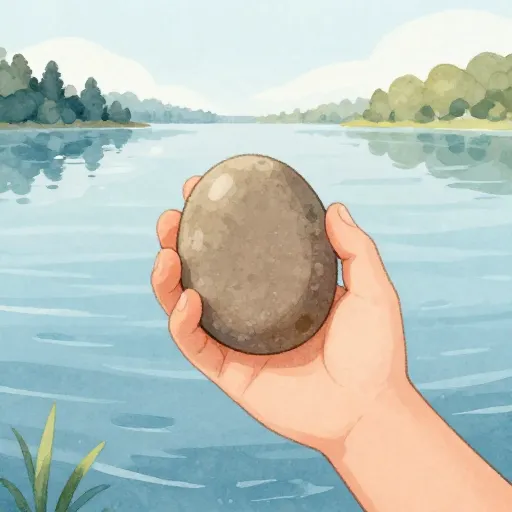
Imagine you are holding a perfect, smooth skipping stone. It's cool to the touch and fits exactly in the palm of your hand. Its weight feels just right. Even before you throw it, you might feel a tiny spark of happiness. That spark is your brain recognizing a form of beauty called 'Harmony.'
The Greeks were obsessed with Symmetry, which is when two sides of something match each other like a mirror. They noticed that the most beautiful things in nature, like butterfly wings or human faces, often had parts that balanced each other out.
They felt that if a building or a statue followed these rules, it wasn't just pretty to look at. It was actually 'true' and 'good' in a way that messy things were not.

Finn says:
"If the Greeks thought beauty was about being perfect, does that mean a messy bedroom can't be beautiful? What if the mess is where all the best ideas are hidden?"
One of the most famous thinkers of this time was a man named Plato. He didn't think beauty was just about what you could see with your eyes.
Plato believed there was a perfect version of everything, a 'Form' of beauty, that lived in a world beyond our own. When we see something beautiful on Earth, we are actually remembering a tiny glimpse of that perfect world.
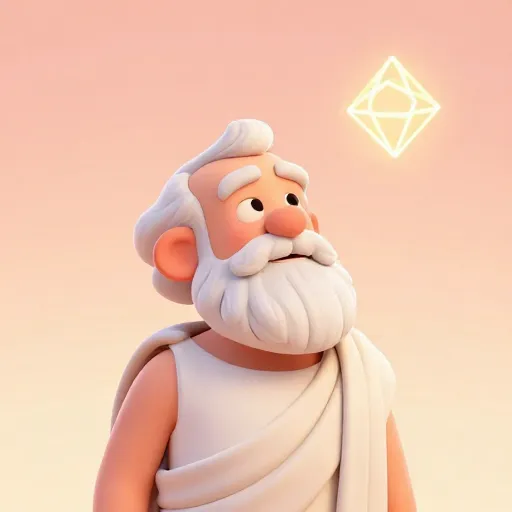
Beauty is the splendor of truth.
As time moved on, artists and scientists began to look for the math behind the magic. During a time called the Renaissance, thinkers in Italy started measuring everything from flower petals to the human body.
They discovered a special number called The Golden Ratio. This is a mathematical pattern that appears over and over again in the world around us.
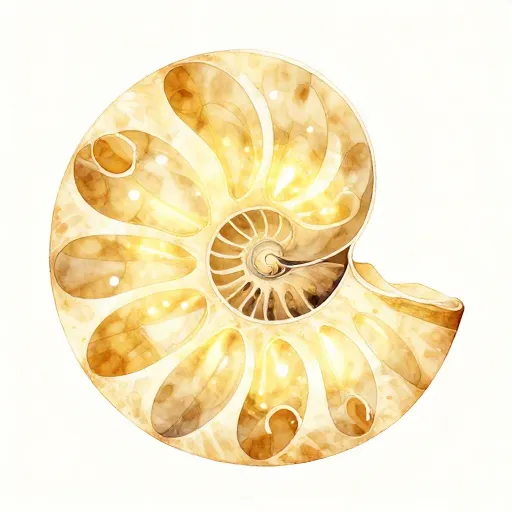
The Golden Ratio is often represented by a symbol called 'Phi.' Artists like Leonardo da Vinci used it to decide where to place things in their paintings. They believed this specific proportion (about 1.618) was the most pleasing to the human eye.
You can find this ratio in the spiral of a seashell, the way a pinecone grows, and even in the shape of distant galaxies. Many people believe our brains are hard-wired to find this specific pattern deeply satisfying.
If you use the Golden Ratio to design a book or a painting, people will often call it beautiful without even knowing why. It feels like a secret language that your brain understands instantly.

Mira says:
"I noticed that the seeds in a sunflower follow that spiral pattern! It's like the flower is doing math without even trying. Maybe beauty is just nature being really smart."
However, beauty isn't always about math and perfect shapes. If everything was perfectly symmetrical and calculated, the world might start to feel a bit like a boring museum.
In Japan, a different idea began to grow hundreds of years ago. This concept is called Wabi-Sabi, and it teaches us to find beauty in things that are imperfect, old, or even broken.
Go on a 'Wabi-Sabi Hunt' in your neighborhood. Look for things that are beautiful because they are old or worn out: a rusty gate with a cool pattern, a tree with a twisted trunk, or a favorite teddy bear with a missing button. Draw one of them and explain why its 'flaws' make it special.
Think about a handmade clay bowl that has a tiny crack in the side. To a Wabi-Sabi artist, that crack tells a story about the bowl's life and makes it more beautiful than a perfect, factory-made plastic cup.
This reminds us that beauty isn't a destination we reach by being perfect. Instead, it is a way of looking at the world with kindness and curiosity.
Through the Ages
But wait, who gets to decide what is beautiful? If you think a certain pair of muddy sneakers is beautiful but your teacher thinks they are a mess, who is right?
This leads us to a big debate in philosophy: is beauty Objective or Subjective? These are two very different ways of answering the question.
Beauty is a fact of nature. It comes from balance, geometry, and the way light works. If something is perfectly designed, it is beautiful for everyone, forever.
Beauty is a personal choice. Just like some people love broccoli and others hate it, beauty depends on your culture, your mood, and your own unique life story.
If beauty is objective, it means it is a fact, like the height of a mountain. If beauty is subjective, it means it lives entirely inside your head, and everyone has their own unique 'taste.'
A philosopher named David Hume believed that beauty wasn't a property of the object itself. He thought it was a feeling that happens inside the person looking at it.

Beauty in things exists merely in the mind which contemplates them.
Think about your favorite food. Is it 'beautifully' delicious because of the ingredients, or because of how your tongue reacts to it?
If everyone in the world disappeared tomorrow, would a diamond still be beautiful? Or does beauty need a pair of eyes and a human heart to exist at all?
Finn says:
"I think beauty is like a secret handshake. When you and your friend both think a weird-looking bug is cool, it's like you both understand the same secret."
When we find something beautiful, we often feel a sense of Awe. This is that dizzy, wonderful feeling you get when you look at a sky full of stars or stand at the edge of the ocean.
Scientists have found that when we experience beauty, our brains release chemicals that make us feel calm and connected to other people. It's like a reset button for our busy minds.
Some scientists believe we find green landscapes with water beautiful because, long ago, that meant a place was safe and had plenty of food. Our sense of beauty might be an ancient survival tool!
Some thinkers believe beauty is a 'gift' that helps us pay attention. In a world where we are often distracted, beauty forces us to stop, breathe, and really see what is right in front of us.
It might be the way light hits a glass of water, or the sound of someone laughing. These small moments are parts of the 'big' beauty that makes life feel like an adventure.

Beauty is a starting point for being a good person.
Ultimately, beauty is a mystery that doesn't have a single answer. It is a bridge between the physical world of stuff and the invisible world of our feelings.
Whether it is found in the perfect math of a snowflake or the wobbly lines of a child's drawing, beauty is how we say 'yes' to the world.
Something to Think About
If you had to choose one thing from your life to put in a 'Museum of True Beauty,' what would it be?
Remember, there is no wrong answer. It could be something big like a mountain, or something tiny like the way your cat's fur feels. What makes it beautiful to you?
Questions About Philosophy
Why do people's ideas of beauty change over time?
Is beauty only about how things look?
Does everything have to be beautiful?
Keep Your Eyes Open
The next time you see something that makes you stop and stare, take a second to ask why. Is it the symmetry? Is it the story behind it? Or is it just a mystery that your brain hasn't solved yet? Beauty is everywhere, waiting for someone to notice it.