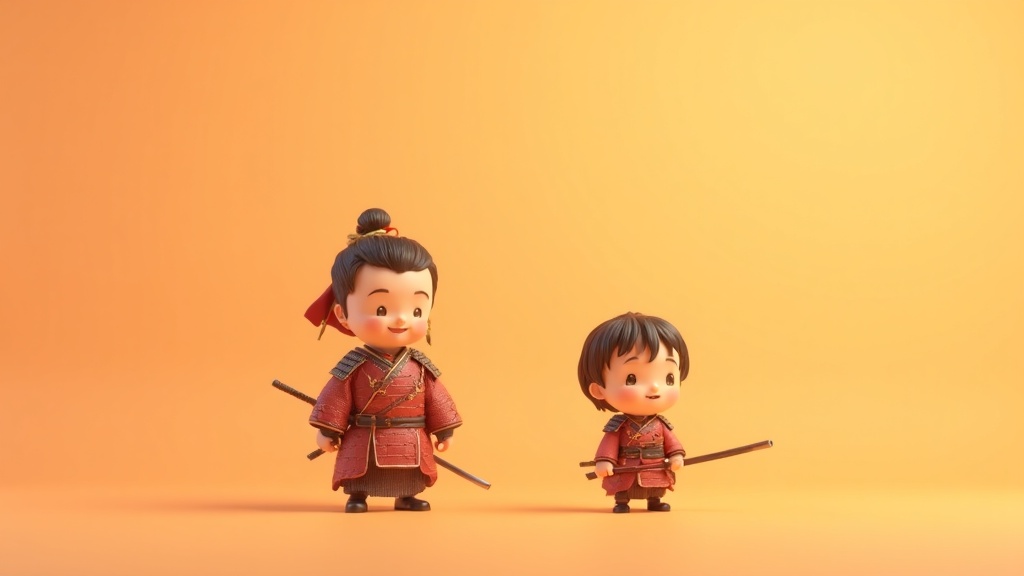
Feudal Japan was an era ruled by powerful military leaders called Shoguns and warrior Samurai, lasting from the 12th century to the mid-19th century. For 200 years, Japan closed its borders! Learn about the strict honor code of the Samurai and why they ruled.
Did you know that for hundreds of years, an entire country decided to close its doors to almost everyone outside? Welcome to Japan, an island nation packed with amazing stories!
Japan has a history that’s as colorful and exciting as a firework show! It stretches back thousands of years, from when people lived in simple villages to when powerful warriors called Samurai ruled the land. While the legendary first emperor, Emperor Jimmu, is said to have started the imperial line way back in 660 BC, for a long time, the real power belonged to the Shoguns—military leaders who acted like the country's bosses! Let’s explore how this incredible place kept its own style while also borrowing cool ideas from its neighbors.

Mira says:
"I think it’s so cool how the Samurai lived by a strict honor code called *Bushido*! It taught them to be loyal and brave, almost like the superheroes of their time!"
What is Feudal Japan and the Mighty Samurai?
Imagine a time when knights ruled castles in Europe. Japan had something similar called Feudal Japan, which lasted from the 12th century all the way to the mid-19th century! Even though there was always an Emperor, the real rulers were the Shoguns and the warriors who followed them: the Samurai.
The Samurai were highly trained fighters who followed a strong code of honor called Bushido. They served powerful local lords called Daimyo, who in turn answered to the Shogun. Life was organized in a strict order: Samurai at the top, then farmers, artisans, and finally merchants at the bottom. This system kept things steady, but it also meant little changed for ordinary people for a very, very long time!
Mind-Blowing Fact!
The Great Buddha statue at Todai-ji Temple in Nara is HUGE! It was constructed during a time when Japan was borrowing lots of ideas from China, showing how they blended their own culture with outside influences.
How Did Japan Close Itself Off to the World?
For about 200 years, Japan followed a policy called Sakoku, which means 'closed country.' The Shoguns, especially the powerful Tokugawa family during the Edo Period (which started around 1600), made it almost completely illegal for foreigners to visit or for Japanese people to leave. This helped keep peace inside Japan, but it also meant they missed out on new inventions happening elsewhere!
During this time of peace, culture flourished! Artists created amazing Ukiyo-e wood-block prints, and everyday city life became much richer.
(Approximate year the Tokugawa Shogunate began its long rule)
(When the first Shogun took power)
(Approximate length of the Sakoku policy)
How Did the World Knock on Japan's Door?
The peace and isolation couldn't last forever! In the mid-1800s, Western countries wanted to trade with Japan. The person who really made things happen was an American Commodore named Matthew Perry.
In 1853, Perry sailed his steam-powered warships—sometimes called 'Black Ships'—into Tokyo Bay. This display of modern military power made the Shogun realize Japan needed to change fast!
The Meiji Restoration: A Big Wake-Up Call
Facing pressure from the outside and unhappy leaders inside, the Shogunate eventually fell. This led to the Meiji Restoration in 1868!
The young Emperor Meiji was given back the real political power. Instead of staying isolated, the new government decided to modernize incredibly fast, learning from Western countries to build a strong new Japan!
💡 Did You Know?
During the Heian Period (794 to 1185 CE), which was a golden age for art and writing, a noblewoman named Murasaki Shikibu wrote 'The Tale of Genji,' often called the world's first novel!
🎯 Quick Quiz!
What was the name of the strict honor code followed by the Samurai warriors?
Why is Japan's History So Unique?
Japan’s history is a mix of holding onto ancient traditions—like their continuous imperial line—while also making huge, fast changes when needed. They blended ideas from China, like writing and Buddhism, into something totally unique.
Even today, you see this mix! You can see ancient temples right near super-modern skyscrapers in cities like Tokyo (which used to be called Edo). This balance between the old ways and the new is what makes Japan so fascinating for kids to learn about today.
- Emperor vs. Shogun: Remember, the Emperor was the ceremonial head, but the Shogun (military leader) had the real power for centuries!
- Key Imports: Early on, Japan borrowed writing (characters) and the religion of Buddhism from China and Korea.
- Warriors Rule: The Samurai brought in the feudal system, where loyalty to a lord was everything.
- The Big Change: Commodore Perry’s arrival in 1853 forced an end to isolation and started the fast modernization of the Meiji Era.
Did you know that because Japan is an island, they ate a lot of fish? Some ancient Japanese people even wrapped fish in vinegared rice to keep it from spoiling—which some people say is the beginning of modern sushi!
Questions Kids Ask About World History
Keep Exploring Japan's Awesome Past!
Wow, what a trip through time! From the legendary Emperor Jimmu to the powerful Shoguns and the brave Samurai, Japanese history is full of amazing layers. Remember that history is like a giant puzzle—every piece, from a warrior's code to a treaty ending isolation, helps you see the whole picture!