Penicillin is an antibiotic, a powerful medicine that fights dangerous bacterial infections. Alexander Fleming discovered this germ-fighting 'mold juice' in 1928 after noticing a green mold contaminating his petri dishes. This discovery changed medicine forever!
What if we told you one of the most important medicines ever found was discovered because a scientist forgot to clean up his lab?
Get ready to explore a super cool moment in Science History! We're talking about Sir Alexander Fleming, a brilliant Scottish scientist, and his amazing, accidental discovery: penicillin! Before penicillin, even a small scratch could turn into a deadly problem because of tiny, invisible germs called bacteria. For kids learning about history, this story shows that sometimes, being a little messy can lead to the biggest breakthroughs. Fleming discovered this powerful germ-fighter in 1928 by noticing a fuzzy green mold!

Finn says:
"Whoa! So, a speck of green dust floating in the air became the secret weapon against killer germs? That’s wilder than any superhero origin story!"
What is Penicillin and Why Did Fleming Need It?
Penicillin is a type of antibiotic, which is a medicine that fights infections caused by bacteria. Think of it like a tiny, secret army that tells bacteria to stop growing or even makes them disappear!
Alexander Fleming first named the germ-fighting juice "mold juice"! He later gave it the scientific name, penicillin, because it came from a type of mold called *Penicillium*.
Fleming was motivated because he saw the terrible effects of infection up close. As a captain in World War I, he worked in hospitals where many soldiers sadly died from simple infected wounds.
Mind-Blowing Fact!
Before penicillin, a simple cut from a rose thorn could lead to a fatal infection!
Fleming's Lab: A Story in Numbers and Mess!
The big moment happened when Fleming returned to his lab at St. Mary's Hospital in London after a vacation. He wasn't famous for being tidy; his lab bench was often covered with plates of bacteria he was studying.
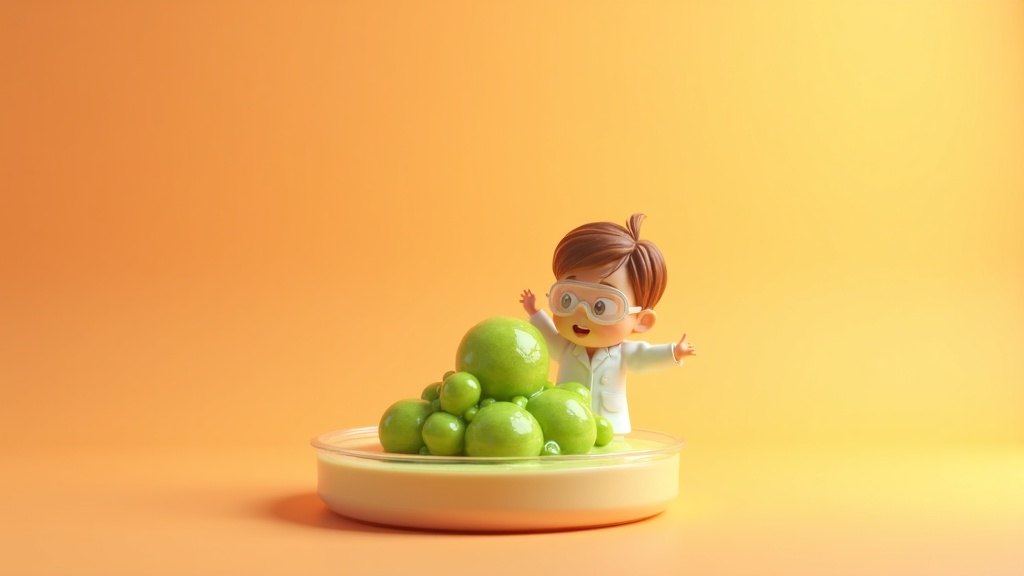
He was growing a nasty bacteria called *Staphylococcus aureus* (say: staf-uh-loh-kuh-Suh-ruh-us) on his dishes. When he got back, he saw one plate was ruined—it had been contaminated by a green mold that snuck in through an open window!
When Fleming noticed the mold
How much Fleming could dilute the mold juice and still kill bacteria
When Fleming shared the Nobel Prize
Estimated lives saved by penicillin since discovery
How Did a Rotten Plate Lead to Medicine?
Fleming looked at the contaminated dish and noticed something amazing. The *Staphylococcus* bacteria were growing everywhere *except* right next to the fuzzy green mold!
He realized the mold was producing a substance that was actively killing the bacteria around it. This clear spot around the mold was the key to the whole thing!
The Next Steps (It Took Time!)
Fleming officially named the substance penicillin in 1929 and shared his findings.
The big problem? He couldn't make enough of the 'mold juice' to actually treat people! It was super tricky to separate the medicine from the mold.
It took almost 15 years before other scientists, Howard Florey and Ernst Chain, figured out how to purify and make mass quantities of penicillin!
💡 Did You Know?
When Florey and Chain struggled to get enough penicillin, one of their team members, Mary Hunt, found a moldy, rotting cantaloupe at a market that produced six times more penicillin than Fleming's original sample!
🎯 Quick Quiz!
What type of germ did Alexander Fleming's penicillin first successfully stop?
Why Does This Accidental Discovery Matter So Much?
The development of penicillin changed everything, especially during World War II! It saved countless soldiers who might have otherwise died from infected wounds.
Thanks to the work that built on Fleming's discovery, we now have many antibiotics to treat serious illnesses like pneumonia, scarlet fever, and meningitis.
- Antibiotics fight infections caused by bacteria.
- Fleming's mold was a contaminant, meaning it wasn't supposed to be there!
- Fleming, Florey, and Chain all shared the 1945 Nobel Prize for their huge contributions to medicine.
- Penicillin works by stopping bacteria from building the strong walls they need to make new cells.
The next time you hear about a huge discovery, remember Alexander Fleming! His ability to look past the 'mistake'—the fuzzy mold—and ask, 'That's funny... what is this doing?' is what made him a history hero for everyone, especially for kids who need to stay healthy!
Questions Kids Ask About Science History
Keep Your Eyes Peeled for Science!
From a messy lab bench in London to saving millions of lives worldwide, the story of penicillin is proof that science is full of surprises! Keep exploring the amazing world of science history with History's Not Boring!