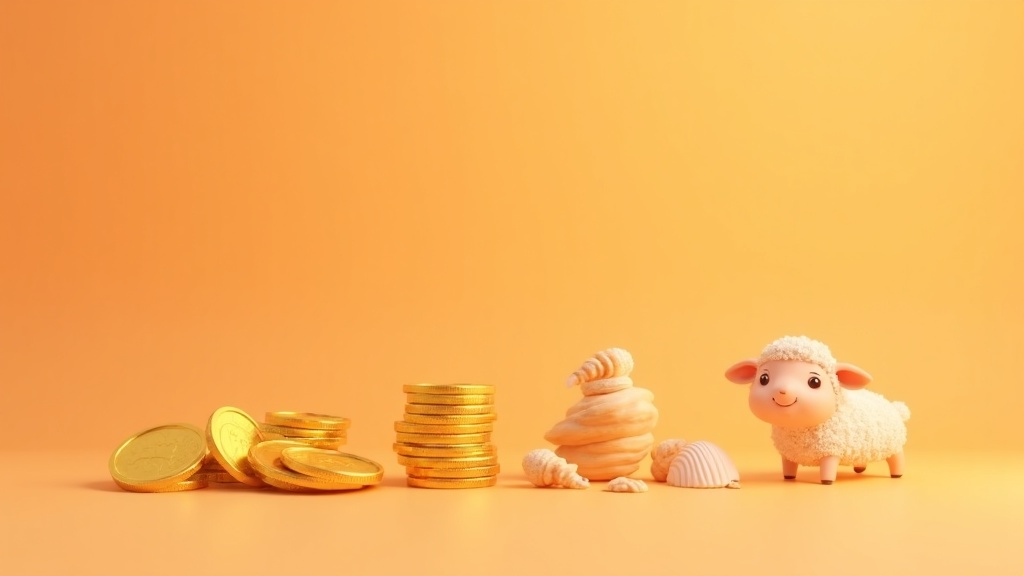
Bartering is trading goods or services directly without money — like swapping a basket of apples for a pair of shoes. The barter system started as far back as 6000 BC but had a big problem called the 'double coincidence of wants': both traders had to want exactly what the other had. This challenge eventually led people to invent money.
Imagine you REALLY want a sparkly new toy, but all you have to trade is... one giant, slightly grumpy-looking pumpkin! How do you make that trade work?
That's the fun (and sometimes frustrating!) world of bartering, the very first way people traded things long, long ago! Bartering is when you swap goods or services directly without using any cash. The barter system has been around for a super long time, possibly starting as far back as 6000 BC with Mesopotamia tribes! It worked because people needed things they didn't have. But what if the pumpkin seller didn't want your pumpkin, but needed a spear? That's where the problems started! For kids learning about how things got easier, this story of trading up to money is a must-hear!

Mira says:
"It’s wild to think that thousands of years ago, if you wanted a new pair of shoes, you might have to show up with a perfectly good basket of apples just to start the conversation! Bartering shows us how creative people had to be just to get what they needed!"
What is Bartering? The Double Coincidence of Wants!
In the early days, trading was all about what you had and what someone else wanted. If you were a farmer with extra grain and needed a tool, you looked for a toolmaker who happened to want grain. This needed a 'double coincidence of wants'—you needed what they had, AND they needed what you had!
If you had a dozen eggs and wanted salt, but the salt seller only wanted a new spear, your trade might not happen. Salt was so important that Roman soldiers sometimes got paid with it, showing how valuable simple things could be!
Besides matching wants, people also argued about value. Is one goat worth ten chickens or twenty? When people started trading things like cowrie shells, animal teeth, or even cattle (which first became a form of exchange around 9000-6000 BC!), things got a little clearer because those items were generally desired.
Mind-Blowing Fact!
In ancient China, they sometimes used imitations of cowrie shells made from bronze and copper as money, around 1000 BC!
The Rise of Commodity Money: Things That Had Value
Since bartering was tricky, people looked for items that most people would accept. These were called commodity money—things that had value all on their own. Think of things that didn't spoil easily, like durable metals, salt, or pretty cowrie shells (popular around 1200 BC in Asia and Africa).
Metals like gold and silver were fantastic! They didn't rot away like bread or get eaten like those early food trades. They could also be weighed to help decide the price. Early civilizations in Mesopotamia used systems based on the weight of barley or silver, with the shekel being a unit of weight and currency around 2150 BC!
(Clay tablets in Mesopotamia)
(Lydia, modern Turkey)
(China, 700 years before Europe)
How Did Coins Become the Superstars of Trade?
The biggest upgrade from weighing metal pieces came from a place called Lydia (in modern-day Turkey) around the year 700 BC!
They invented the first true metal coins, which were a mix of gold and silver called electrum. This was a revolution for kids learning finance because the coin's value was stamped right on it!
Why Coins Beat Loose Metal:
No More Weighing: You didn't need a scale for every single purchase; the weight and purity were guaranteed by the stamp!
Easy to Carry: Coins were small and easy to carry around, unlike bulky bags of silver or heavy cattle!
Standard Value: Everyone agreed on what the stamped symbol meant, making trade way faster and fairer than arguing over a bunch of mismatched shells.
💡 Did You Know?
The ancient Greeks loved their new coins so much that by about 2,500 years ago, almost every Greek city-state had its own special design stamped on its coins!
Who Invented Paper Money? Hint: It was in Asia!
Even coins can get super heavy when you need to buy something really big, like a massive shipment of silk or spices! Imagine carrying thousands of heavy metal coins on a camel. That's exactly what happened in China.
Around 600 AD, and commonly by 1000 AD, Chinese merchants started leaving their heavy coins with trusted places (like early banks) and got a piece of paper promising they could pick up their coins later. Soon, people started trading the paper promises instead of the heavy coins!
- The Problem: Carrying tons of metal coins for big trades got too heavy and slow.
- The Solution: Merchants deposited coins with a government or trusted shop.
- The New Money: They received a paper certificate that they could easily trade.
- The Result: Paper money was invented, making trade much faster and lighter for everyone!
From trading a cow for a canoe to handing over a lightweight banknote, the history of money is a story of people finding smarter ways to say, 'I need that, and here is something of equal agreed-upon value for it!' It’s all about making sure everyone agrees on the worth!
🎯 Quick Quiz!
What was the biggest problem with the very first trading system, bartering?
Questions Kids Ask About Economics
Keep Exploring How Money Works!
Isn't it cool how a simple idea—what is this thing worth?—can change the whole world? From trading a chicken for a handful of berries to tapping a card for a toy, the history of money is all about making life easier for people like us! Keep asking those big questions!