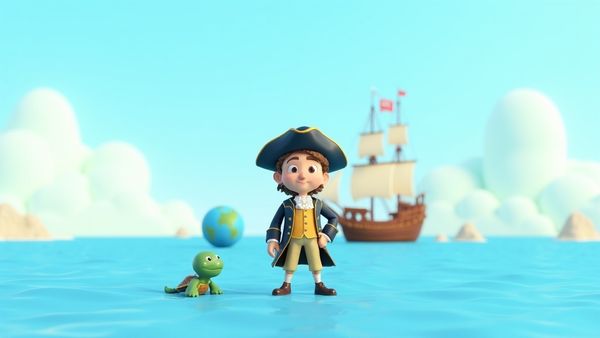
Captain James Cook was a superstar British explorer and mapmaker from the 1700s. He led three massive voyages across the Pacific Ocean between 1768 and 1779. His mission included watching the Transit of Venus and searching for the Great Southern Continent. This adventurer changed world maps forever!
What if you could sail farther than almost anyone before you, and put brand new lands on the map? That’s what Captain James Cook did!
Captain James Cook was a superstar British explorer and mapmaker from the 1700s. He was like a super-smart detective of the sea! Between 1768 and 1779, Cook led three massive voyages across the giant Pacific Ocean. His goal wasn't just finding new places; he was also a scientist who charted coastlines with amazing detail and kept his crew super healthy. This article is your mission briefing on the incredible life and voyages of this history-making adventurer, perfect for kids who love adventure!

Mira says:
"Wow, mapping all that ocean without GPS sounds like the hardest video game ever! I bet his compass was his best friend."
What Was Captain Cook Looking For?
Imagine setting sail with secret instructions! Cook’s voyages had two big parts to them. The first part, on his ship *Endeavour*, was to go to Tahiti to watch a special event called the Transit of Venus—when Venus passes in front of the Sun. This helped scientists figure out how far the Earth was from the Sun!
But the *secret* mission, which was revealed after he got there, was to search for a huge, rumored landmass called Terra Australis Incognita—the Great Southern Continent! He never found the giant continent, but he sure found a lot of islands and coasts along the way!
Mind-Blowing Fact!
Captain Cook was so good at keeping his sailors healthy and preventing the awful sickness called scurvy (which made people very sick from a lack of Vitamin C) that he even won a famous award, the Copley Medal, for it!
Cook's Three Amazing Voyages by the Numbers
Cook sailed tens of thousands of miles across oceans that were mostly blank spaces on European maps! He sailed around the world twice during these trips.
His first trip started in 1768 and his last one ended in 1779. Think about that—three huge, multi-year adventures with only the technology of the 1700s!
Between 1768 and 1779
On the East Coast of Australia
The Antarctic Circle (1773)
How Did Cook Change the Map?
Cook’s map-making skills were top-notch! He wasn't just sailing; he was carefully measuring and recording every coastline he saw. This was super important for explorers and sailors who came after him.
The First Voyage: Australia and New Zealand
On his first trip on the *Endeavour*, Cook mapped the coast of New Zealand, proving it wasn't part of a giant southern continent.
Later, he became the first European to record visiting the east coast of Australia in 1770. He named that area New South Wales and claimed it for Great Britain!
The Second Voyage: The Frozen South
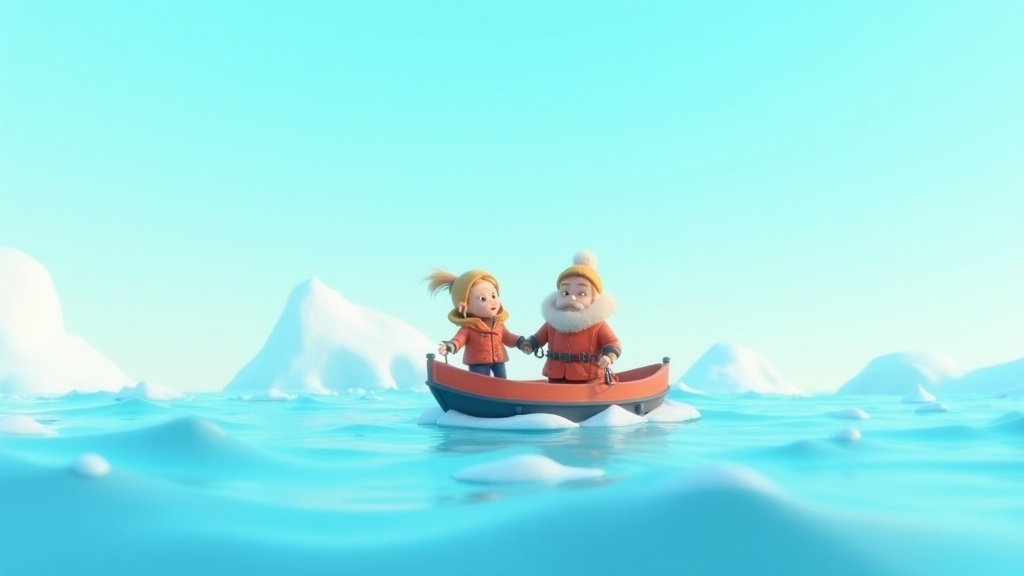
The second voyage was all about sailing as far south as possible! Cook became the first European ever to sail across the Antarctic Circle in January 1773!
He explored many islands like Easter Island and the Friendly Islands (now Tonga), filling in huge gaps on the map of the Southern Pacific.
💡 Did You Know?
On his third journey, Cook became the first known European to visit the Hawaiian Islands in 1778! He originally called them the 'Sandwich Islands' after a friend back in England.
🎯 Quick Quiz!
What was the main *secret* goal of Captain Cook's first voyage?
Why Did Captain Cook's Story End in Hawaii?
Cook's final adventure in 1779 took him to the Hawaiian Islands while searching for the North-West Passage. Initially, the islanders welcomed the sailors warmly, perhaps even believing Cook was a returning god named Lono because his arrival fit a special prophecy.
Sadly, things turned serious. After a boat was stolen, Cook tried to take the powerful island chief, Kalaniʻōpuʻu, hostage to get it back. This led to a huge confrontation at Kealakekua Bay where Captain Cook was tragically killed by the Hawaiians on February 14, 1779.
- New Zealand: Cook sailed all around its main islands, accurately charting them.
- Australia's East Coast: He landed at Botany Bay and claimed the territory as New South Wales for Britain.
- Hawaiian Islands: He was the first European to visit and record these islands during his final voyage.
- Antarctic Circle: He was the first European to cross this imaginary line around the South Pole!
Even though Captain Cook's death was a sad ending to his third voyage, his detailed maps and scientific notes changed the world's understanding of the Pacific forever. The space race even honored him later—two famous NASA Space Shuttles were named Discovery and Endeavour after his ships!
Questions Kids Ask About Explorers
Keep Charting Your Own Course!
Captain Cook shows us that with curiosity, hard work, and good teamwork, you can explore and discover amazing things. Whether you're exploring a new book or a new corner of your backyard, remember Cook’s spirit of adventure! Keep learning, history explorers!