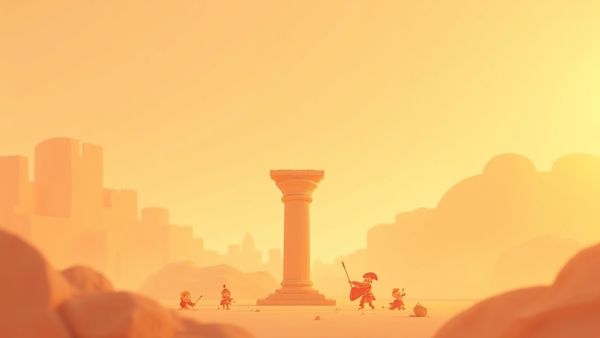
The end of Ancient Rome refers to the decline and final collapse of the Western Roman Empire, usually dated to 476 AD. At its peak, the empire covered 5 million km². Discover the slow, epic reasons why this powerful civilization faded away!
Imagine an empire so huge it covered almost all the land around the Mediterranean Sea—so big that they famously said, 'All roads lead to Rome!'
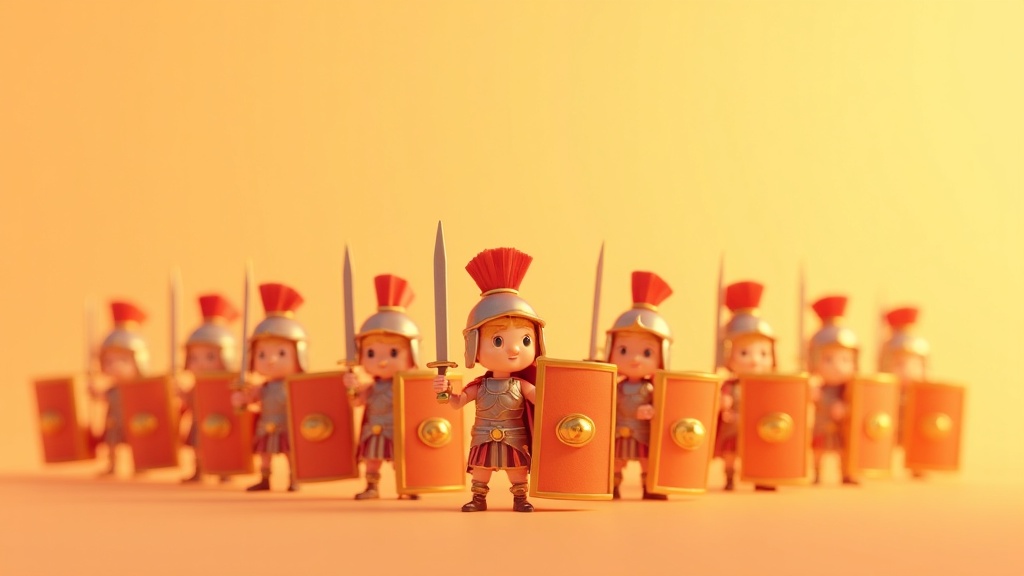
For hundreds of years, the Roman Empire was the superpower of the world, building amazing roads, strong armies, and incredible laws. But even the mightiest things sometimes come to an end. We often talk about the fall of the Western Roman Empire, which is usually marked by the year 476 AD. This meant the part of the empire centered around the city of Rome lost its central government and power. But don't worry, it wasn't like a light switch flipped! It was a super long, slow process with many big problems—like a giant sandcastle slowly getting washed away by the tide.

Mira says:
"It's wild to think that something so HUGE could stop existing! I wonder if their last emperor knew he was the *last* one?"
What Was the Roman Empire Anyway?
Before we talk about the end, we need to know what ended! The Roman Empire was massive. At its biggest, it stretched across huge parts of Europe, North Africa, and Asia. It started as a small city-state, became a Republic (where people voted for leaders), and then became an Empire when leaders like Augustus gained total power around 27 BC.
To help manage all that land, the emperors realized it was too much for one person. In 395 AD, after the death of Emperor Theodosius I, the empire was officially split into two halves: the Western Roman Empire and the Eastern Roman Empire (which later became known as the Byzantine Empire). Sadly, the West was much poorer and weaker than the East, setting the stage for the final collapse in the West.
Mind-Blowing Fact!
The Eastern Roman Empire (Byzantium) was so strong that it lasted another 1,000 years after the West fell, finally ending in 1453!
The Empire's 'Ouch' Numbers: How Big Was It?
To understand why it was hard to keep track of everything, check out how enormous Rome got! It wasn't just the land—it was the power it held over millions of people.
When the Western Empire finally lost its central control, it meant local leaders and newly arriving groups were taking charge instead. The Roman Emperor's power shrunk until he had almost none left!
(Area in AD 117)
(Estimated in 25 BC)
(Before the split)
How Did This Superpower Start to Crumble?
Historians don't agree on just one reason for Rome's end; it was a pile-up of problems! Think of it like trying to balance a giant tower of blocks—eventually, one wobbly block brings the whole thing down. Here are the main reasons the West got wobbly, which is important history for kids to learn about state failure!
Too Big to Manage
The empire got so gigantic that it was super hard to send messages, collect taxes, and move troops quickly across the whole thing. Even with amazing roads, distance was a huge enemy!
The Army Got Weak
Keeping that massive border safe cost tons of money! As time went on, the army became less strong, sometimes hiring soldiers who weren't loyal to Rome. Also, constant civil wars used up soldiers and money fighting Romans instead of invaders.
Bad Leaders & Money Troubles
Sometimes emperors were more interested in fighting each other or being greedy than making good decisions. High taxes crushed the regular people, trade slowed down, and money lost its value. When people are poor and leaders are corrupt, things get messy!
💡 Did You Know?
One major event that shook Rome was when the Visigoths (a Germanic tribe) sacked (looted and damaged) the city of Rome in 410 AD! This was a huge shock because Rome was thought to be unconquerable.
🎯 Quick Quiz!
Which year is often used as the marker for the end of the Western Roman Empire?
Who Was the Very Last Emperor and What Happened Next?
The last ruler of the Western Roman Empire in Italy was a young boy named Romulus Augustulus. Can you imagine? His name was almost the same as the legendary founder of Rome (Romulus) and the first Emperor (Augustus)!
- The Final Change: In 476 AD, the Germanic warrior Odoacer won a big battle and forced Romulus Augustulus to step down.
- Sending the Crown Back: Instead of naming a new emperor for the West, Odoacer sent the emperor's fancy symbols (like a crown and robes) to the Eastern Emperor, Zeno, in Constantinople.
- New Kingdoms: Odoacer became the first King of Italy, and much of the old Western Roman land broke up into smaller kingdoms ruled by different Germanic groups, like the Franks and Visigoths.
Even though the Western Roman Emperor was gone, Roman ideas didn't vanish! Amazing things like their laws, language (Latin), architecture, and engineering were copied and kept alive by the new kingdoms and, most importantly, by the strong Eastern Roman (Byzantine) Empire which kept the Roman flame burning for another thousand years!
Questions Kids Ask About Ancient Rome
Rome's Legacy Lives On!
So, the next time you see a fancy building, hear a word that sounds a bit like Latin, or learn about our legal system, remember the Romans! Their story didn't end in 476 AD; it just changed shape and became the foundation for much of the world we live in today. Keep exploring, history heroes!