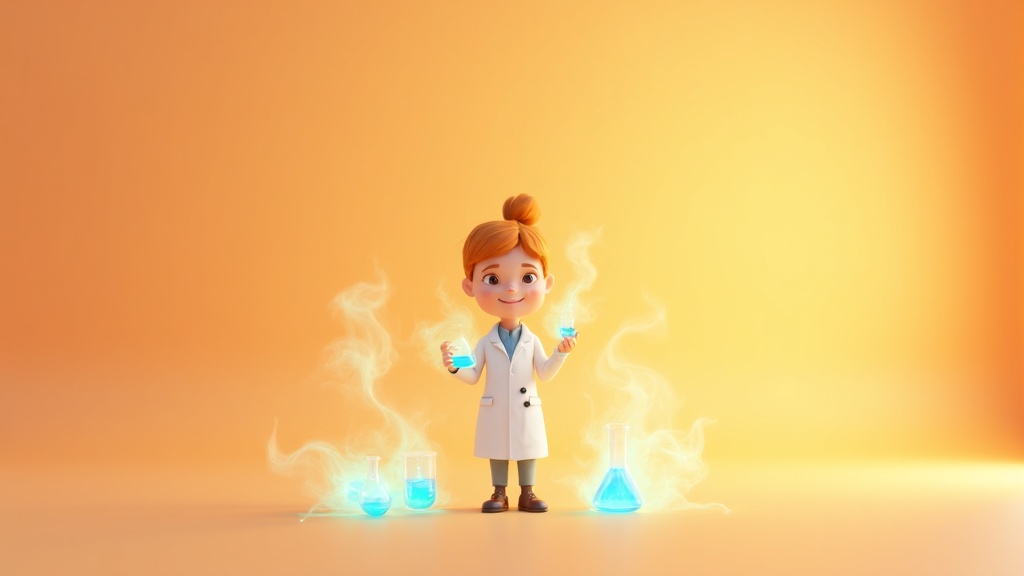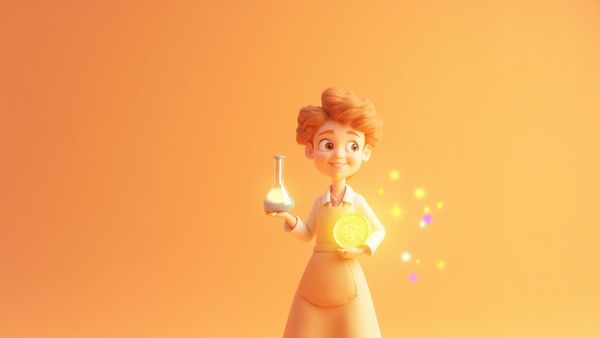
The first woman to win a Nobel Prize was Marie Curie. She won the 1903 Nobel Prize in Physics, sharing it for her pioneering work on radioactivity, a term she created. This groundbreaking science is still important today for understanding atoms and energy!
What does it take to change the world with just your brain? Think big science, super smart ideas, and a whole lot of dedication!
Today, we’re zooming in on one of history’s ultimate brainiacs: Marie Curie! She didn't just win one of the most famous awards on Earth—the Nobel Prize—she was the very first woman ever to do it! Born Maria Skłodowska in Poland in 1867, she had a huge dream: to study science at the highest level, even when it was super hard for girls to do so. She moved to Paris and worked tirelessly, eventually sharing the 1903 Nobel Prize in Physics for her pioneering work on something she named: radioactivity! But guess what? That wasn’t even the end of her amazing story! She came back a few years later for another one. That’s like winning the championship game and then winning the Super Bowl the next year! Keep reading to find out what she did next and why her work is still important for kids today.

Mira says:
"Wow, winning *two* Nobel Prizes in two totally different science fields—Physics AND Chemistry—is mind-blowing! It proves that if you follow your curiosity, you can discover things no one even knew existed!"
What is the Nobel Prize Anyway?
Imagine the coolest, most respected award you can think of. That's the Nobel Prize!
These amazing awards were started because of a very rich Swedish inventor named Alfred Nobel.
He invented dynamite, which helped build things like roads and tunnels, but he also worried about how his inventions could be used for bad things. So, he left most of his massive fortune to create prizes to honor people who did the 'greatest benefit on mankind'!
The first prizes were handed out in 1901 in five areas: Physics, Chemistry, Medicine, Literature, and Peace. A sixth prize for Economics was added later on.
Mind-Blowing Fact!
The first Nobel Prize was awarded way back in 1901! Marie Curie’s first win was just two years later in 1903!
The Two Huge Discoveries That Earned Marie Curie Two Prizes
Marie Curie’s journey to becoming the first female Nobel winner in 1903 (Physics) was shared with her husband, Pierre Curie, and a scientist named Henri Becquerel.
They all worked on studying strange rays coming off certain elements, like uranium. Marie was the one who came up with the awesome name for this effect: radioactivity!
But Marie didn't stop there! She kept working, even after a huge tragedy when Pierre died in an accident in 1906.
Her next big discovery was finding two brand new chemical elements: Polonium (which she named after her home country, Poland!) and Radium!
(Physics)
(Chemistry)
(Only person to do this!)
(Her own discoveries)
How Did Marie Curie Isolate Those Amazing Elements?
Finding Polonium and Radium wasn't like finding a cool rock in your backyard. It was super hard work that took years!
Imagine taking tons—like, many, many tons—of a dusty, heavy rock called pitchblende, which contained a tiny bit of the new elements.
The Laborious Lab Work
Marie and Pierre had to work in a drafty old shed that wasn't even a proper lab! It was more like a leaky shack. But they didn't care; they were scientists on a mission!
They used chemical reactions over and over again to separate different parts of the rock. Think of it like making a giant pot of soup, but instead of just eating it, you carefully scoop out one tiny ingredient at a time, over and over, until you have just a pinch of what you're looking for.
They boiled, mixed, stirred, and filtered huge amounts of material to get just a tiny speck of pure radium! This incredible effort is what helped her win the 1911 Nobel Prize in Chemistry all by herself!
💡 Did You Know?
Marie Curie was also the first woman in France to earn a PhD in Physics, and she was the very first woman to ever become a professor at the famous Sorbonne University in Paris!
🎯 Quick Quiz!
What element did Marie Curie name after her home country of Poland?
Why is Marie Curie Still a Hero for Kids Today?
Marie Curie’s story is a fantastic example of never giving up. She faced sexism, worked in difficult conditions, and dealt with personal tragedy, but her scientific curiosity never faded.
Her discoveries didn't just win her awards; they helped people! Radium became important for scientists studying radiation, and later, it helped create new ways to treat cancer by destroying bad cells.
- Wartime Hero: During World War I, she created mobile X-ray units called 'petites Curies' (little Curies) to help doctors see broken bones right near the battlefields.
- Family of Scientists: Her daughter, Irène Joliot-Curie, also followed in her footsteps and won a Nobel Prize in Chemistry in 1935!
- A Lasting Legacy: She founded the famous Curie Institutes in Paris and Warsaw, which are still major centers for cancer research today.
Even though Marie Curie sadly passed away in 1934 from a sickness caused by working with radiation for so long, her notebooks are still so radioactive that they have to be stored in lead boxes today! That shows you just how powerful the stuff she studied really was.
Questions Kids Ask About Famous People
Keep Exploring the Unknown!
Marie Curie proved that with smarts, passion, and grit, anyone—no matter who they are—can make a discovery that changes science forever. Next time you’re doing an experiment or asking a 'why' question, remember Madame Curie and keep bravely seeking the answers!