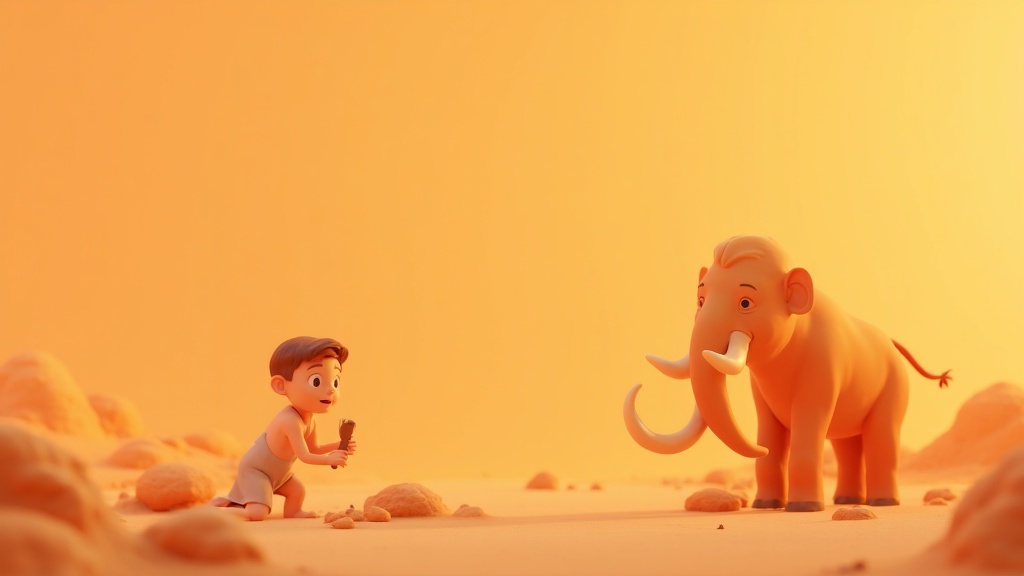
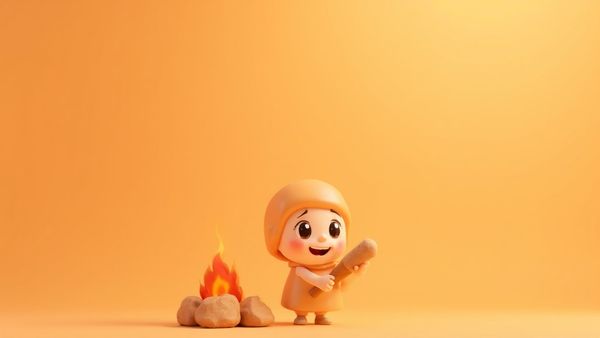
Prehistoric humans were the amazing people who lived before written language—about 99% of human history! They invented vital skills like walking upright and controlling fire. Learning about these original inventors shows kids how we became *Homo sapiens*.
What if you had to invent EVERYTHING—your tools, your shelter, even how to make a campfire—all by yourself? That’s what our earliest ancestors did!
Prehistoric humans are the amazing people who lived *way* before anyone wrote anything down. Prehistory is the massive chunk of time before written language, which is about 99% of human history! Scientists, like archaeologists, dig up clues—like old bones and stone tools—to figure out how these incredible early humans survived. They were the original inventors who learned to walk upright, make fire, and hunt the biggest animals!

Mira says:
"I can’t believe they didn't have smartphones! But honestly, inventing the first sharp stone tool sounds way cooler than scrolling on one. Think of the problem-solving skills they had!"
What is the Stone Age? Time Traveling with Tools!
The main time we talk about when we discuss prehistoric humans is the Stone Age. Why stone? Because that’s what they used to make almost everything! It’s the longest age in prehistory, lasting for millions of years.
The Stone Age is usually split into three main parts: the Paleolithic (Old Stone Age), the Mesolithic (Middle Stone Age), and the Neolithic (New Stone Age). Think of it like a video game, with levels getting harder and more advanced!
Mind-Blowing Fact!
Did you know? Humans weren't the first to use stone tools! Some ancient species made and used them about 3.3 million years ago, long before *Homo sapiens* even existed!
The Stages: Our Ancient Family Tree
Our journey to becoming *Homo sapiens* (that's us!) happened over millions of years, with different groups (called species) appearing and developing.
Early ancestors like *Australopithecus* were walking upright, which was a huge deal because it freed up their hands for carrying things and eventually making tools!
Meet Homo erectus: The First Traveler
Next up was *Homo erectus* (meaning 'Upright Man'). These folks were taller, standing around 6 feet tall!
They were the first of our relatives to leave Africa and spread into places like Asia and Europe. The biggest invention of *Homo erectus*? Controlling fire! Fire gave them warmth, light, and a way to cook food, which made them safer and healthier.
The Neanderthals: Tough Cousins
Neanderthals were another group of humans who lived alongside our direct ancestors for a long time. They were super strong and built for cold weather!
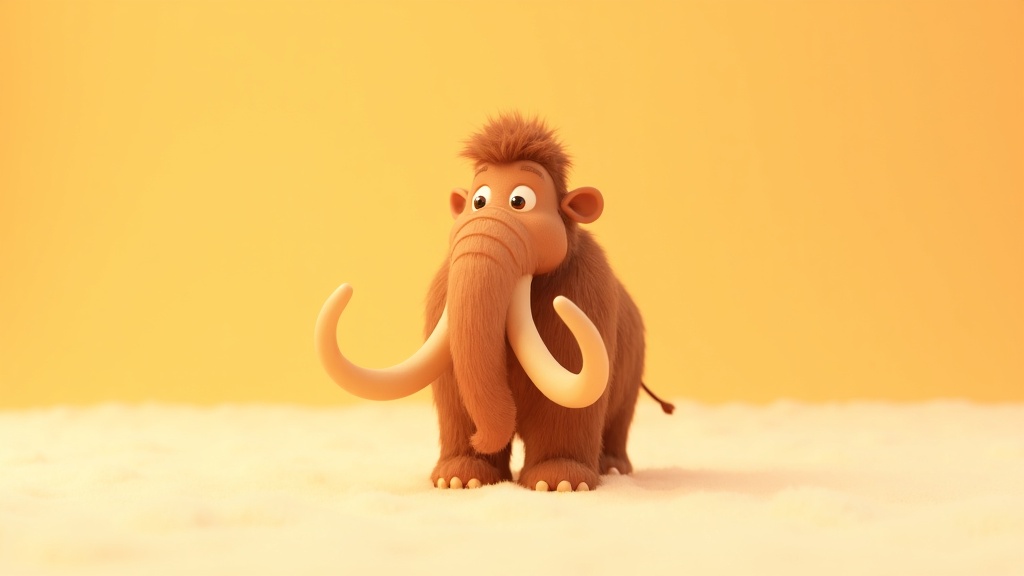
They were very good at hunting big game like mammoths and used advanced stone tools called Mousterian tools.
That’s longer than 100,000 Great Pyramids stacked end-to-end!
We're the newest kid on the ancient block!
Due to a tough, risky life.
Even the shortest were tough survivors!
💡 Did You Know?
Did you know that Neanderthals grew up faster than us? Baby Neanderthals started eating solid food up to four months earlier than modern human babies, which helped fuel their rapidly growing brains!
How Did Prehistoric Humans Survive and Thrive?
Survival was a full-time job! Prehistoric people didn't have grocery stores or doctors. Every single day was about finding food and staying safe from wild animals and the weather.
They were masters of their environment, learning which plants were safe to eat and how to track animals across huge distances.
Hunting and Gathering: The Daily Grind
In the Paleolithic (Old Stone Age), people were hunter-gatherers. This means they hunted animals for meat and gathered wild plants, nuts, and berries.
They were always moving, following the seasons and the herds of animals. Imagine packing up your whole family and moving to a new 'home' every few weeks!
Art and Ideas: More Than Just Survival
It wasn't all hunting! Prehistoric people had rich inner lives. They created art, like the famous cave paintings found in places like France.
Archaeologists have found evidence that they even had spiritual beliefs and buried their dead with tools or even flowers, showing they felt deep emotions about life and loss.
🎯 Quick Quiz!
Which of these was a HUGE invention of *Homo erectus* that changed everything for prehistoric humans?
Why Don't We See Them Today?
The Neanderthals eventually disappeared, and *Homo sapiens* became the only human species left on Earth about 40,000 years ago.
Historians and scientists have many ideas why—maybe modern humans were better at sharing, adapting to tiny climate changes, or maybe they just had slightly bigger social groups.
- Tool Making: Sharpening flint for knives and scrapers.
- Fire Control: Using fire for cooking, warmth, and keeping predators away.
- Tracking & Foraging: Knowing exactly which plants were safe and how to follow animal trails.
- Shelter Building: Creating huts from branches or using caves.
The life of a prehistoric human was tough, with an average lifespan often around 33 years due to harsh conditions and high infant mortality, but the few who survived childhood could often live into their 40s or even older! They laid the groundwork for everything we do today by inventing the very basics of survival and culture.
Questions Kids Ask About Prehistory
Keep Exploring the Past!
Isn't it amazing how much our ancestors figured out with just rocks and sticks? They were the ultimate survivors and the very first thinkers! Next time you use a knife or sit by a fire, remember the prehistoric humans who made those first amazing steps for all of us!