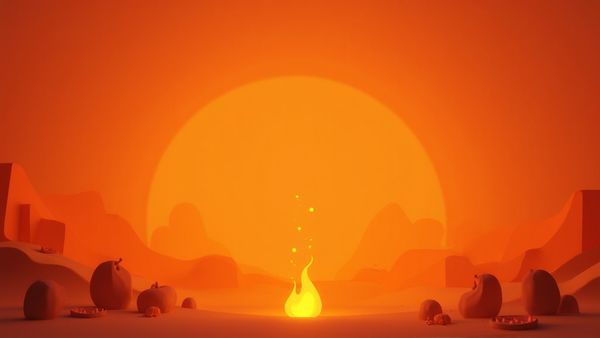
Samhain (pronounced SOW-in) was an ancient Celtic festival marking the end of the harvest and the start of winter, celebrated on October 31st. Dating back over 2,000 years, Celts believed the veil between worlds thinned, allowing spirits to visit. It's the mysterious origin of modern Halloween!
What if we told you that one of the most popular candy-collecting nights of the year has roots stretching back over 2,000 years to an ancient festival called Samhain?
Get ready to time-travel with us to ancient Ireland, Scotland, and Wales to explore Samhain (pronounced SOW-in)! This incredible Gaelic festival marked a HUGE moment in the Celtic year: the end of the harvest season and the start of winter, the darker half of the year. Celebrations traditionally began on the evening of October 31st and ran into November 1st. For the Celts, this wasn't just about a change in weather; it was a time of big magic and mystery. They believed the barrier, or veil, between our world and the spirit world became incredibly thin on this night, allowing spirits and otherworldly beings to visit! It was both an ending and a new beginning, making it one of their four main seasonal festivals.

Mira says:
"Wow, Finn! So, when people dress up for Halloween now, it’s like an ancient tradition to trick the spirits into thinking you are one of them? That’s much cooler than just picking out a costume!"
What is Samhain? The Celtic New Year!
Samhain literally means "Summer's End" in Irish. Imagine you are a Celtic farmer a long, long time ago. You’ve spent all summer growing food—vegetables, fruits, and grain. Samhain was the grand finale of the harvest! It was time to bring all the animals down from the summer fields and store all that delicious food away because the long, cold winter was coming.
Because the days got shorter and the nights longer after Samhain, people associated this time with the darker half of the year, and even with death and the spirit world. It was the official Celtic New Year, a time to look back at the year that ended and prepare for the one about to begin. Think of it as the biggest, most important end-of-year party ever!
Mind-Blowing Fact!
The word Samhain is sometimes also interpreted to mean "assembly," which makes sense because it was a time when people gathered for big feasts and ceremonies before winter set in!
The Thinnest Veil: Spirits and Bonfires
The most exciting (and maybe scariest!) part of Samhain was the belief about the Otherworld. The Celts thought that on this one night, the door between our world and the world of the spirits was wide open. This meant ghosts, fairies (known as the *aos sí*), and the souls of the recently deceased could walk among the living.
To keep themselves safe from any mischievous or unwelcome spirits, the Celts had some awesome traditions! The biggest one involved bonfires. Huge fires were lit, often on hilltops, because fire was thought to have special powers to cleanse and protect the community and the land for the coming winter.
Samhain tradition began
In the Celtic Year (Samhain, Imbolc, Bealtaine, Lughnasa)
The Celtic day ran from sunset to sunset
How Did Samhain Become Modern Halloween?
If you love wearing costumes and getting treats, you have Samhain to thank! The Celts didn't just light fires; they also used specific rituals to deal with the spirits. Here is how their traditions connect to what we do today:
### Costumes and Disguises
People wore masks and costumes, sometimes made from animal skins. They did this for two main reasons: to hide from the spirits so they couldn't be recognized, or to pretend to be a spirit themselves so they wouldn't be bothered! This is the direct ancestor of your Halloween costume!
Feasts and Offerings
Families would light candles in windows to help guide their beloved ancestors home safely. They also left food and drinks outside their doors as offerings. Sometimes, they even set an extra place at the dinner table to make sure visiting spirits felt welcome and honored.
💡 Did You Know?
Many of the scary faces we carve today were originally carved into turnips or large roots in Ireland and Scotland! These spooky lanterns, called Jack-o'-lanterns, were placed near doors to scare away bad spirits. When Irish immigrants came to America, they discovered the huge, easy-to-carve pumpkin and switched over!
🎯 Quick Quiz!
What time of year did the ancient Celts believe the veil between worlds was thinnest during Samhain?
Why is Samhain Still Important?
Samhain was so important that when Christianity spread across Europe, leaders created new holidays to overlap with it. All Saints' Day (November 1st) and All Souls' Day (November 2nd) gradually blended with the older customs. The night before, All Hallows' Eve, became what we know as Halloween!
Even though we might not light bonfires for protection every year, the spirit of Samhain lives on in our modern celebrations of remembering the past, celebrating the change of seasons, and having fun with spooky themes.
- Honoring Ancestors: Leaving a place setting at the table for family members who have passed away.
- Divination: Using things like apples or nuts to try and tell fortunes for the coming year (this might remind you of apple bobbing!).
- Community Feasting: Sharing the last of the harvest food and drink together.
- Masking Up: Wearing costumes to confuse or hide from roaming spirits.
So, the next time you put on a costume or carve a pumpkin, remember you are taking part in a tradition that is thousands of years old, connecting you to the ancient Celts who welcomed the dark, mysterious half of the year with fire, feasts, and a little bit of magic!
Questions Kids Ask About Holidays
Keep Exploring the History of Fun!
From huge bonfires to spooky costumes, Samhain shows us that holidays are always changing but the need to celebrate seasons and remember our past stays the same. Keep listening and learning for more amazing history stories!