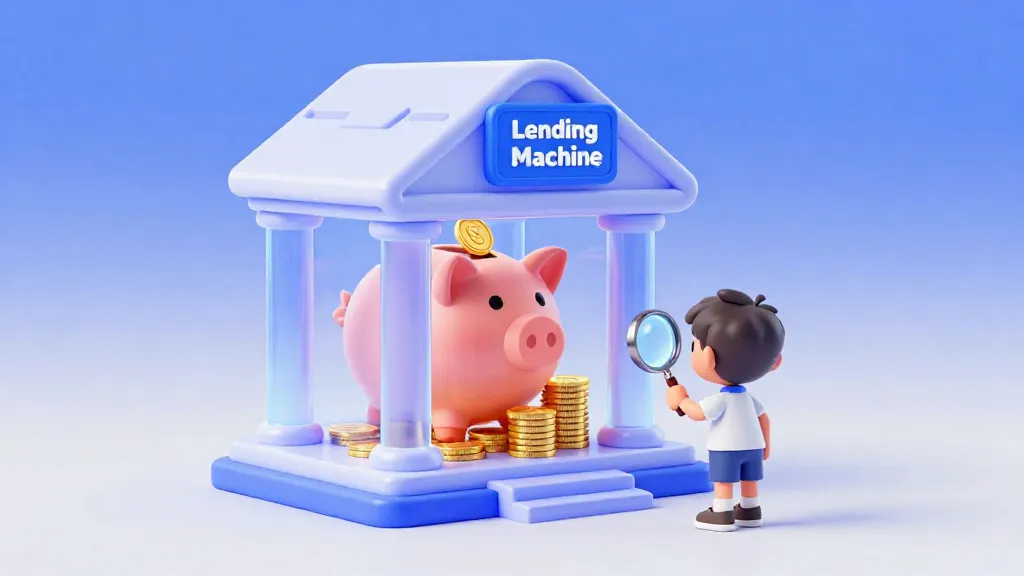
Imagine you could borrow your friend's bike, rent it out to a neighbor for double the price, give your friend a tiny cut of the cash, and keep the rest for yourself. That is exactly what banks do every single day.
Most people think banks are just safe lockers for their cash, but they are actually profitable businesses designed to grow. By using the money you deposit, banks can fuel the entire economy while making billions of pounds in profit through a clever system called the interest rate spread.
When you walk into a bank, it usually feels very serious. There are thick glass windows, heavy vaults, and adults in suits. It feels like a public service, almost like a library or a post office. But here is the secret: banks are businesses, just like a toy shop or a cinema. Their goal is to make a profit, and they are exceptionally good at it.

Imagine you have a rare trading card worth £10. You let your friend keep it in their folder for 'safety.' While you aren't looking, your friend rents that card to someone else for £2 a day. Your friend keeps the £2 and gives you back your card whenever you ask. Your friend just used your asset to make a profit without you doing anything!
Most of the money a bank has isn't actually theirs. It belongs to people like you, your parents, and local businesses. To understand how they turn your pocket money into their profit, we have to look at the 'middleman' trick. You see, a bank is essentially a giant middleman that connects people with extra money to people who need money.
The Magic of the Spread
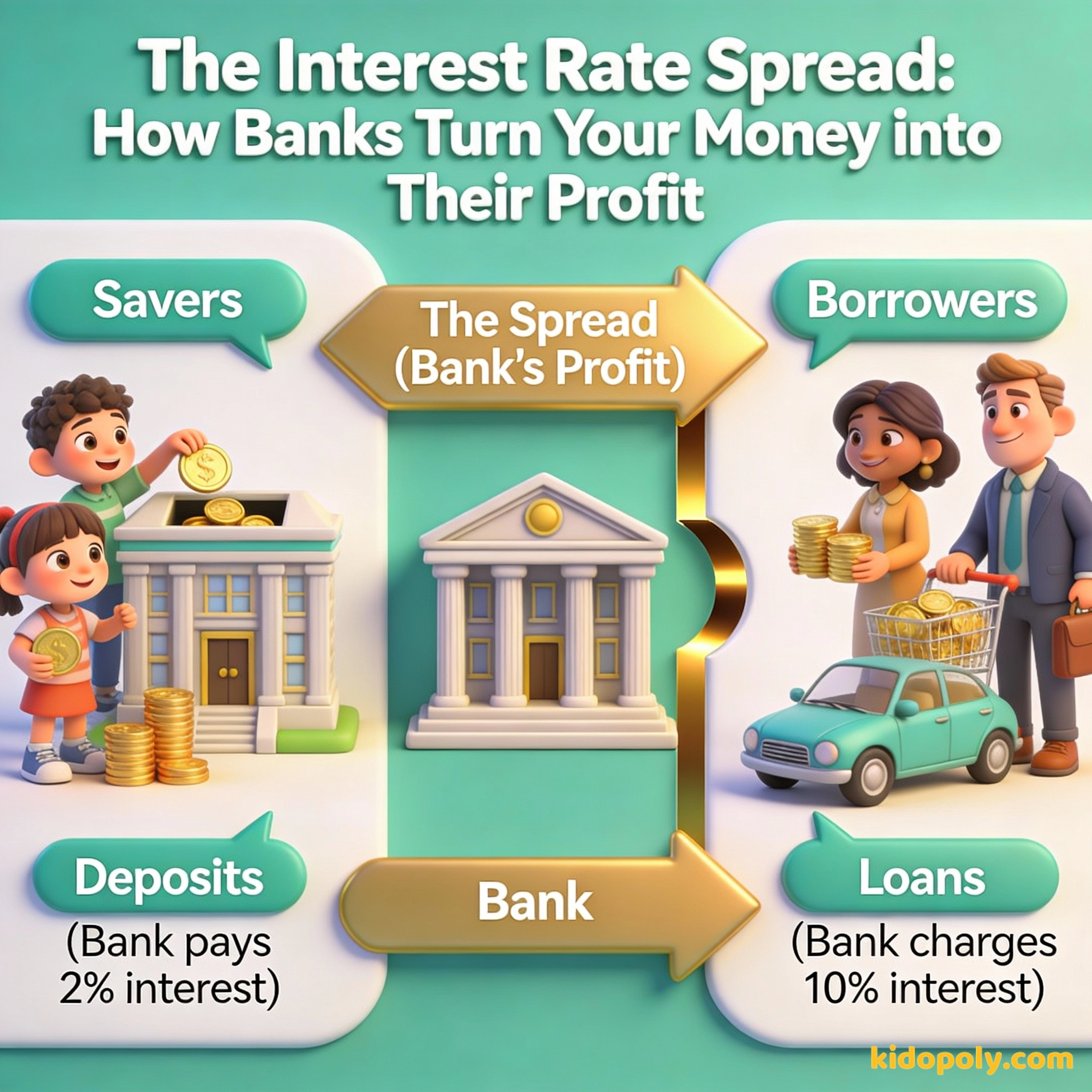
The main way a bank earns money is through something called the interest rate spread. Think of it as the 'gap' between two different prices. When you put money into a savings account, the bank pays you a small amount of interest for the privilege of holding your cash. They might pay you 1% or 2% per year. To you, that feels like a nice little bonus, but to the bank, it is the cost of doing business.

Finn says:
"Wait, so if I put my £20 in the bank, and they lend it to someone else immediately, what happens if I go to the bank five minutes later and want it back?"
Once the bank has your money, they don't just let it sit in a dusty vault. They immediately lend that same money out to other people who want to buy a house, a car, or start a new business. However, they charge those borrowers a much higher interest rate than what they are paying you. If they pay you 2% but charge a borrower 8%, that 6% difference is the 'spread' - and that is the bank's main source of income.

Banking is a very good business if you don't do anything dumb.
Let's look at a £1,000 deposit: - Bank pays Saver: 2% interest = £20 per year - Bank charges Borrower: 10% interest = £100 per year - The Spread: £100 (earned) minus £20 (paid) = £80 profit Now imagine the bank does this with billions of pounds!
More Than Just Interest: The Fee Machine
While the interest spread is the 'main course' for a bank's income, they also have plenty of 'snacks' called fees. Have you ever seen an adult get frustrated because they used an ATM that wasn't from their own bank? That is because the bank might charge a service fee just for the convenience of getting your own cash.
In 2022, big banks in the United States made over $9 billion just from 'overdraft fees.' That is money they earn specifically when their customers run out of money. It is one of the most controversial ways banks make a profit.
Banks have dozens of different fees that add up to billions of dollars every year. Some common ones include:
- Overdraft fees: Charged when someone spends more money than they actually have in their account.
- Monthly maintenance fees: A 'subscription' cost just for having an account open.
- Late payment fees: Charged when a borrower doesn't pay back their loan on time.
Taking Big Risks for Big Rewards
Beyond loans and fees, big banks also act like professional investors. This is often called investment banking. They take some of the massive amounts of money they hold and invest it in the stock market, buy pieces of other companies, or trade complex financial products. While this is riskier than just lending money for a house, it can lead to massive paydays when those investments do well.

Mira says:
"It is like the bank is playing a massive game of 'The Floor is Lava,' but with money. They keep the cash moving so fast it never gets a chance to just sit still!"
This is where banks start to make the 'mega-money.' By using their expert knowledge of the global economy, they can grow their own wealth at the same time they are managing yours. It is like having a professional video game player use your controller to win a tournament - they get to keep the prize money, even though they were using your equipment!

A bank is a place that will lend you money if you can prove that you don't need it.
How Much Do They Actually Make?
To see how successful this business model is, we just have to look at the real numbers. Big banks aren't just making a few thousand pounds; they are making more money than almost any other type of company on Earth. For example, in 2023, the American bank JPMorgan Chase reported a profit of nearly $50 billion. That is enough money to buy every single person in the UK a brand-new PlayStation 5 and still have billions left over!
High interest rates on loans mean the bank makes more money from every person who borrows. This leads to record-breaking profits for the bank's owners.
High interest rates make it more expensive for families to buy homes or for businesses to grow, which can slow down the whole economy.
In the UK, banks like HSBC and Barclays also make billions in profit every year. When you see those huge, shiny skyscrapers in the middle of a city with a bank's logo on top, remember: every window in that building was likely paid for by the interest spread and those little fees they charge.
Why You Should Care
Knowing that a bank is a business changes how you look at your money. Since banks are competing for your 'business,' you realize you have power as a customer. You don't have to just accept any account; you can look for the bank that pays you the most interest and charges the fewest fees.
Finn says:
"So, since they are making money from MY money, does that mean I can ask for a better deal? It's like I'm the supplier for their money factory!"
When you understand the business model, you stop seeing the bank as a place that is doing you a favor by holding your money. Instead, you see it for what it really is: a partner that is using your money to make their own. That realization is your first step toward being a smart, empowered manager of your own wealth.

The business of banking is the business of managing risk.
Something to Think About
If you ran your own bank, would you focus on making the most profit possible, or would you try to keep fees low to help your customers?
There is no right or wrong answer here. Some people think banks should be as profitable as possible to stay strong, while others think they should act more like a service for the community. What do you value more?
Questions About Banking
Is it fair that banks make money from my savings?
What happens to the profit the bank makes?
Do banks ever lose money?
You're the Boss of Your Balance
Now that you know the bank is a business, you can start treating them like one. Always look for the best 'price' for your money! Ready to see how the whole system stays glued together? Check out our guide on how-banks-work to see what happens behind the vault door.
