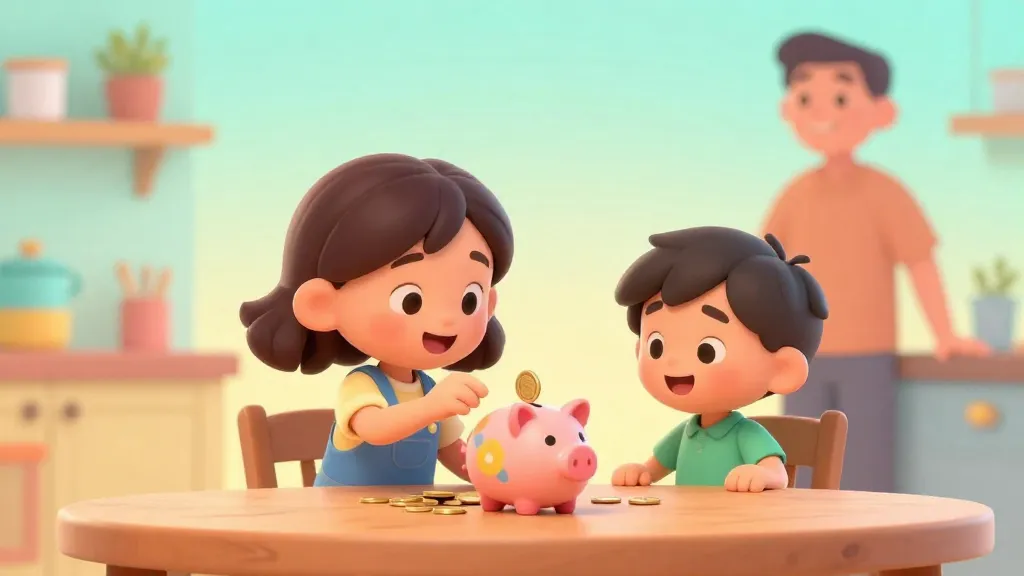
Your friend gets £5 a week just for existing. Your other friend earns £3 per chore. And that kid in Year 6 makes £20 a week selling friendship bracelets. Who is got it right?
The answer is: it depends. This guide helps you navigate the world of pocket money and earning, transforming what could be a simple chore into a powerful life skill for your child.
When you first start talking about money at home, it can feel like a big mystery. Why do some kids get paid for doing the dishes while others do not? Why does the amount change so much between families?
At its heart, pocket money (or allowance, as it is often called in the US) is a training tool. It is a way for you to practice making decisions before the stakes get too high.

I started early. I was selling chewing gum and Coca-Cola door to door.
Pocket Money vs. Allowance: What is the Difference?
In the UK, most families use the term pocket money. In the US, it is almost always called an allowance. While they sound different, they usually mean the same thing: a regular payment from a parent to a child.
However, there is a subtle shift in how people use these words today. Many people view pocket money as 'spending cash' for fun things. An allowance, on the other hand, might include money meant for specific responsibilities, like buying lunch or bus tickets.
A 2023 study found that the average age children in the UK start receiving pocket money is six years old. Starting early helps kids build confidence with numbers before they even reach secondary school!
The Three Earning Models
There is no 'single' way to do pocket money. Most families fall into one of three categories. Choosing the right one depends on your family values and what you want to teach.
First, there is the unconditional model. This is a set amount of money given every week or month regardless of chores. The goal here is purely to teach budgeting and money management.

Finn says:
"But wait, if I get my pocket money for free, won't I just think money grows on trees? How do I learn that work is important?"
Second, we have the chore-linked model. In this setup, money is earned by completing specific tasks. This creates a clear link between work and reward.
Teaches the value of hard work and shows that money is a limited resource you must earn.
Can make kids feel like they should only help out if they are getting paid, rather than just being part of a helpful family.
Finally, many families use a hybrid model. You might get a small base amount for free, but you can earn 'bonus' money by doing extra jobs like washing the car or weeding the garden.

A penny saved is a penny earned.
Age-Based Progression: From Coins to Cards
How much you earn and how you receive it usually changes as you grow up. Between ages 5 and 7, money is very concrete. It is often best to use physical coins and a clear jar so you can see your wealth growing.
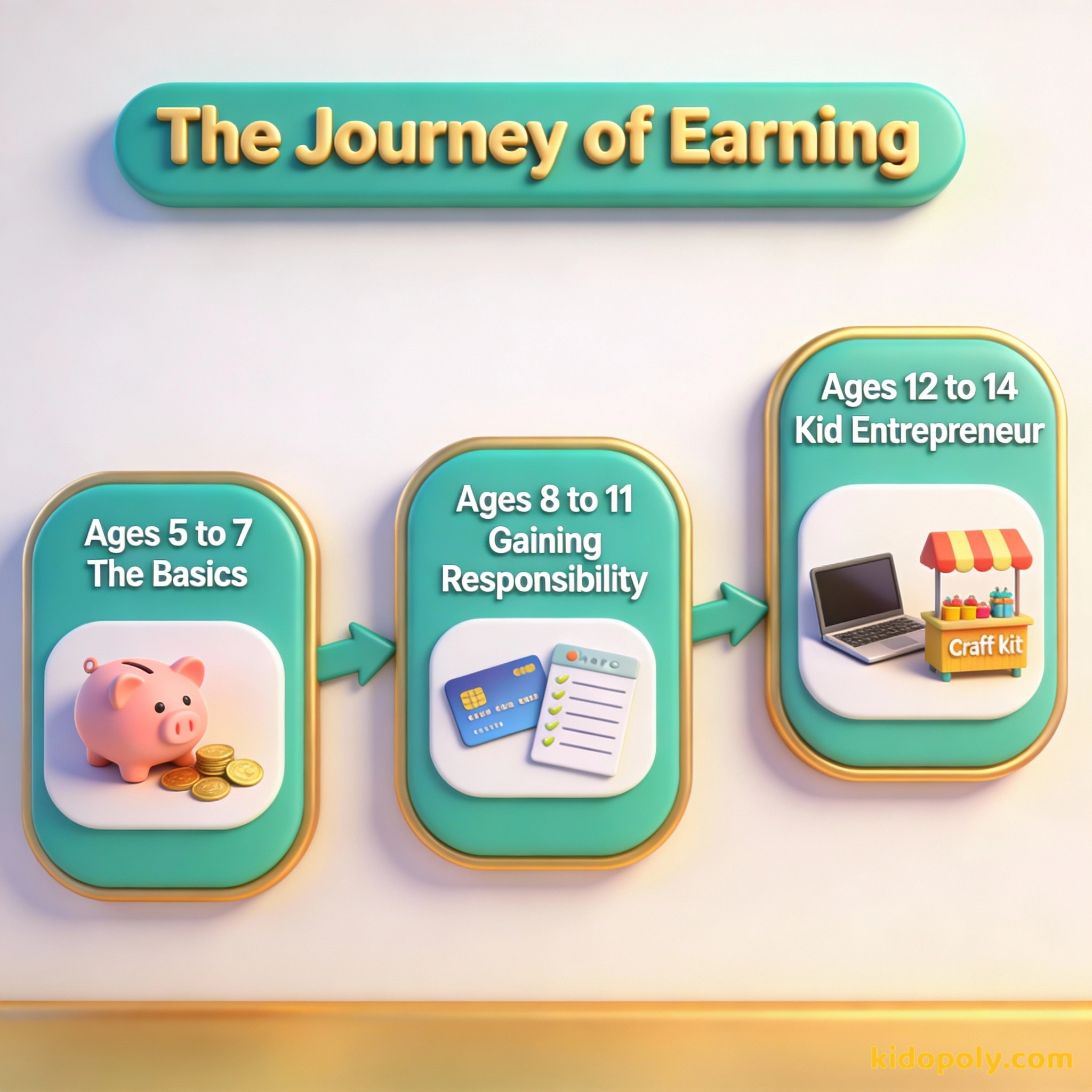
By the time you reach 8 to 11, you might move toward a digital system. Many families use pocket money apps or prepaid debit cards. This is the stage where you start learning about digital currency and how to track spending online.

Mira says:
"My mum says that getting a debit card is like getting a 'money steering wheel.' I have more control, but I have to be careful not to crash my savings!"
As you enter your teens (12 to 14), the focus often shifts. You might receive a larger monthly allowance that covers more of your own expenses. This is also the perfect time to explore earning money outside of the home.
Beyond Pocket Money: Kid Entrepreneurship
There is a limit to how much pocket money most parents can provide. If you want to save for something big, like a new gaming console or a designer pair of shoes, you might need to look beyond the family budget.
Kid entrepreneurship is the next big step. This means starting a small business of your own. It could be anything from selling handmade crafts to offering dog-walking services in your neighborhood.
Create an 'Extra Jobs' menu! Ask your parents to list three tasks they hate doing (like matching socks or washing the car) and put a price on them. It is a great way to earn extra cash when you have a specific goal in mind.
Earning your own money through a business teaches you about profit, expenses, and customer service. It is one of the fastest ways to understand how the real economy works while having fun at the same time.
Finn says:
"So if I sell my old Lego sets, that counts as being an entrepreneur? I'm basically a CEO now!"
Managing the Digital Shift
In the past, pocket money was always cash. Today, the world is moving toward a cashless society. While physical coins are great for younger kids, older children need to understand how to manage money they cannot see.
Let's look at the power of consistency: £5.00 per week x 52 weeks in a year = £260.00 total! If you save just half of that (£2.50 per week), you would have £130.00 by the end of the year. That is enough for a major new video game and a trip to the cinema with friends!
Using digital tools helps you see where your money goes. Most apps allow you to set savings goals and track your progress. It makes it easier to stay organized, but it also requires more discipline because it is easier to tap a card than it is to hand over a physical ten-pound note.

Financial freedom is a mental, emotional, and spiritual process.
No matter which model your family chooses, the most important thing is consistency. Talking about money openly helps take the stress out of it and turns every pound earned into a lesson for the future.
Something to Think About
If you could earn money doing any job in the world, what would it be?
Think about what you enjoy doing for fun. Is there a way that activity could help someone else or solve a problem? There are no right or wrong answers, only your own interests!
Questions About Earning & Pocket Money
How much pocket money is normal?
Should I pay my child for basic chores like making their bed?
What is the best age to start pocket money?
Ready to Start Earning?
Now that you know the different ways to earn, why not have a 'Money Meeting' with your family? You can decide together which model works best for you and set your first savings goal. Whether you are earning coins for chores or starting your first business, every penny is a step toward a smarter future.
