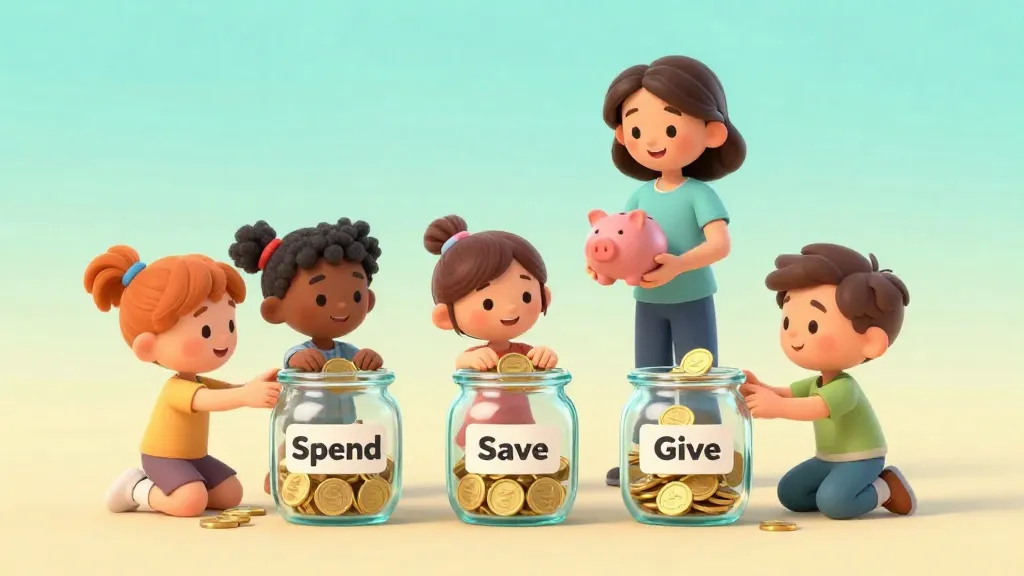
What if every time your child saved £1, you added another £1 to their piggy bank?
This concept, known as matched saving, is borrowed from workplace pension schemes. It is just one of a dozen pocket money ideas that turn a simple handout into a real-world money education. By choosing the right pocket money system, you move from simply giving cash to teaching life-long financial literacy.
Most parents start giving pocket money to help their children buy small treats. However, the way you deliver that money matters just as much as the amount. When you use a structured system, you create a safe environment for your child to make mistakes, practice delayed gratification, and learn the value of a pound.

Using physical cash and coins helps children under age 8 learn the value of money much faster than digital numbers on a screen. The weight and sight of the money make the 'loss' of spending feel real.
The Three-Jar Method: Creating Clarity
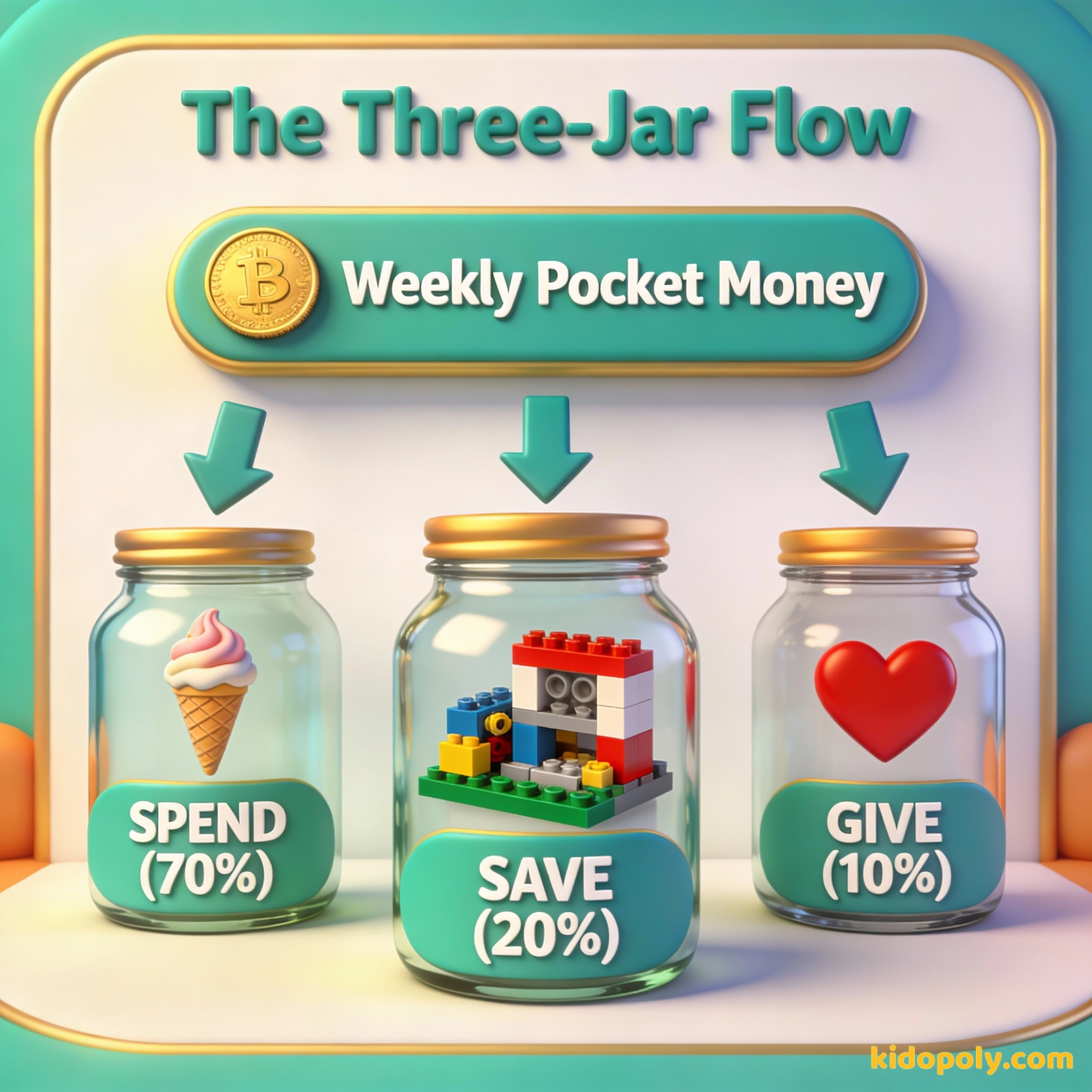
The Three-Jar Method is the gold standard for younger children. Instead of one wallet, the child has three separate containers labeled Spend, Save, and Give. This teaches them that money is not just for immediate consumption.
Every time they receive money, you help them split it. A common ratio is 70 percent for spending, 20 percent for saving toward a bigger goal, and 10 percent for giving to a cause they care about. This physical separation makes abstract concepts like charitable giving and long-term goals visible and tangible.

Finn says:
"Wait, if I put money in the 'Give' jar, it is just gone? Why would I do that instead of buying a new Lego set right now?"
The Commission System: Base + Bonus
Some families prefer a commission system over a flat allowance. In this model, the child receives a small base amount of pocket money. They can then earn 'commissions' for completing extra tasks that go above and beyond their normal household contributions.
This approach mimics the real-world labor market. It teaches kids that their effort can directly influence their income. If they want a new video game sooner, they can choose to take on more responsibilities to bridge the gap.

Do not save what is left after spending, but spend what is left after saving.
Matched Saving: The Parent Pension
Matched saving is a brilliant way to incentivize patience. You agree to match whatever amount your child puts into their 'Save' jar or account. For example, if they save £5 of their own money, you contribute an additional £5.
This system demonstrates the power of incentives. It makes the act of saving feel rewarding immediately, rather than just being a period of waiting. It also introduces the concept of employer-matched contributions they might see in the future.
The Power of the Match: - Child saves: £2.00 - Parent matches 100%: £2.00 - Total Savings: £4.00 By matching their savings, you effectively double their 'interest rate,' making the choice to save much more attractive than spending.
The Real-World Simulation
For older children and teenagers, a monthly budget simulation works best. Instead of small weekly amounts, give them a larger lump sum at the start of the month. This money must cover specific, agreed-upon expenses, like their phone credit, cinema tickets, or even some clothing.

Mira says:
"The monthly budget feels like when we go grocery shopping. I have to choose between the fancy snacks or having enough left for the bus!"
By managing a larger pot of money over a longer timeframe, they learn resource allocation. They quickly realize that if they spend their entire budget in the first week, the rest of the month will be very quiet. This shift from child to 'money manager' is vital for independence.

Imagine your teenager has a £40 monthly allowance. In week one, they spend £30 on a new game. Suddenly, they realize they don't have enough left for the pizza night with friends in week three. This 'safe failure' is a lesson they will never forget.
The Family Economy
If you want to get truly creative, try a family economy. Some parents use play money or tokens for daily 'earning' which can be cashed in for real money or family rewards at the end of the week. This can include 'paying' for household 'services' like a movie night or a special dessert.
This system helps children understand the flow of an economy. It demonstrates that money moves in a circle: you earn it, you might have to pay 'costs', and then you use the remainder for what you want. It removes the mystery of where money goes after it leaves a parent's wallet.

By the time they are three years old, kids can understand basic money concepts like exchange and value.
Goal-Based Pocket Money
Sometimes, the best system is the simplest one: goal-based earning. Instead of a regular schedule, the pocket money is tied to a specific purchase the child wants to make. You work together to break down the cost into manageable steps or milestones.
Finn says:
"So if I save £5 and you match it, I have £10? That is like a 100 percent bonus just for being patient!"
This method is excellent for teaching opportunity cost. If they are saving for a £50 set of headphones, every small candy bar they buy along the way represents a delay in reaching that goal. It makes every spending decision feel intentional.
Money Challenges and Games
You can keep interest high by introducing money challenges. These are temporary shifts in the system that make financial literacy feel like a game rather than a chore. They help break spending habits and encourage creative thinking.
Frequent payments help kids practice making many small decisions. If they mess up, 'payday' is only a few days away.
Larger, less frequent payments teach long-term planning and the consequences of overspending early in the month.
- No-Spend Days: Pick one day a week where nobody in the family (parents included) spends any money.
- The Savings Streak: Offer a small bonus if the child puts money in their savings jar four weeks in a row.
- The Supermarket Challenge: Give them a small budget and a list of items to see if they can find the best deals.

An investment in knowledge pays the best interest.
Choosing the Right System
There is no 'correct' way to handle pocket money. The best system is the one that fits your family's values and that you can maintain consistently. You might start with jars and transition to a monthly budget as your child grows.
For more guidance on tailoring these ideas to your child's developmental stage, check our guide on pocket-money-by-age. If you are wondering how to balance these systems with household chores, visit our page on pocket-money-and-chores for a deeper look at that debate.
Something to Think About
If you could only use one jar for a whole month, which one would be the hardest for you to fill: Spend, Save, or Give?
This question helps children identify their natural spending personality. There are no wrong answers, only opportunities to understand how we each feel about money differently.
Questions About Earning & Pocket Money
Should I use a digital app or physical cash for these ideas?
What if my child refuses to put money in the 'Give' jar?
How often should I review the pocket money system with my child?
From Handouts to Financial Habits
The system you choose is the framework for your child's financial future. Whether you start with the simplicity of three jars or the responsibility of a monthly budget, you are giving them the tools to navigate the real world. Why not try the Matched Saving challenge this weekend and see how it changes their attitude toward their piggy bank?