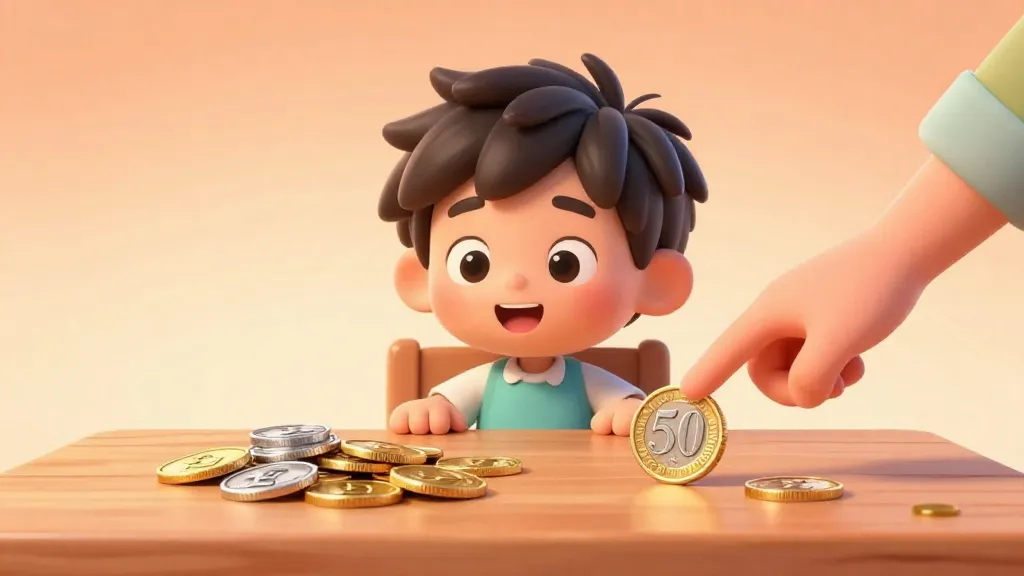
Hand a five year old a pound coin and a 50p coin. Ask them which one is worth more. Most will pick the 50p: after all, it is bigger!
This simple experiment reveals a lot about how a child's brain works at this age. To a five year old, money is a physical object defined by its size, color, and shape rather than its economic value. Because they are in the concrete operational stage of development, they learn best through touch and play rather than abstract explanations.
The Power of Concrete Thinking
At age five, your child is a scientist of the physical world. They are busy figuring out gravity, volume, and why a big box is more exciting than a small one. Money is no different. To them, a shiny new penny might feel more valuable than a crumpled five pound note.
Because they cannot yet grasp the abstract concept of "value," we must focus on the physical. This means putting away the apps and digital wallets for now. If they cannot touch it, count it, or drop it into a jar, it does not really exist in their financial world.

According to a study by the University of Cambridge, many of the habits that will help children manage their money in later life are already formed by age seven.
Game 1: The Coin Scientist
The first step in teaching a 5-year-old about money is simple recognition. You want your child to become a "coin expert." Start by gathering a handful of mixed change and sitting down together on the carpet.
Ask them to sort the coins into piles based on their appearance. Do not worry about the value yet. Just let them notice that some are copper, some are silver, and some have seven sides while others are round. This builds the foundational pattern recognition they need for more complex math later.

Mira says:
"It's like when we go to the bakery! I know the big loaf of bread costs more than the small roll, even if the coins I use look the same."

The most important investment you can make is in yourself.
Game 2: The Pretend Shop
Once they can tell a penny from a pound, it is time to put those coins to work. Playing "Shop" is the gold standard for money activities for 5-year-olds. Set up a small table with three or four of their favorite toys and put a "price tag" on each one.
Keep the prices simple: one toy costs 1p, another costs 5p, and a really special one costs 10p. Give your child a small pot of coins and take turns being the shopkeeper and the customer. This teaches them the most important rule of economics: exchange.
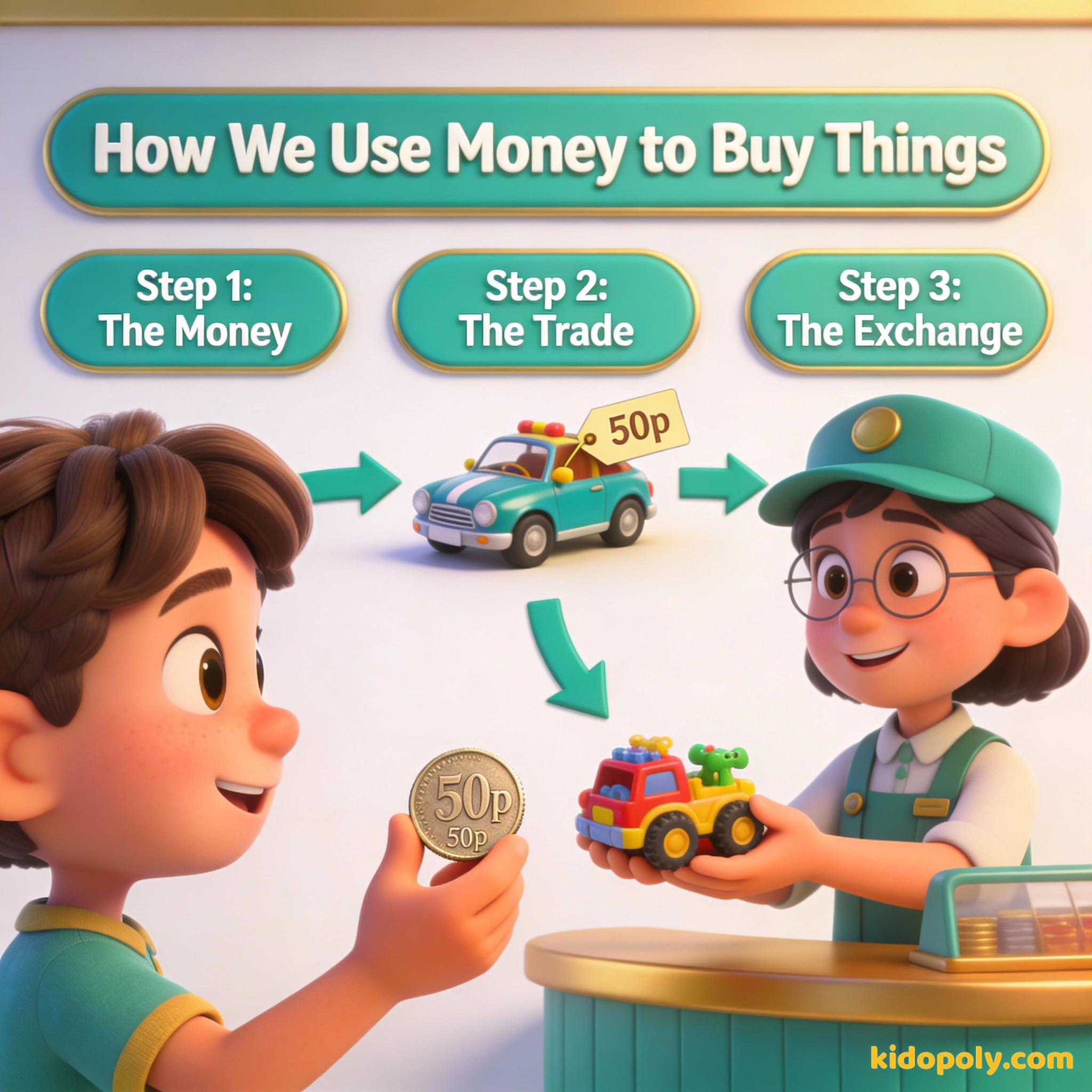
When they are the customer, they feel the physical loss of the coin as they hand it over. When they are the shopkeeper, they practice the basic money math of counting out the items and receiving payment. It makes the transaction real in a way that watching you tap a card at the supermarket never can.
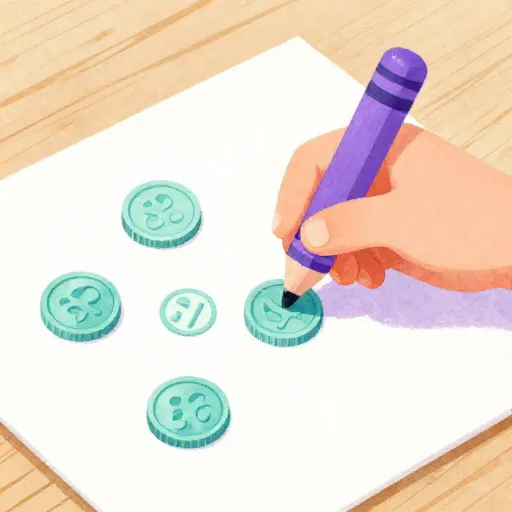
Try 'Coin Rubbing' art! Place coins under a piece of paper and use a crayon to rub over them. It helps your child notice the unique patterns and faces on each coin while making it a fun art project.
The "This or That" Exercise
One of the hardest money concepts for 5-year-olds to grasp is scarcity. They often think that if we run out of money, we can just go to the "hole in the wall" (the ATM) to get more. To counter this, we introduce the concept of opportunity cost through simple choices.
Next time you are at the shop, give them a small, specific amount: say, 50p. Show them two items they like, such as a small pack of stickers and a piece of fruit. Explain that they have enough for one, but not both.
Buying a small treat right now feels great and gives immediate happiness.
Waiting and saving that money helps you buy something much bigger and more exciting later.
This is not about being mean or restrictive. It is about empowering them to make a decision. When they choose the stickers, they are learning that choosing one thing means saying "no" to something else. This is the very beginning of prioritising spending.

Finn says:
"But if I spend my 50p on the stickers today, does that mean I have 50p less for that toy dragon I'm saving for in my jar?"
Saving in Plain Sight
For a five year old, a bank account is a mystery. If they cannot see their money, they assume it is gone. That is why the best tool for teaching a 5-year-old about saving is a clear glass or plastic jar.
Help them identify a "First Savings Goal." This should be something small and attainable within a few weeks, like a specific toy car or a box of crayons. Print out a picture of the item and tape it to the jar.
Help your child count by fives or tens using coins. 10 x 1p coins = one 10p coin. Stacking ten 1p coins next to a single 10p coin shows them that different objects can have the same 'power' even if they look different.
Every time they receive a small reward or a bit of pocket money, let them drop the coins in themselves. The sound of the clink and the rising level of the silver and copper provides a powerful visual feedback loop. They can literally see their patience turning into progress.

An investment in knowledge pays the best interest.
Connecting Work and Reward
At this age, children are eager to help. You can begin to bridge the gap between effort and income by offering small rewards for "extra" tasks. Note that these should be things above and beyond their normal responsibilities, like tidying their own toys.
Perhaps they can earn 20p for helping you pull weeds in the garden or matching all the socks in the laundry basket. This helps them understand that money comes from work, not just from a parent's pocket. Keep the tasks short and the payment immediate to match their attention span.
Mira says:
"Matching socks is actually kind of fun when I know it's helping me get closer to my new box of glitter pens!"
Recommended Resources for Age 5
You do not have to do this alone. There are fantastic tools designed specifically for this developmental window. Look for books that treat money as an adventure rather than a lecture.
- The Berenstain Bears' Trouble with Money: A classic story about earning and spending.
- Bunny Money by Rosemary Wells: Great for visualising how quickly a budget can disappear.
- Board Games: Simple games like Snakes and Ladders help with counting, while Junior Monopoly introduces the idea of buying property.

The primary reason people struggle financially is because they spent years in school but learned nothing about money.

Imagine you are at the zoo. You have two coins. You can buy a bag of food for the goats, or you can save your coins to buy a toy lion at the gift shop later. You can't do both! Which one feels like more fun to you today?
Moving Forward
Teaching your child about money at age five is not about math: it is about habit and mindset. By making money physical, playful, and part of daily conversation, you are removing the mystery and fear that often surrounds finances later in life.
Start small, keep it tactile, and remember that at this age, the "shop game" on the living room floor is the most important economics class they will ever take.
Something to Think About
If you could pick one thing to start saving for together today, what would it be?
This isn't about the price of the item, but about finding something your child is genuinely excited about to make the concept of 'waiting' feel worth it.
Questions About Learning & Teaching Money
Is 5 too young to give pocket money?
How do I explain where money comes from?
What if my child loses their money?
Your Next Adventure in Money
Now that you have the tools to make money concrete for your five year old, why not dive deeper into the world of pocket money? Check out our guide on how much to give and how to set up your first family 'bank' system.